 English
 Nederlands
 Deutsch





If your car starts aquaplaning, ease off the accelerator gently, keep the steering wheel straight, and avoid braking sharply. The goal is to let the tyres gradually regain contact with the road surface without introducing any sudden inputs that could cause the car to spin or veer off course. Aquaplaning is a temporary loss of traction caused by a layer of water building up between your tyres and the road, and it can happen faster than most drivers expect. The sections below cover how to recognise it, what to do, and how to reduce the risk before you set off.
How do you know if your car is aquaplaning?
Aquaplaning feels like a sudden lightening of the steering, as if the front of the car has disconnected from the road. The steering wheel may feel unusually light or unresponsive, the engine revs might rise slightly, and the car can begin to drift in a direction you did not intend. In rear-wheel-drive vehicles, the rear of the car may feel loose or begin to swing out.
Unlike a tyre blowout, aquaplaning does not usually come with a loud noise or violent jolt. It can be subtle at first, which is part of what makes it disorienting. You may notice the car tracking slightly off your intended line, or a faint vibration through the steering column as the tyres skim across the water surface. If any of these sensations appear during heavy rain or after driving through standing water, aquaplaning is the most likely cause.
What causes a car to aquaplane?
Aquaplaning happens when water accumulates in front of the tyre faster than the tyre can disperse it. This creates a thin film of water that lifts the tyre off the road surface, breaking the contact needed for steering and braking to work. It is most likely to occur at speeds above 80 km/h, on roads with standing water, and when tyre tread depth is low.
Several factors increase the risk:
- Speed: The faster you travel, the less time the tyre has to channel water away through its tread grooves. Higher speeds dramatically increase the likelihood of aquaplaning.
- Tyre condition: Worn tyres with shallow tread cannot move water efficiently. Most countries set a minimum legal tread depth, but traction in wet conditions starts to deteriorate well before that threshold is reached.
- Tyre pressure: Under-inflated tyres have a reduced contact patch and struggle to displace water as effectively as correctly inflated ones.
- Road surface and drainage: Roads with poor camber, ruts, or blocked drains collect standing water more readily, increasing the risk even at moderate speeds.
- Rainfall intensity: Heavy, sudden downpours are particularly dangerous because the water arrives faster than road drainage can cope with.
What should you do the moment aquaplaning starts?
The moment you sense aquaplaning, release the accelerator smoothly and hold the steering wheel straight. Do not brake suddenly and do not make sharp steering inputs. Allow the car to slow naturally until the tyres regain grip, then steer gently back to your intended path. The entire process usually resolves within a few seconds if you avoid overreacting.
Here is a clear sequence to follow:
- Lift off the accelerator: Reduce speed gradually by releasing the throttle. Do not stamp on the brakes.
- Hold the steering wheel firmly and straight: Resist the urge to correct aggressively. Keep the wheel pointing in the direction you want to go.
- Avoid braking if possible: If you must brake, apply pressure gently and progressively. Modern cars with ABS will manage brake force automatically, but hard braking on a surface with no traction is still dangerous.
- Wait for grip to return: You will feel the steering weight return and the car settle back onto the road. Once it does, you can resume normal control.
- Reduce your speed for the conditions: After the episode, slow down. If it happened once, the conditions are right for it to happen again.
What should you never do when your car is aquaplaning?
The most dangerous responses to aquaplaning are the instinctive ones. Stamping on the brakes, jerking the steering wheel, or accelerating to try to power through the water can all make the situation significantly worse. These inputs introduce forces the tyres cannot manage when they have no grip, and can send the car into a spin or off the road entirely.
Specifically, avoid the following:
- Hard braking: Locking the wheels on a surface with no traction removes any remaining steering ability. Even with ABS, aggressive braking during aquaplaning can extend the episode rather than resolve it.
- Sudden steering corrections: If the car begins to drift, the instinct is to steer sharply back. This can cause the car to snap in the opposite direction when grip suddenly returns.
- Accelerating: Increasing power when the tyres are already skimming the surface adds instability and can spin the rear wheels, making control even harder to recover.
- Panicking: Calm, minimal inputs are what allow the car to recover. Tense, reactive movements are the main reason aquaplaning episodes escalate into accidents.
How can you reduce the risk of aquaplaning before you drive?
Most of the risk factors for aquaplaning are things you can address before you turn the key. Checking your tyres regularly, adjusting your speed for wet conditions, and maintaining a greater following distance in rain all significantly reduce the likelihood of losing control on a wet road.
Practical steps to take before and during wet-weather driving:
- Check tyre tread depth: Use a tread depth gauge or the wear indicators built into the tyre. If you are approaching the legal minimum, replace the tyres before driving in heavy rain. Better tread means better water dispersal.
- Check tyre pressure: Correctly inflated tyres maintain a better contact patch. Check pressure at least once a month and before long journeys.
- Reduce your speed in rain: There is no precise speed at which aquaplaning becomes guaranteed, but slowing down meaningfully reduces the risk. If the road surface is wet and visibility is poor, drop well below the speed limit.
- Increase following distance: Wet roads extend braking distances considerably. Leave more space between you and the vehicle ahead.
- Avoid puddles and standing water where safe: If you can change lane or adjust your line to avoid visible standing water, do so. Puddles in ruts or at the edges of lanes are particularly likely to cause aquaplaning.
- Avoid cruise control in wet conditions: Using cruise control in rain means the car cannot respond as quickly to changing traction, and you may not react fast enough to disengage it if aquaplaning begins.
What should you keep in your car in case of a wet-weather emergency?
Aquaplaning can resolve in seconds, but wet-weather driving carries broader risks, including reduced visibility, longer stopping distances, and the possibility of a collision or roadside stop in difficult conditions. Keeping a few practical items in your car means you are prepared for whatever the weather brings, not just the best-case outcome.
Items worth having in your car during wet or winter driving:
- A high-visibility safety vest: If you need to stop at the roadside in poor visibility, a reflective vest makes you visible to approaching traffic. In many European countries, carrying one is a legal requirement.
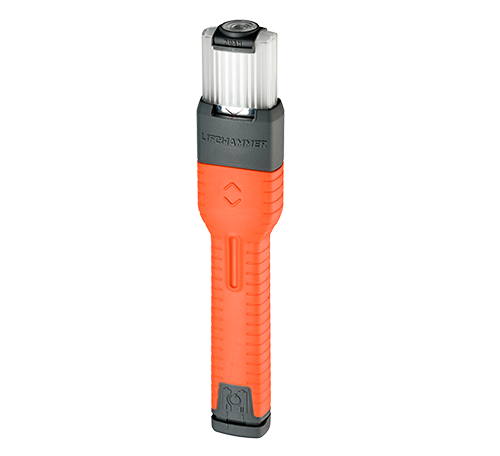
- A torch or emergency light: Useful if you break down after dark or need to signal your position in low visibility conditions.
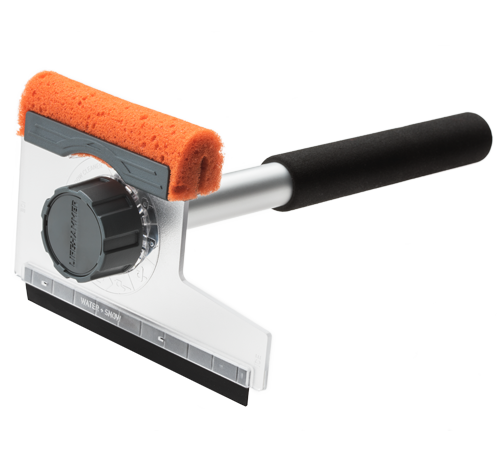
- A window scraper and de-icer: Wet weather in autumn and winter can quickly transition to ice. Keeping these in the car means you are never caught out.
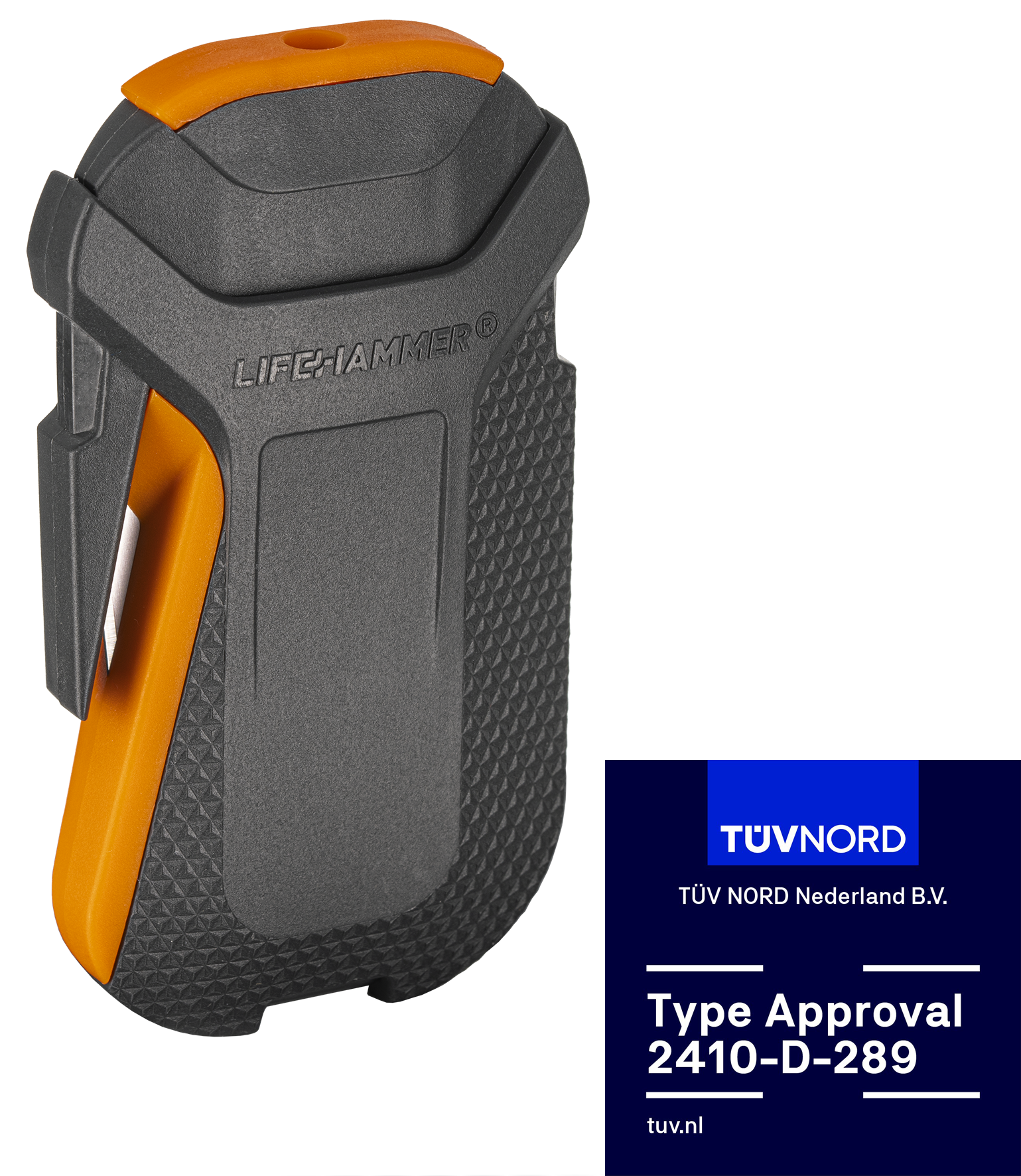
- A car escape tool: In the event of a serious accident involving flooding or a vehicle entering water, a safety hammer allows you to break a tempered side window and cut a jammed seatbelt. It is a compact item that takes up almost no space but covers a scenario where no other tool will do.
- A basic first aid kit: Wet roads increase accident risk. A simple kit does not require any expertise to carry and can be useful in a range of roadside situations.
How Lifehammer® supports you on wet-weather drives
At Lifehammer® we have been developing vehicle safety tools since 1983, and wet-weather preparedness is exactly the kind of situation our products are designed for. Whether you are doing a quick pre-departure check or building out a complete car kit for the colder months ahead, we focus on tools that are reliable, compact, and genuinely useful when it counts.
- Our safety hammer range gives you a practical escape option if a serious accident leaves you trapped. The Safety Hammer Evolution uses a ceramic hammerhead to break tempered side windows and includes a seatbelt cutter for swift exit. The Safety Hammer SMART uses the same ceramic pin mechanism in a slim, modern design that can be mounted within easy reach using 3M VHB double-sided adhesive tape.
- All Lifehammer® safety hammers are TÜV certified and trusted by first responders and fleet operators across Europe. They are built to perform under stress, not just under normal conditions.
- Our Safety Vest Ultra comes in an ultra-flat vacuum pack that stores discreetly under any floor mat and decompresses immediately on opening. It is one-size-fits-all and suitable for drivers and passengers alike, making it a practical addition for any wet or low-visibility drive.
If you have questions about which products are right for your car or your driving habits, our Q&A section covers the most common topics in straightforward detail. And if you are ready to add a safety hammer to your car kit, you can find our full range on Amazon.