 English
 Nederlands
 Deutsch





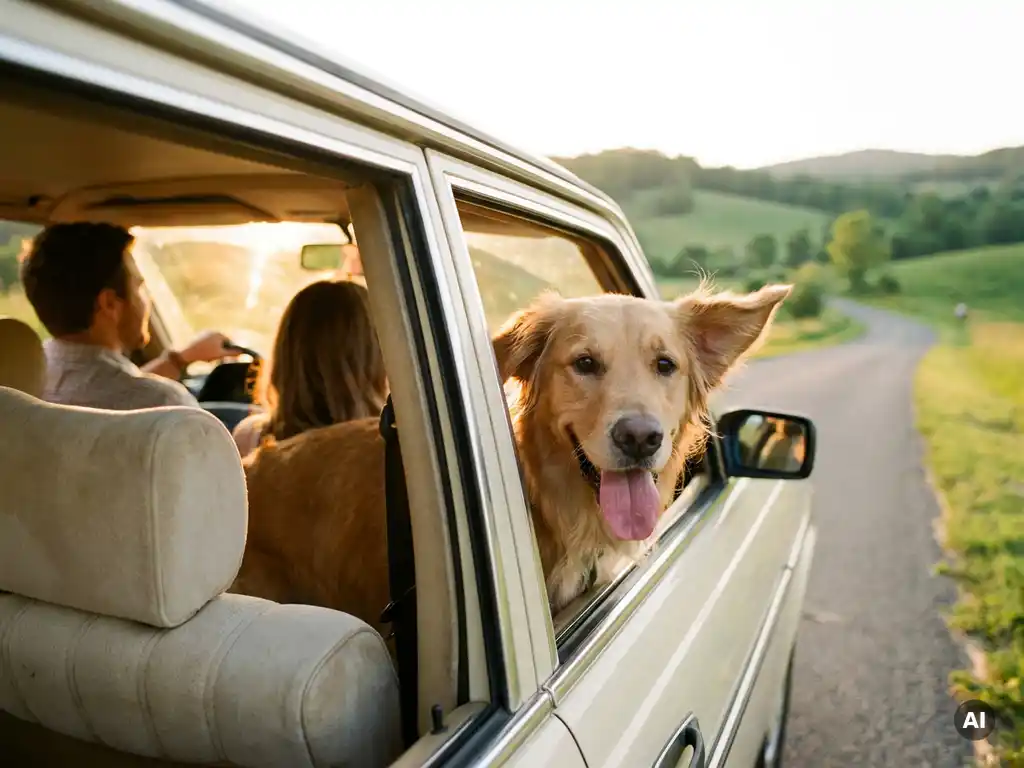
Planning a road trip with your dog sounds straightforward until you’re two hours in, your dog is restless, you’ve missed the last decent rest stop, and you’re not sure whether the panting is normal. Travelling with a dog by car is genuinely enjoyable when you prepare well, and genuinely stressful when you don’t. The good news is that most of what makes dog car travel work well comes down to understanding a few core principles and building them into a repeatable routine.
This guide walks you through everything you need to know before your next road trip with your dog, from the basics of how dogs experience car journeys to the gear worth packing, the schedule worth keeping, and the mistakes worth avoiding. Whether you’re planning a weekend away or a longer cross-country drive, the same foundations apply.
What dogs actually need on a long car journey
Dogs have four primary needs during car travel: physical comfort, emotional security, adequate hydration, and regular movement. Understanding these as distinct needs, rather than bundling them under the vague idea of “keeping your dog happy,” helps you plan more precisely.
Physical comfort means your dog has enough space to lie down and change position. A dog that cannot stretch or shift its weight over several hours will become agitated in the same way a person does on a long-haul flight in a cramped seat. Emotional security means your dog feels safe and familiar with the environment, which is why a well-used crate or a favourite blanket in the back seat makes a genuine difference. Hydration is easy to overlook because dogs don’t ask for water the way children ask for snacks, but they need regular access, particularly in warm weather or when they’re anxious.
Movement is the need most often underestimated. Dogs are not built to stay still for four or five hours at a stretch. Their muscles stiffen, their digestive systems slow, and their anxiety builds. A dog that gets out, sniffs around, and moves its body every couple of hours arrives at the destination in a noticeably calmer state than one that was confined for the whole journey.
How dogs experience car travel differently from humans
Dogs do not process a car journey the way you do. You understand where you’re going, roughly how long it will take, and what the sensations of motion mean. Your dog has none of that context. Every journey is, to some degree, an unknown experience that requires trust rather than understanding.
This matters because it explains why dogs respond so differently to car travel. Some become anxious because the motion, smells, and sounds are overwhelming and unpredictable. Others become hyperactive because the stimulation is exciting and they have no outlet for it. A smaller number are genuinely travel-sick, which is more common in puppies whose inner ear systems are still developing but can persist into adulthood.
Dogs also navigate car travel primarily through smell. The scent of the car, your scent, and the changing smells coming through the ventilation all form a continuous stream of information your dog is processing. This is why a familiar blanket or a piece of your clothing in the car can have a measurable calming effect. It’s not sentiment, it’s sensory anchoring. Knowing this helps you make small, practical decisions that genuinely improve your dog’s experience of the journey.
Useful gear for a dog-friendly road trip
The gear that actually improves dog car travel tends to fall into three categories: containment, comfort, and hydration. Knowing what belongs in each category helps you avoid buying things you don’t need and missing things you do.
Containment
A crash-tested harness or a secured travel crate is not optional if you want your dog to be safe in the car. An unrestrained dog in a vehicle becomes a projectile in a sudden stop, which is dangerous for the dog and for every other person in the car. Look for harnesses that have been tested to relevant safety standards, not just marketed as “car harnesses.” A boot divider or dog guard is a useful addition for larger dogs travelling in the rear.
Comfort and hydration
A familiar blanket or bed insert helps settle dogs that are anxious in the car. For hydration, a travel water bottle with an attached bowl is far more practical than trying to pour from a standard bottle at a rest stop. Collapsible bowls pack flat and take up almost no space. If your dog is prone to travel sickness, avoid feeding a large meal within two hours of departure, and keep the car well ventilated.
Documentation and identification
If you’re crossing borders, your dog needs a valid pet passport, up-to-date vaccinations, and microchip details that match. Even for domestic travel, carrying your vet’s contact details and your dog’s vaccination records is a sensible habit. It costs nothing to carry and matters a great deal if something goes wrong.
How to plan rest stops and a safe daily driving schedule
A practical rule for dog road trips is to plan a proper stop every two hours. Not a brief pause at a service station, but a ten to fifteen minute break where your dog gets out of the car, moves around, drinks water, and has the opportunity to relieve itself. This rhythm keeps your dog comfortable and actually makes the overall journey smoother, because a dog that has been out and active at a stop settles more quickly back into the car.
For daily driving distance, most experienced dog travellers find that six to seven hours of actual driving time is a reasonable upper limit when travelling with a dog. Beyond that, fatigue and restlessness compound each other, for both the dog and the driver. If your destination requires more than that, splitting the journey across two days with an overnight stop is worth the extra planning.
When choosing where to stop, look ahead on the route for green spaces, parks, or quiet verges rather than relying on motorway service stations alone. Many mapping apps now allow you to filter for pet-friendly stops. Planning three or four specific stops before you leave, rather than making decisions on the road, removes one source of stress from the journey.
Common road trip mistakes dog owners make
Most problems on a dog road trip trace back to a small number of predictable mistakes. Recognising them before you travel is far easier than managing them on the road.
- Skipping the test run. If your dog rarely travels by car, a long road trip is not the right introduction. A few shorter journeys in the weeks before help your dog build familiarity with the experience and give you a clearer picture of how they cope.
- Feeding too close to departure. A full stomach and a moving vehicle is a reliable recipe for nausea. Feed your dog three to four hours before you plan to leave, and keep snacks light during the journey.
- Leaving the dog alone in the car. Even on a mild day, the temperature inside a parked car rises faster than most people expect. Never leave a dog unattended in a vehicle, even briefly, in warm weather.
- Ignoring early signs of stress. Yawning, lip-licking, excessive panting, and restlessness are all early indicators that a dog is uncomfortable. Responding to these signals early, by stopping sooner or adjusting ventilation, prevents the situation from escalating.
- Overpacking the boot. Dogs need space. A boot packed tightly with luggage leaves no room for your dog to move, which makes the journey harder for them and potentially unsafe if your dog is not in a crate or harness.
Build a repeatable pre-trip routine for travelling with your dog
The most useful thing you can do for dog car travel is build a consistent pre-trip routine that you repeat before every journey. Dogs are highly attuned to patterns. When the same sequence of events reliably precedes a car trip, your dog begins to associate those actions with what comes next, which reduces the uncertainty that drives anxiety.
A practical routine might look like this: a walk or active play session thirty to forty-five minutes before departure, so your dog is physically tired before getting in the car. Then a final toilet opportunity immediately before loading. Water available but no large drink right before moving. The familiar blanket or bed placed in the car before your dog gets in. The same command or gesture used each time to signal “it’s time to get in.” None of these steps are complicated, but their value comes from repetition.
Over time, this routine does something useful. It shifts the car journey from an unpredictable event into a familiar one. Your dog stops reacting to the car as a source of uncertainty and starts treating it as a known part of a known sequence. That shift in your dog’s relationship with car travel is worth more than any single piece of gear you could buy.
How Lifehammer® supports you on a road trip with your dog
At Lifehammer® we have been developing vehicle safety tools since 1983, and road trip preparation is exactly the kind of situation our products are designed for. When you’re travelling with a dog, your focus is rightly on your companion, which makes it even more important that the safety basics in your car are already sorted before you leave.
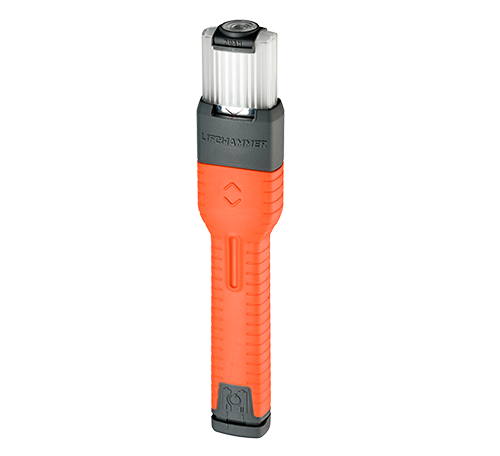
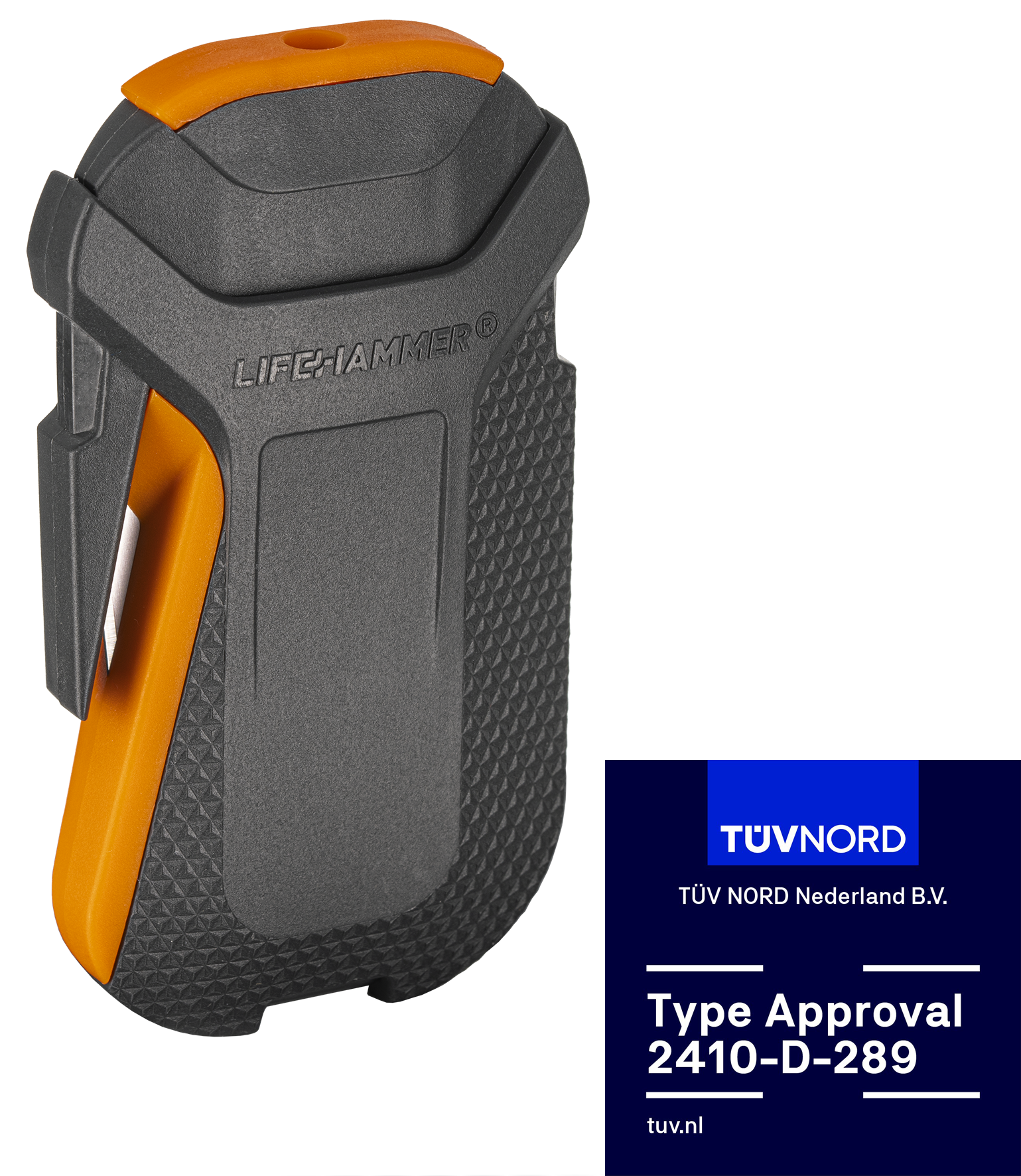
- Our safety hammer range includes four models. The Classic and Plus use a manual hardened carbon steel hammerhead; the Evolution and Smart use an automatic ceramic hammerhead. All four cut seatbelts and break tempered side windows, giving you a reliable means of escape if you ever need it.
- All Lifehammer® safety hammers are TÜV certified and trusted by first responders and fleet operators across Europe, so you are not relying on a product that has never been tested under real conditions.
- Our Safety Vest Ultra comes in an ultra-flat vacuum pack that stores discreetly under any floor mat and decompresses immediately on opening. It is one-size-fits-all and suitable for drivers and passengers alike, which matters when you’re stopped on the roadside with a dog to manage.
If you have questions about which products are right for your car or your journey, our Q&A section covers the most common topics in straightforward detail.