 English
 Nederlands
 Deutsch






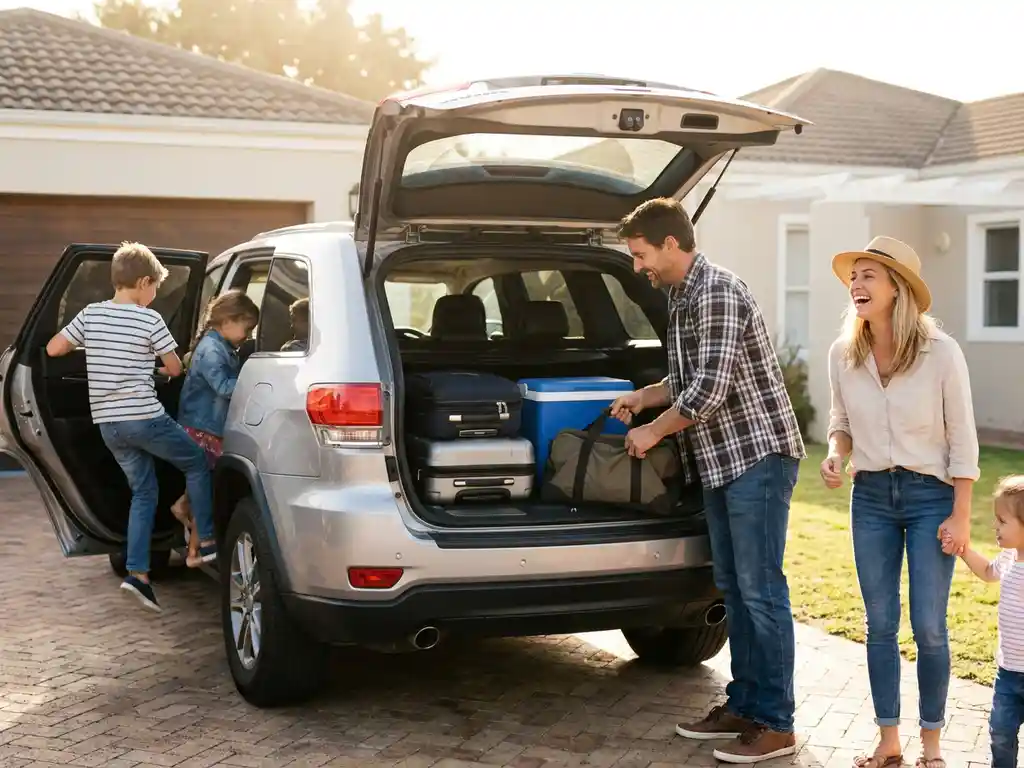
Planning a family road trip takes more than booking accommodation and packing the bags. The car itself needs attention before you set off, and the things you bring along can make the difference between a smooth journey and a stressful one. Whether you are heading out for a weekend break or a longer summer drive, a little preparation goes a long way toward keeping everyone comfortable, safe, and on schedule.
What should I check on my car before a family road trip?
Before a family road trip, check your tyre pressure and tread depth, top up all fluid levels, test your lights, inspect your brakes, and confirm your spare tyre is in good condition. These checks take less than 30 minutes and address the most common causes of breakdowns and roadside emergencies on long drives. Start with the tyres. Underinflated tyres affect fuel economy, handling, and safety, especially when the car is fully loaded with passengers and luggage. Check the pressure when the tyres are cold, using the figure in your vehicle handbook rather than the number stamped on the tyre itself. While you are at it, check the tread depth. The legal minimum in most European countries is 1.6mm, but many road safety organisations recommend replacing tyres before they reach that point. Next, go through your fluids: engine oil, coolant, windscreen washer fluid, and brake fluid. A long drive puts more demand on your engine than a short commute, so low levels that you might get away with day to day can become a real problem over several hundred kilometres. Test every light on the car, including indicators and brake lights. Ask someone to stand behind the car while you check. Lights are easy to overlook because a failed bulb rarely affects how the car drives, but it creates a legal risk and reduces your visibility to other road users. Finally, check your spare tyre or tyre repair kit. Many newer cars come with a foam sealant kit rather than a full spare, so make sure you know which one you have and that it is in working order before you need it.What should I pack in my car for a family road trip?
For a family road trip, pack a navigation device or phone mount, snacks and drinks, entertainment for children, a first aid kit, a warning triangle, a high-visibility vest, phone chargers, and a small bag of essentials in case of delays. Organising these items before you leave saves time and reduces stress on the road. Divide your packing into three categories: journey comfort, navigation and communication, and safety and breakdown preparedness. Journey comfort:- Snacks and water for everyone, including enough for unexpected delays
- Entertainment for children: downloaded films, audiobooks, or travel games
- Wet wipes and a small rubbish bag to keep the car tidy
- Sunscreen, especially for rear-seat passengers exposed to direct sunlight
- A phone mount that keeps your device visible without obstructing your view
- Charging cables and a multi-port USB adapter or power bank
- A downloaded offline map in case you lose signal in rural areas
- A first aid kit
- A warning triangle
- A high-visibility vest for each person in the car
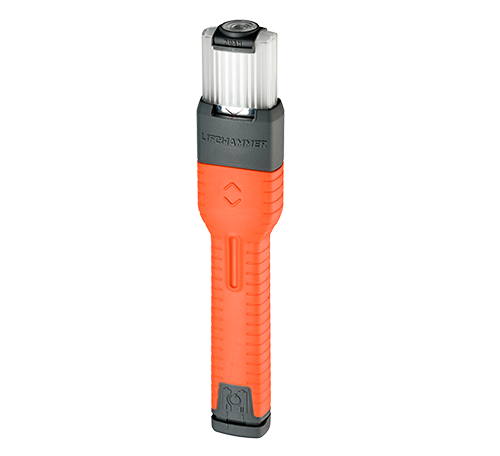
- A torch with working batteries
- A car escape tool stored within reach of the driver
How do I keep kids safe and comfortable on a long drive?
To keep children safe and comfortable on a long drive, make sure car seats are correctly fitted and appropriate for each child’s weight and height, plan regular stops every 90 to 120 minutes, bring familiar snacks and entertainment, and keep the car at a comfortable temperature. Preparation before you leave reduces the chances of problems during the journey. Car seat safety is the most important consideration. Check that each seat is installed according to the manufacturer’s instructions and that the harness fits snugly with no slack. Children grow quickly, so it is worth re-checking the fit at the start of each new season rather than assuming it is still correct from the last trip. Plan your stops in advance. Long stretches without a break are uncomfortable for children and can affect your concentration as the driver. Aim for a proper stop every 90 to 120 minutes where children can get out of the car and move around. Identifying service stations or rest areas along your route before you leave makes it easier to stick to this rhythm. For entertainment, familiar favourites work better than new content. Downloaded films, podcasts, or audiobooks that children already enjoy tend to hold attention more reliably than something unfamiliar. Avoid giving children screens for the entire journey if possible. Mixing screen time with simpler activities like travel games or spotting challenges keeps them more engaged overall. Temperature matters more than many drivers realise. The rear of a car can be significantly warmer than the front, particularly in summer. Rear window sunshades help, and checking in with passengers in the back seats is a simple habit that makes a real difference to comfort.What emergency supplies should I keep in my car?
Every car should carry a first aid kit, a warning triangle, a high-visibility vest, a torch, a phone charger or power bank, a basic toolkit, and a car escape tool. These items cover the most likely roadside emergencies and are required by law in several European countries. Some of these items are legal requirements in certain countries. In Germany, Austria, and many other European nations, a first aid kit and warning triangle are compulsory. A high-visibility vest is required in France, Spain, Italy, and others. If you are driving across borders, it is worth checking the specific requirements for each country on your route before you travel. Beyond the legal minimums, a few additional items are worth having:- A car escape tool: A safety hammer with an integrated seatbelt cutter can help occupants exit a vehicle quickly if a door becomes jammed or a seatbelt locks after an impact. Store it within reach of the driver, not in the boot.
- A power bank or car charger: A flat phone battery removes your ability to call for help or access navigation. A charged power bank in the glovebox addresses this reliably.
- A basic toolkit: Gloves, a tyre pressure gauge, jump leads or a portable jump starter, and a multi-tool cover a wide range of minor issues without waiting for roadside assistance.
- Water and a snack: If you are waiting at the roadside for an hour or more, having something to drink makes a practical difference, particularly with children in the car.
What are the most common mistakes people make preparing for a road trip?
The most common road trip preparation mistakes are leaving car checks until the day of departure, packing emergency supplies in inaccessible locations, underestimating journey time, neglecting to check legal requirements for countries on the route, and forgetting to charge devices before setting off. Most of these are easy to avoid with a simple checklist completed a day or two in advance.Leaving checks too late
Checking tyre pressure or oil levels the morning you leave means there is no time to fix anything you find. Doing your vehicle checks a day or two before departure gives you time to visit a garage if needed, without the pressure of a departure time looming.Packing safety items where they cannot be reached
A warning triangle buried under luggage in the boot, or a high-visibility vest that takes five minutes to locate, is not useful in an emergency. Pack safety items last so they are accessible first, and keep the most urgent items in the passenger compartment rather than the boot.Underestimating journey time with children
A journey that takes two hours without stops can easily take three or more with a family. Building in realistic time for rest stops, meals, and unexpected delays makes the journey less stressful for everyone and reduces the pressure to drive faster than conditions allow.Ignoring cross-border requirements
If your route takes you through multiple countries, the legal requirements for safety equipment vary. Some countries require a breathalyser kit, others require specific types of warning triangles or additional vests for each passenger. A quick check of the requirements for each country on your route takes ten minutes and avoids the risk of a fine or delay at a border.Forgetting to charge devices
A flat phone means no navigation, no ability to call for help, and no entertainment for children. Charge all devices the night before, and bring a power bank as a backup. It is a small detail that matters more than it seems once you are on the road.How Lifehammer® supports your road trip preparation
We design our products for exactly this kind of situation: a car full of people you care about, a long drive ahead, and the quiet confidence that comes from knowing you have thought of everything. Our tools are built to be reliable when they matter most, not just to look good in a product photo.- The Lifehammer® range includes four safety hammers. The Classic and Plus models use a manual hardened carbon steel hammerhead; the Evolution and Smart models use an automatic ceramic hammerhead. All four include a seatbelt cutter.
- Our Safety Vest Ultra comes in an ultra-flat vacuum pack that fits under any floor mat. One-size-fits-all, high-visibility, and ready to use the moment you open it.
- All our products are TÜV certified according to German standards, trusted by emergency services across Europe.
- Easy installation: no screws required. Attaches to the car door or center console, stays securely in place, and is immediately at hand in an emergency.