 English
 Nederlands
 Deutsch





Only certain car windows can be broken with a safety hammer. Tempered glass side windows, which are found on the doors and rear quarters of many cars, are designed to shatter under a sharp, concentrated impact, which is exactly what a safety hammer delivers. Laminated glass, used in windshields and, in some vehicles, in side windows too, cannot be broken this way. The sections below explain why the glass type matters, which panels may follow which rule, and where to strike for the best result.
Are all car windows made of the same glass?
No, car windows are not all made of the same glass. Modern vehicles use two distinct types of safety glass: tempered glass (also called single-pane safety glass or ESG) and laminated glass. The type used depends on where the window sits in the vehicle and the safety function it serves. Understanding this difference is the foundation of knowing how a car escape tool actually works.
Tempered glass is produced by heating standard glass to a very high temperature and then cooling it rapidly. This process creates internal tension that makes the glass far stronger than ordinary glass under normal pressure, but when that tension is overcome by a sharp, concentrated point of force, the entire pane shatters into small, relatively harmless fragments. That controlled failure is intentional.
Laminated glass, by contrast, is made from two layers of glass bonded together with a plastic interlayer, typically polyvinyl butyral (PVB). When laminated glass is struck, the outer pane may crack, but the plastic layer holds the fragments together. The window stays largely intact. This is also intentional: laminated glass is designed to keep occupants inside the vehicle during a collision and to prevent objects from penetrating the cabin.
Laminated glass is not limited to windshields and panoramic roofs. It can also be fitted to the front and rear side windows. This is most often seen in higher-end and luxury vehicles, where it is used to improve sound insulation and security. Depending on the manufacturer, model, and trim level, laminated side glass may be included as standard equipment or offered as part of an optional equipment package. This does not mean that every luxury vehicle has laminated side windows, so the only reliable approach is to check the vehicle in question.
Which windows will a safety hammer actually break?
A safety hammer is designed to break tempered safety glass. On many passenger vehicles, the door windows and rear quarter windows are made from tempered glass. When struck at a corner or edge with a pointed tip, these panes shatter completely, which makes them the correct target in an emergency car escape situation.
This is why every reliable car escape tool is built around a hardened or ceramic striking point rather than a blunt surface. The goal is not to apply broad force across the glass, but to concentrate impact onto a very small area, overcoming the internal tension of the tempered pane at a single point. When that happens correctly, the entire window breaks apart almost instantly.
However, not every side window is tempered. Some vehicles use laminated glass in their side windows, and a conventional safety hammer cannot reliably break through it. The same plastic interlayer that holds a laminated windshield together holds a laminated side window together, so the pane may crack but will stay in the frame. What matters is the type of glass, not the position of the window: a side window is not automatically breakable just because it is a side window.
Different windows within the same vehicle can also use different types of glass. For example, the front side windows may be laminated while the rear side windows are tempered. Laminated side glass is most common in higher-end vehicles, and depending on the manufacturer, model, and trim level, it may be standard equipment or part of an optional package. Even so, it is not limited to premium models, and not every premium vehicle has it.
How can you tell if your car has tempered or laminated side windows?
Most car windows carry a manufacturer’s marking, usually etched into a corner of the glass. Labels such as “Tempered” or “Laminated” give a useful indication of the glass type. The visible edge of the pane can also help: tempered glass is a single layer, while laminated glass shows two layers with a thin plastic interlayer between them. Identification is not always straightforward, however, as markings can be worn, hard to read, or incomplete, and the edge of a side window is often hidden inside the door seal.
Before an emergency occurs, you should check your car’s window glass type to understand which side windows may be suitable for an emergency exit. Check each side window individually, since different glass types may be installed within the same vehicle. If the markings are unclear, confirm the glass specification with the vehicle manufacturer.
Why can’t a safety hammer break a windshield?
A safety hammer cannot break a windshield because windshields are made from laminated glass, not tempered glass. No matter how hard or how precisely you strike a laminated windshield, the plastic interlayer bonding the two glass panes together will prevent the window from shattering or breaking away. A safety hammer is simply not the right tool for this surface.
The windshield’s laminated construction is a deliberate engineering choice. In a frontal collision, the windshield needs to remain structurally intact to support the roof, prevent ejection, and allow airbags to deploy correctly against a solid surface. A windshield that shattered on impact would undermine all of those protective functions.
This is an important point for anyone relying on a car escape tool: in an emergency, you should direct your effort toward a side window made from tempered glass, not the windshield. Striking a laminated windshield repeatedly wastes time and energy without result. Where tempered side windows are available, they are your exit.
Does the same rule apply to rear windscreens and sunroofs?
In most vehicles, the rear windscreen is made from tempered glass, which means it can be broken with a safety hammer in the same way as a tempered side window. However, this is less relevant as an escape route because rear windscreens are larger, harder to reach from inside the cabin, and often more difficult to clear safely. Tempered side windows remain the better option wherever accessible.
Sunroofs and panoramic glass roofs vary more significantly by manufacturer and model. Many are made from tempered glass and could theoretically be broken, but striking upward at a glass panel above your head is far less practical under stress than striking a side window at arm level. Some panoramic roofs also use laminated glass for added structural support and UV filtering, which would make them resistant to a safety hammer entirely.
As a general rule: in an emergency escape situation, target a tempered side window first. It is typically the most accessible panel and the most practical exit point, provided you know it is tempered. Only consider other windows if tempered side windows are blocked or inaccessible, and if every side window in your vehicle is laminated, seek other means of escape and call for help.
Where should you strike a car window to break it?
This guidance applies to tempered glass only; it will not work on laminated glass. Strike a tempered side window at a corner or edge, not in the centre. The centre of a tempered pane is the strongest point. The corners and edges are where the internal stress is highest and where a concentrated strike from a safety hammer tip will most effectively initiate the shattering process. A single well-placed strike is far more effective than repeated blows to the middle of the glass.
For manual safety hammers, use the designated striking head to deliver a firm, controlled impact near a lower corner of a tempered side window. Spring-loaded models work differently: press the designated contact surface against the glass as instructed by the manufacturer. Always follow the instructions for your specific safety hammer model.
A few practical points to keep in mind:
- Aim for the lower corners of the window, away from your face and body
- If the window is partially open, strike the remaining glass at its exposed edge
- Cover your face briefly as the glass fragments, even though tempered glass breaks into small pieces rather than sharp shards
- Once the window is broken, use your arm or a tool to clear the frame before exiting
Positioning your safety hammer within easy reach before you need it makes all of this significantly more achievable under stress. A tool stored in the boot or a glove compartment is difficult to access in a real emergency; mounting it near the driver’s seat is the practical choice.
How Lifehammer® supports you with car window safety
At Lifehammer®, we have been developing vehicle safety tools since 1983. Our safety hammers are designed to break tempered car glass and help occupants escape when doors or windows cannot be opened normally. They are not suitable for breaking through laminated glass.
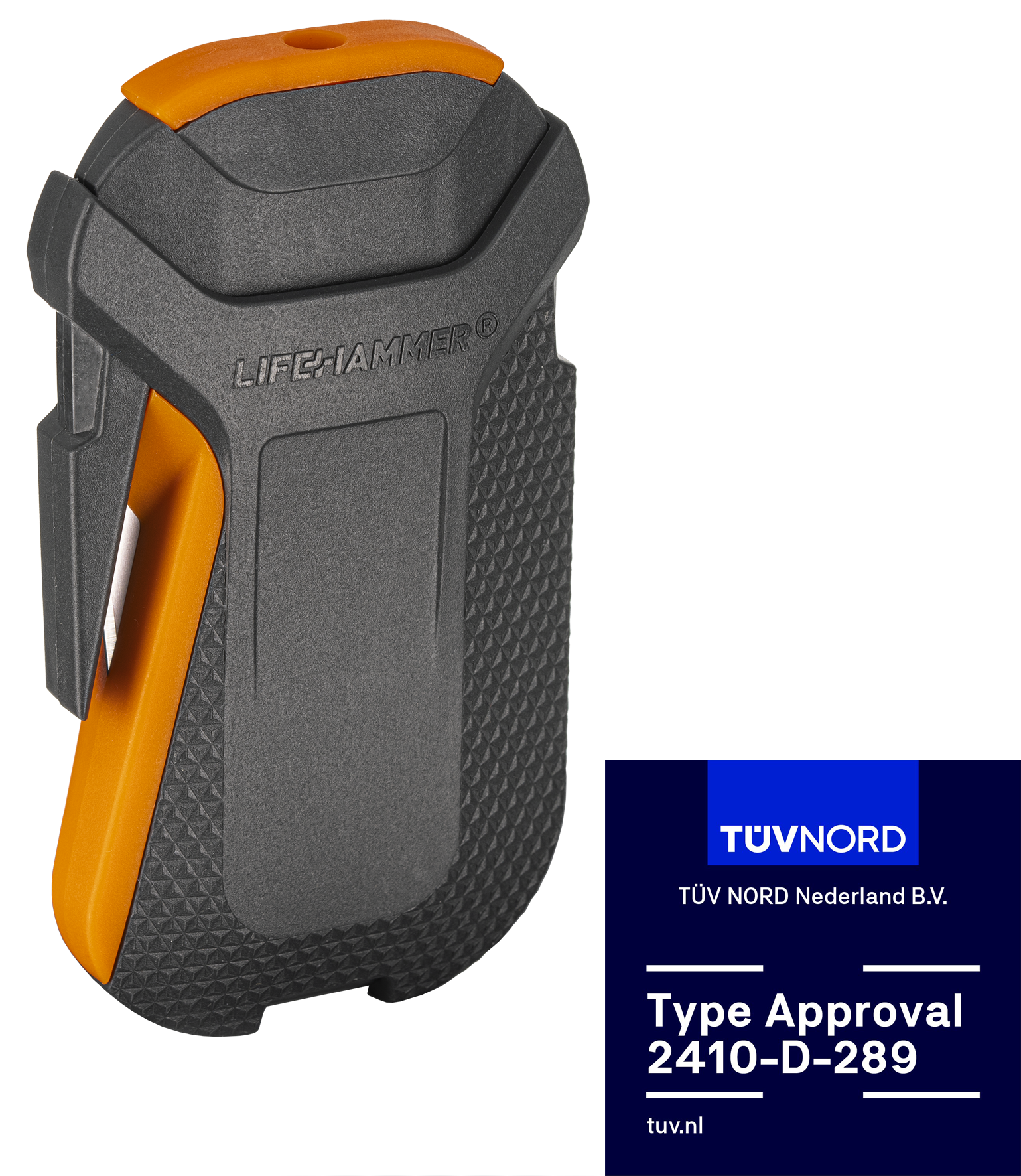
- Safety Hammer Classic and Plus: Both models feature a manual hammerhead designed to break tempered side and rear windows. The Plus uses a double-sided carbon steel hammerhead. Both include an integrated seatbelt cutter.
- Safety Hammer Evolution: This automatic model uses an ultra-hard ceramic hammerhead and features an integrated seatbelt cutter. Its mounting systems allow convenient placement within reach.
- Safety Hammer SMART: This compact, spring-loaded model uses a ceramic striking mechanism and includes a seatbelt cutter. It can be mounted on suitable hard, flat surfaces using the supplied 3M adhesive tape.
- Tested safety: Lifehammer® safety hammers are regularly tested for functionality and TÜV certification is an important part of our product quality standards. Regardless of the model, always check whether your vehicle’s windows are made from tempered or laminated glass
If you have questions about glass types, which model suits your vehicle, or how to mount a safety hammer correctly, our Q&A section covers the most common topics in straightforward detail. You can also find our products on Amazon if you prefer to order there.