 English
 Nederlands
 Deutsch





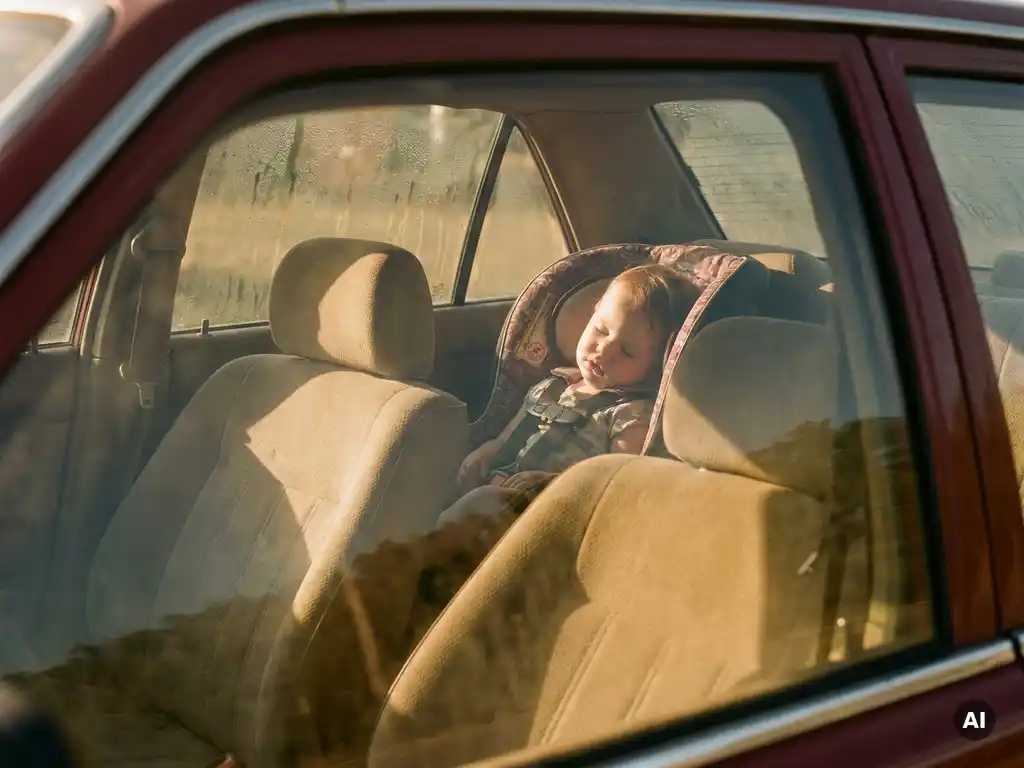
Leaving a child or dog alone in a car is genuinely dangerous, and in many situations it is also illegal. The core risk is heat: a parked car can reach life-threatening temperatures within minutes, even on a mild day, and neither children nor dogs can regulate their body temperature the way adults can. The sections below cover how quickly temperatures rise, the legal picture across different countries, what warning signs to watch for, and what to do if you see someone at risk.
How quickly does a car heat up with a child or dog inside?
A parked car can heat up by around 10 to 20 degrees Celsius within the first ten minutes, and by as much as 30 degrees above the outside temperature within half an hour. On a 20°C day, the interior of a closed car can exceed 45°C in under an hour. This rate of heating makes a parked car one of the most rapidly dangerous environments for anyone left inside.
The reason cars heat so quickly is the greenhouse effect. Sunlight passes through the glass, warms the surfaces inside, and that heat cannot escape efficiently. Upholstery, dashboards, and seat materials absorb and radiate heat, accelerating the rise in air temperature well beyond what you would expect from the outside conditions alone.
Children are particularly vulnerable because their bodies heat up three to five times faster than an adult’s. Their thermoregulation systems are still developing, and they have a higher surface-area-to-body-mass ratio, which means they absorb heat more rapidly. Dogs face a similar problem: they cool themselves primarily through panting, which becomes ineffective in a confined, overheated space with limited airflow.
Is it illegal to leave a child or dog alone in a car?
In many countries, leaving a child or dog alone in a hot car is illegal, though the specific laws vary. In the United Kingdom, leaving a child in a situation that causes unnecessary suffering or injury is a criminal offence under child protection legislation. Leaving a dog in conditions that endanger its welfare is an offence under the Animal Welfare Act 2006. In Germany, leaving a child unattended in a vehicle is treated as negligence and can result in criminal charges. Across most of Europe and North America, the legal position is broadly similar: if harm results, or if the situation is considered reckless, the responsible adult faces serious legal consequences.
Even where specific car-related laws are not explicitly written, general child endangerment and animal cruelty statutes apply. In 2026, awareness of this issue has grown significantly, and enforcement has increased accordingly. Police and emergency services are empowered in most jurisdictions to intervene immediately, including breaking a vehicle window if a child or animal is in distress.
The legal threshold is not only about harm that has already occurred. Placing a child or animal in a situation where harm is reasonably foreseeable is itself the basis for legal action in many countries. Regardless of the law in your specific location, the practical risk alone makes it a situation to avoid entirely.
What are the signs of heatstroke in children and dogs?
Heatstroke in children presents as hot, dry, or flushed skin, rapid breathing, confusion, dizziness, and in serious cases, loss of consciousness. A child may stop sweating despite being overheated, which is a sign that their body’s cooling system has failed. They may also become unusually quiet, limp, or unresponsive.
Signs of heatstroke in children
- Skin that is hot to the touch, red or flushed, and dry rather than sweaty
- Rapid or shallow breathing
- Confusion, disorientation, or loss of coordination
- Vomiting or complaints of nausea
- Seizures or loss of consciousness in severe cases
Signs of heatstroke in dogs
- Excessive, heavy panting that does not slow down
- Drooling more than usual, with thick or foamy saliva
- Bright red or pale gums
- Glazed eyes or a vacant, unfocused expression
- Weakness, stumbling, or collapse
- Vomiting or diarrhoea
In both children and dogs, heatstroke is a medical emergency. The window between early symptoms and serious harm is short. If you observe these signs, act immediately rather than waiting to see if the situation improves on its own.
What should you do if you see a child or dog locked in a hot car?
If you see a child or dog alone in a hot car and they are showing signs of distress, call the emergency services immediately. Do not wait. In the UK, call 999. In most European countries, call 112. Give the dispatcher the exact location, the vehicle registration, and a description of the situation. Emergency responders are trained to handle this quickly and have the authority to act.
If the child or animal appears to be in immediate danger and emergency services cannot reach you in time, you may need to break the vehicle window yourself. In many jurisdictions, this is legally protected when done to prevent serious harm, but the legal position varies by country. If you do break a window, use a pointed object on the corner of a tempered side window, which is the single-pane safety glass used for side and rear windows. This type of glass is designed to shatter safely into small fragments. Do not attempt to break the windscreen, which is made of laminated glass and will not break the same way.
After gaining access, move the child or animal to a cool, shaded area immediately. For a child, apply cool water to the skin and offer small sips of water if they are conscious. For a dog, apply cool water to their paws, neck, and groin area. Do not use ice-cold water, as this can cause shock. Seek medical attention even if they appear to recover quickly, because heatstroke can cause internal damage that is not immediately visible.
Are cracked windows or shade enough to keep a car safe?
No. Cracked windows and shade reduce the rate at which a car heats up, but they do not prevent it from reaching dangerous temperatures. Research and real-world observations consistently show that even with windows partially open, a parked car in warm weather will still climb to temperatures that pose a serious risk to children and dogs within 20 to 30 minutes.
A cracked window improves airflow marginally, but the volume of air exchanged through a small gap is not enough to counter the greenhouse heating effect inside the vehicle. Shade helps by reducing direct solar gain, but the ambient temperature still heats the car’s interior over time, and shade is also not guaranteed to stay in place as the sun moves.
The only safe approach is not to leave a child or dog in a parked car unattended. There is no combination of open windows, shade, or timing that reliably makes it safe. The risk is too variable, the temperature rise too fast, and the consequences too serious to rely on partial measures.
How Lifehammer® supports you with car safety
At Lifehammer® we have been developing vehicle safety tools since 1983, and situations like the ones described in this article are exactly why reliable, accessible car safety equipment matters. Whether you are a parent, a dog owner, or a driver who simply wants to be prepared, we focus on tools that work when it counts.
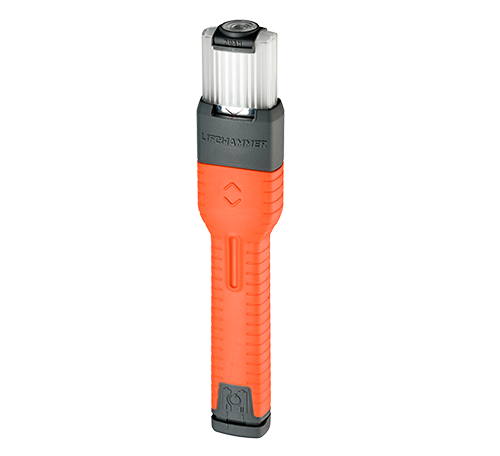
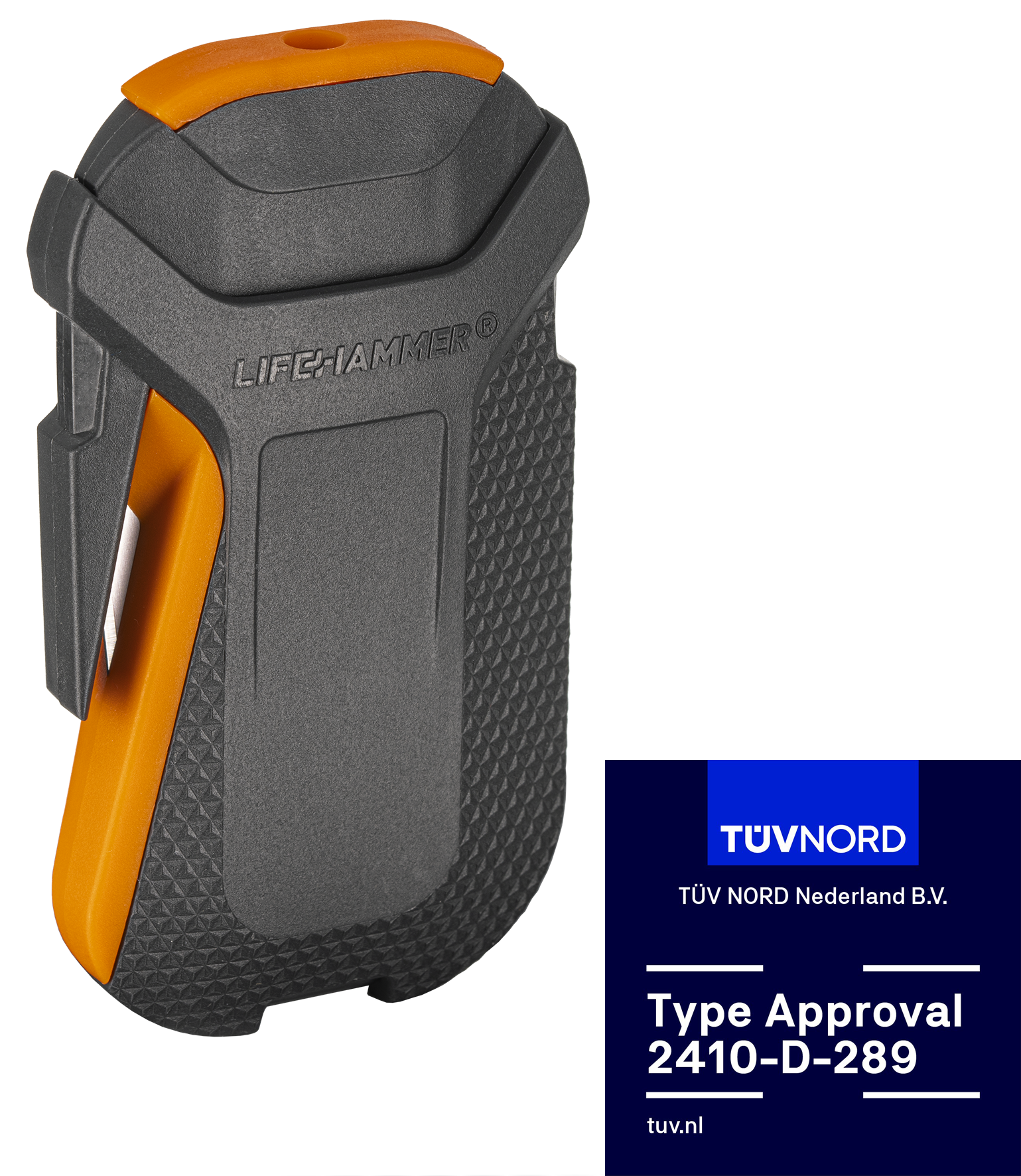
- Our safety hammer range includes four models. The Classic and Plus use a manual hardened carbon steel hammerhead; the Evolution and Smart use an automatic ceramic hammerhead. All four cut seatbelts and break tempered side windows, giving you the ability to act quickly in an emergency.
- All Lifehammer® safety hammers are TÜV certified and trusted by first responders and fleet operators across Europe, so you can rely on them to perform under real conditions.
- Keeping a safety hammer within reach means that if you ever need to break a tempered side window to reach a child or animal in distress, you have the right tool immediately available.
If you have questions about which product suits your vehicle or situation, our Q&A section covers the most common topics in clear, practical detail. You can also find Lifehammer® products on Amazon for straightforward ordering and delivery.