 English
 Nederlands
 Deutsch

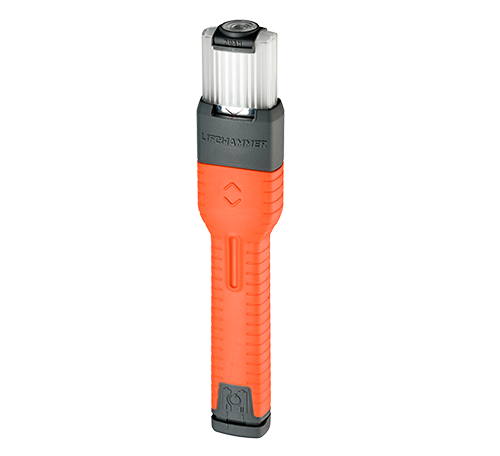
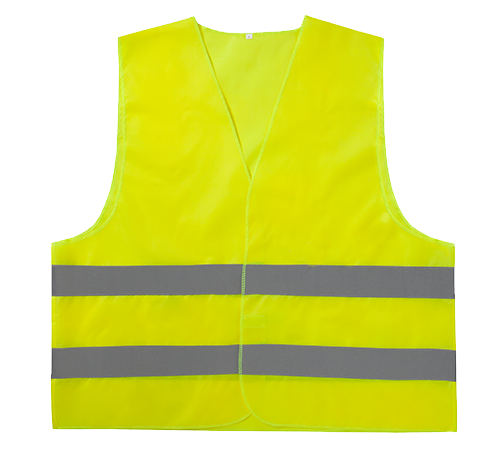
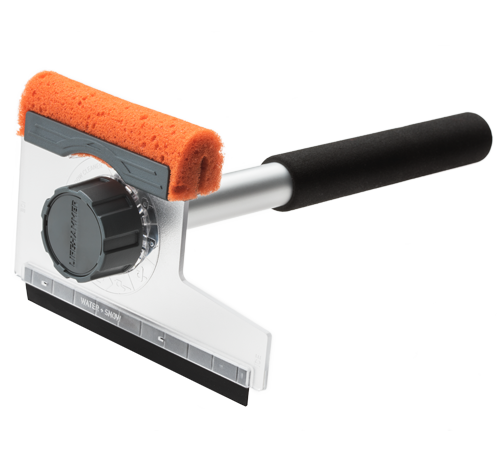
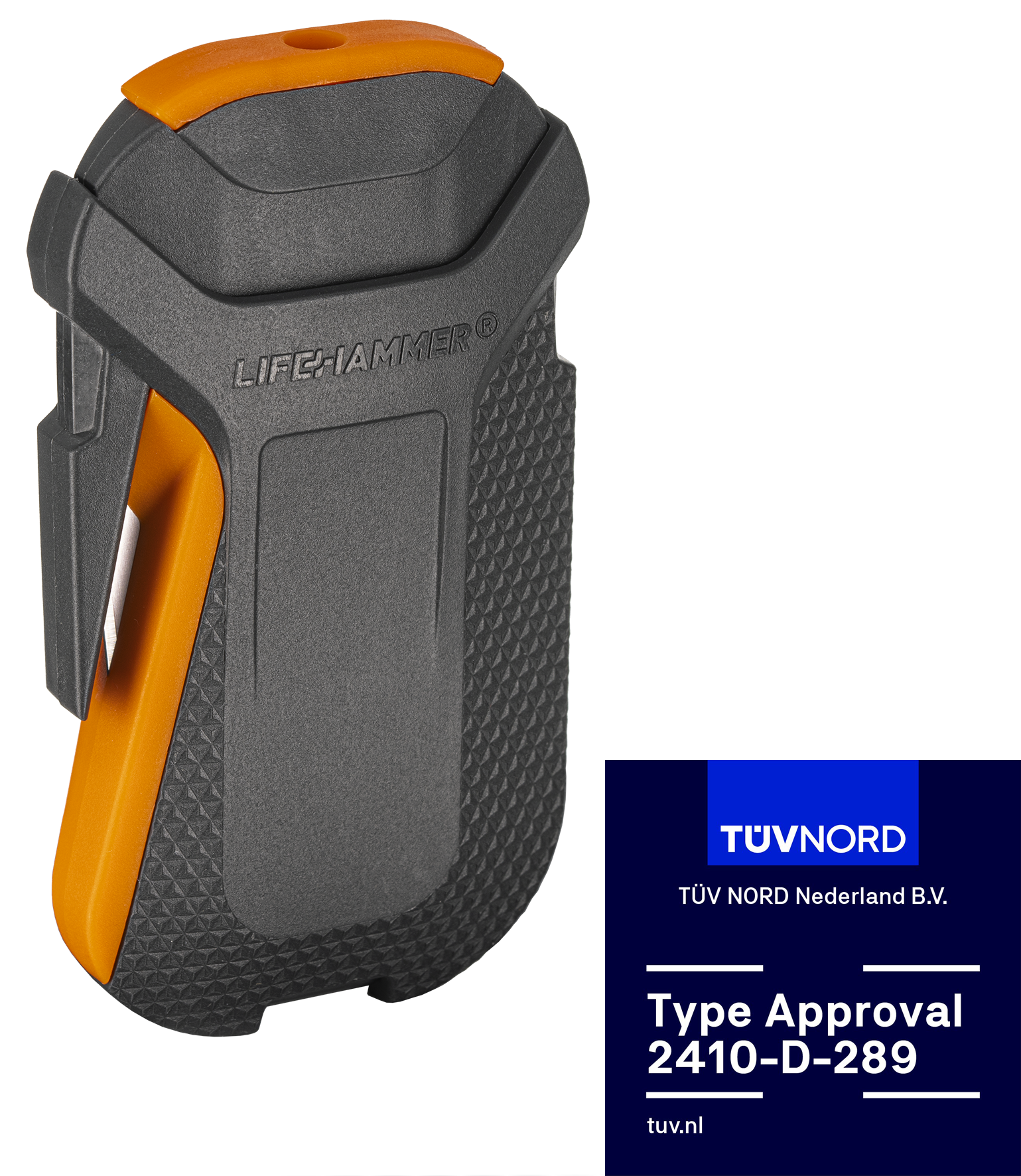


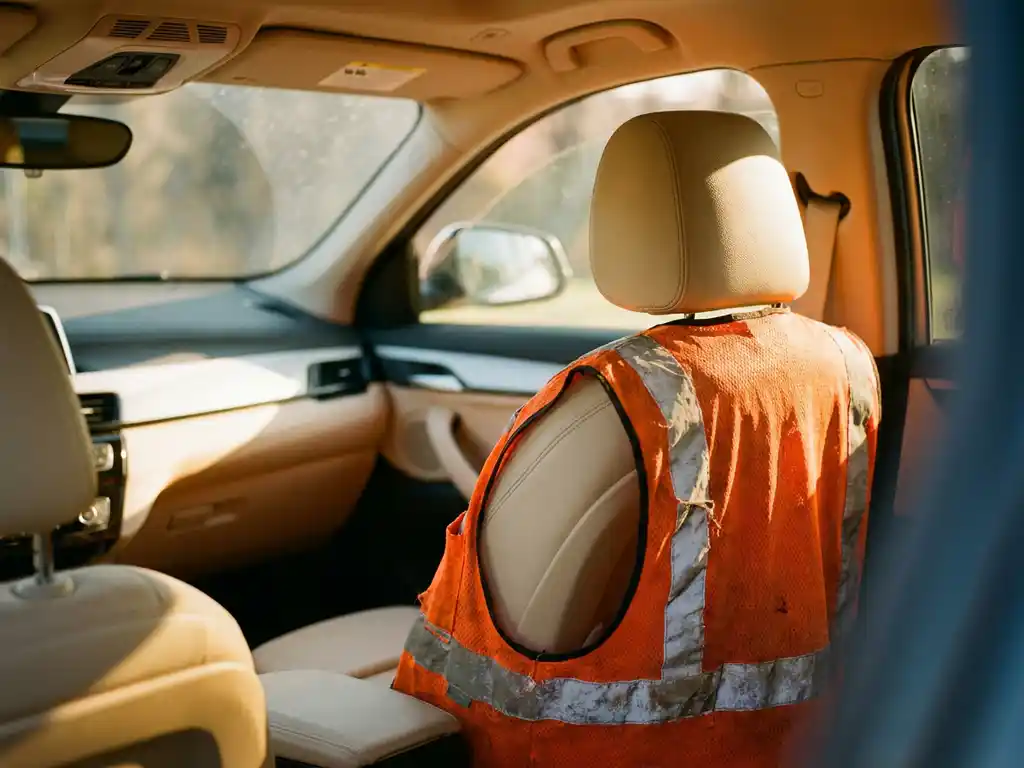
A high-visibility vest kept in your car should generally be replaced every four to five years, even if it still looks intact on the outside. UV radiation, heat, and moisture gradually degrade the reflective materials over time, reducing their effectiveness. This article explains how to recognize declining quality, what legal requirements apply, and what to look for when buying a new vest.
How long does a high-visibility vest last in a car?
Under normal conditions, a high-visibility vest lasts around four to five years. However, this estimate only holds if the vest is stored properly. Inside a vehicle, it is constantly exposed to temperature fluctuations, direct sunlight, and occasional moisture, all of which can noticeably shorten its lifespan.
The biggest issue is the deterioration of the retroreflective strips. These are made from specialized micro glass beads or prismatic elements that reflect light back toward its source. Over time, UV exposure and mechanical wear cause these structures to lose their effectiveness. A vest that no longer reflects adequately has outlived its purpose, even if the fabric itself still appears undamaged.
Anyone who uses their vest regularly — for example, during breakdowns or roadside work — should inspect it more frequently and plan to replace it sooner.
How can you tell when a high-visibility vest is no longer safe?
A high-visibility vest is no longer safe when its reflective strips are dull, cracked, or peeling, when the signal color has faded significantly, or when the seams or fasteners are damaged. Heavy soiling that cannot be washed out also seriously reduces visibility.
A simple practical test: hold the vest up to a flashlight in a dark room. If it barely reflects the light or not at all, it is no longer providing adequate protection. A good-quality vest should reflect light clearly and evenly.
Other warning signs include:
- Cracks or holes in the reflective material
- Yellowed or faded signal color (yellow or orange)
- Damaged hook-and-loop fasteners or torn seams
- A strong smell of mold or dampness
- Deformation or stiffening of the material
If you are unsure whether your vest still meets the required standards, it is safer to replace it. The cost of a new high-visibility vest is minimal compared to the risk of being insufficiently visible during a breakdown.
Is there an official expiration date for high-visibility vests?
There is no legally mandated expiration date for high-visibility vests in Germany. The EN ISO 20471 standard, under which vests are certified, sets minimum requirements for reflectivity and fluorescent color, but does not specify a fixed service life.
Some manufacturers print a production date or a recommended period of use on the label. While this is not legally binding, it serves as a useful reference point. If no such date is provided, the general guideline of four to five years is a reasonable starting point for your own assessment.
Important: what matters is not age alone, but the actual condition of the vest. A well-stored vest may remain usable for longer, while a poorly stored one may lose its protective properties within just two years.
What type of high-visibility vest is legally required in a car?
In Germany, since 2014, all vehicles are required to carry a Class 2 high-visibility vest in accordance with EN ISO 20471. This class requires at least 0.50 m² of fluorescent material and 0.13 m² of retroreflective strips. Motorcycles are exempt from this requirement, though carrying a vest is still recommended.
The vest must be stored inside the passenger compartment — within easy reach — not in the trunk. Anyone who exits a vehicle after a breakdown or accident is required to put on the vest before stepping onto the roadway.
Different rules may apply when traveling to other European countries. Some countries require a separate vest for every person in the vehicle. Anyone who travels abroad regularly should check the local regulations before setting off and carry additional vests if necessary.
When should a high-visibility vest be replaced after an accident?
A high-visibility vest should always be replaced after an accident if it has been visibly damaged, heavily soiled, or has absorbed blood, oil, or other substances that permanently impair its reflective properties. Even if the vest appears undamaged on the outside, an inspection is advisable.
In an accident, a vest is often put on and taken off under stress, which can cause tears in the reflective strips or damage to the fasteners. These kinds of damage are easy to overlook in a stressful situation and may only become apparent later.
As a general rule: any high-visibility vest that has been used during a breakdown or accident should be carefully inspected afterward. When in doubt, replacing it is the safer choice — a damaged vest may not provide adequate protection the next time it is needed.
What should you look for when buying a new high-visibility vest?
When buying a new high-visibility vest, look for EN ISO 20471 certification — Class 2 is the minimum requirement in Germany — as well as a compact design that can be stored within easy reach inside the passenger compartment. Inexpensive vests without proof of certification may fail to meet legal requirements.
Additional criteria to consider:
- Certification: The CE mark alone is not sufficient. Make sure the label specifically states EN ISO 20471 Class 2.
- Materials and construction: High-quality stitching, sturdy fasteners, and durable reflective strips extend the vest’s lifespan.
- Compact size: A vest that folds down small is easier to store in the passenger compartment and quicker to grab in an emergency.
- Fit: The vest should fit over clothing, including a winter jacket.
- Multiple vests: Anyone traveling with family or passengers, or who regularly drives abroad, should carry more than one vest.
Avoid products with no clear manufacturer information or no verifiable certification. In an emergency, being visible at the roadside is not a matter of price.
How Lifehammer® supports you with high-visibility vests for your car
Since 1983, we have been developing TÜV-certified safety products for vehicles that perform reliably when they are needed most. This includes our compact high-visibility vest, designed specifically for use in vehicles.
- Safety Vest Ultra: The Lifehammer® Safety Vest Ultra is exceptionally compact and can be stored discreetly under the floor mat. In an emergency, it is immediately ready to use and meets the legal requirements for Germany and many other European countries.
- Four safety hammers as a complement: Alongside the high-visibility vest, our range includes four hammer variants with a seatbelt cutter, capable of reliably breaking tempered glass (ESG) side windows. This ensures you are fully equipped in the event of a breakdown or emergency.
- Compact storage: All our products are designed to take up minimal space in the passenger compartment while remaining immediately accessible when it matters most.
For more information and answers to frequently asked questions about our products, visit our Questions and Answers section.