 English
 Nederlands
 Deutsch





Autumn roads look beautiful, but they hide some of the most unpredictable driving conditions of the year. Rain-soaked tarmac reduces grip, and a thin layer of fallen leaves can be just as slippery as ice. The good news is that skidding is rarely random. In most cases, it follows from something the driver did, or failed to do, before or during the journey. Follow these steps and you will significantly reduce your risk of losing control on wet autumn roads.
Check your tyres and brakes before autumn drives
Before you even start the engine, spend a few minutes on a basic check. Your tyres and brakes are the only things standing between your car and the road surface, and both perform noticeably worse when worn or underinflated on wet ground.
- Check tyre tread depth. The legal minimum in most European countries is 1.6 mm, but safety on wet roads improves considerably with 3 mm or more. Use a tread depth gauge or the coin test as a rough guide.
- Check tyre pressure. Underinflated tyres reduce contact quality with the road and make handling sluggish. Refer to your vehicle handbook for the correct pressure, it often differs between front and rear.
- Listen for any unusual sounds when you brake gently at low speed. Squealing, grinding, or a soft, spongy pedal feel can all indicate brake wear that needs attention before a longer drive.
- Look for leaf build-up in your wheel arches or around your brakes if you have been parked under trees. Compacted leaves can occasionally interfere with brake performance.
After completing these checks, you should feel confident that your vehicle is mechanically ready for wet conditions. If anything looks worn or behaves unexpectedly, have it inspected by a mechanic before driving in rain or on leaf-covered roads. No amount of careful driving compensates for compromised equipment.
Adjust your speed and following distance on wet roads
With your vehicle checked and road-ready, the next step is adjusting how you drive once conditions change. Wet tarmac and fallen leaves both reduce the friction your tyres rely on to grip the road. The faster you travel, the less time you have to react, and the longer your stopping distance becomes.
On a dry road, a typical stopping distance at 50 km/h is around 25 to 30 metres. On wet roads, that figure can increase by 50% or more. On roads covered with wet leaves, the surface can behave more like compacted mud than tarmac, and stopping distances become genuinely difficult to predict. Reduce your speed before you reach wet or leaf-covered sections, not during them, braking hard on a slippery surface is exactly what triggers a skid.
- Drop your speed by at least 20 to 30% compared to your usual pace in dry conditions, even if the speed limit remains the same.
- Double your following distance from the vehicle ahead. In rain, the two-second rule becomes a four-second rule at minimum.
- Approach bends, junctions, and downhill sections with extra caution. These are the points where grip is tested most, and where leaf accumulation tends to be heaviest.
You will know you have the right speed when braking and turning feel smooth and predictable. If the car feels light or vague when you steer, slow down further.
Steer and brake smoothly to stay in control
With your speed adjusted, the way you handle the controls becomes the most important factor in preventing a skid. Sudden inputs, sharp braking, aggressive acceleration, or abrupt steering, are the most common triggers on wet and leaf-covered roads. The goal is to keep all your movements gradual and deliberate.
- Brake early and progressively. Apply pressure to the brake pedal steadily rather than stamping on it. If your car has ABS (anti-lock braking system), maintain firm, continuous pressure and let the system do its work, do not pump the pedal.
- Steer gently into corners. Avoid turning the wheel sharply or making corrections mid-bend. Enter corners at a speed that allows you to maintain a smooth line throughout.
- Accelerate gradually when pulling away or exiting a bend. Pressing the accelerator too hard while turning is a common cause of rear-wheel skids, particularly in rear-wheel-drive vehicles.
- Keep both hands on the wheel and your eyes focused well ahead. Looking further down the road gives you more time to plan your inputs before you reach a hazard.
After a few minutes of driving this way, smooth control should feel natural rather than effortful. If you find yourself making frequent corrections or the car feels unsettled, it is a signal to slow down further and give yourself more space.
Recover from a skid safely and quickly
Even careful drivers can encounter a skid on particularly treacherous surfaces. Knowing how to respond in the first two or three seconds makes a significant difference to whether you regain control or lose it completely.
The instinctive reaction, stamping on the brakes and gripping the wheel tightly, is usually the wrong one. Locking the wheels removes your ability to steer, and overcorrecting the wheel can send the car into a spin in the opposite direction.
- Ease off the accelerator immediately. Do not brake sharply.
- Look and steer in the direction you want the car to go, not where it is currently heading. This is the most important action in a front-wheel skid.
- In a rear-wheel skid (where the back of the car slides out), steer gently in the same direction the rear is sliding to bring the car back into line. This is sometimes called “steering into the skid.”
- Once the tyres regain grip, straighten the wheel smoothly. Overcorrecting at this point can trigger a second skid in the opposite direction.
- If you have ABS and need to brake during a skid, apply firm, steady pressure and maintain it, the system will modulate braking automatically.
After recovering from a skid, find a safe place to stop briefly if you can. Check that you are calm, that the vehicle feels normal, and that nothing around you was affected. Then continue at a reduced speed and with increased caution.
What to keep in your car for wet-weather emergencies
Preparation does not stop at the driver’s seat. Having the right items in your car means that if something does go wrong, a breakdown, a minor collision, or an unexpected stop on a dark, wet road, you are ready to respond safely and be seen by other drivers.
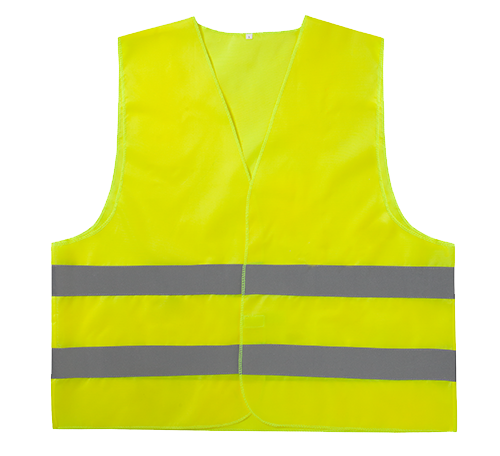
- A high-visibility safety vest — if you need to exit the vehicle on a wet, low-visibility road, a reflective vest makes you visible to approaching traffic. Keep it within easy reach, not buried in the boot.
- A warning triangle or road flares — place these behind your vehicle to alert other drivers if you are stopped in a hazardous position.
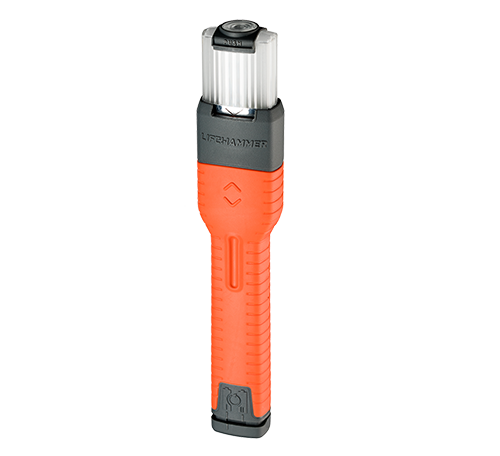
- A torch — useful for inspecting tyres, checking under the bonnet, or signalling in poor visibility.
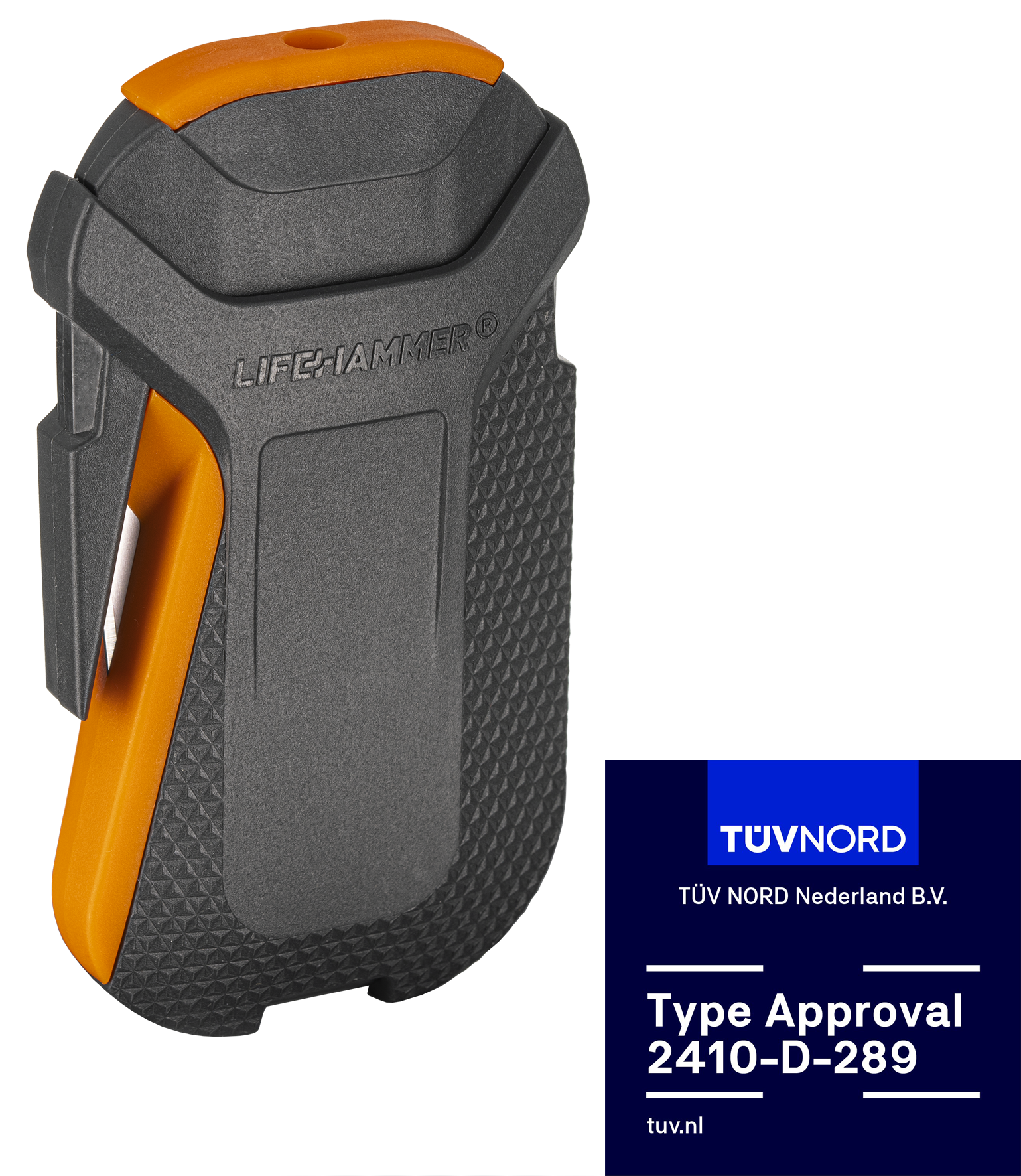
- A car escape tool — in the event of a serious incident on a wet road, being able to cut a jammed seatbelt or break a tempered side window can matter. Keep this mounted within reach of the driver’s seat.
- A phone charger or power bank — wet weather often means longer journeys and reduced visibility, and a dead phone removes your ability to call for help.
Think of this kit not as emergency equipment but as the same kind of quiet preparation you bring to any well-organised journey. You pack a spare tyre not because you expect a puncture, but because you prefer to be the driver who is ready for one.
How Lifehammer® supports you in wet-weather driving safety
At Lifehammer® we have been developing vehicle safety tools since 1983, and autumn driving conditions are exactly the kind of situation our products are designed for. Whether you are building out a practical car kit before the season changes or looking for one reliable tool to keep within reach, we focus on products that are compact, dependable, and genuinely useful when it counts.
- Our Safety Hammer SMART uses a ceramic pin as its striking mechanism to break tempered side windows and includes a seatbelt cutter. It can be secured in position using 3M VHB double-sided adhesive tape, keeping it accessible from the driver’s seat without any tools needed for mounting. Note: avoid placing it near airbag deployment zones.
- The Safety Hammer Evolution uses a ceramic hammerhead and is assembled using the hex key provided. All four models in our safety hammer range are TÜV-certified and trusted by first responders and fleet operators across Europe.
- Our Safety Vest Ultra comes in an ultra-flat vacuum pack that stores discreetly under any floor mat and decompresses immediately on opening. It is one-size-fits-all and suitable for drivers and passengers alike — practical for exactly the kind of roadside situation wet-weather driving can create.
If you have questions about which products suit your vehicle or your regular driving conditions, our Q&A section covers the most common topics in straightforward detail. You can also find our products on Amazon if you prefer to order there. A little preparation before the season changes goes a long way.