 English
 Nederlands
 Deutsch



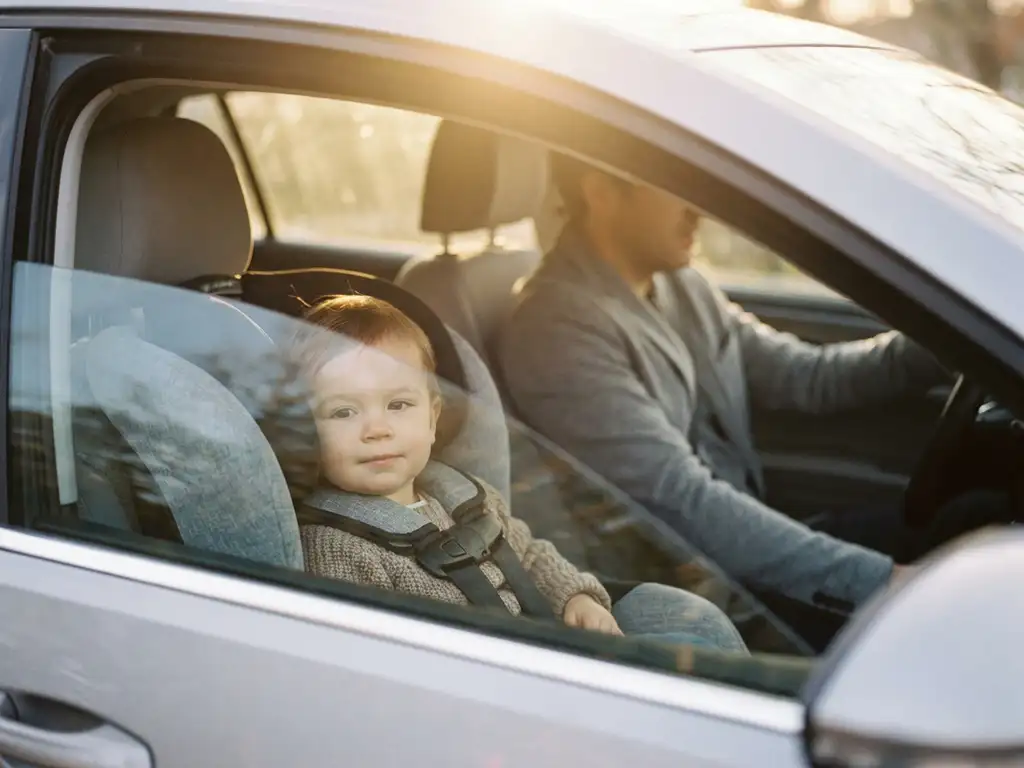
In most countries, children can sit in the front seat from around the age of 12, though the exact rules vary by country and depend more on height and weight than age alone. The general guidance across Europe is that children should use the back seat until they are at least 135 cm tall or have outgrown all available child restraint systems. The sections below cover the legal requirements, safety considerations, and practical questions parents most commonly ask.
At what age can a child legally sit in the front seat?
There is no single universal age at which a child can legally sit in the front seat, because the law differs between countries. In most European countries, the threshold is tied to height rather than age: children under 135 cm must use an appropriate child restraint system, regardless of where they sit in the car. In practice, this means many children can sit in the front seat at around 12 years old, but some will be ready earlier or later depending on their size.
In the UK, children must use a child car seat until they are 12 years old or 135 cm tall, whichever comes first. In Germany, children under 150 cm must use a suitable restraint system. France requires children under 10 to sit in the back unless all rear seats are already occupied. The Netherlands follows EU regulation, requiring child restraints based on height and weight categories rather than a fixed age.
Because front passenger seat child rules are set at the national level, it is worth checking the specific legislation for any country you plan to drive through, particularly if you are travelling across borders.
What are the height and weight requirements for the front seat?
The height and weight requirements for sitting in the front seat without a child restraint system are generally 135 to 150 cm in height, depending on the country. Weight-based classifications have largely been replaced by height-based ones across Europe following updates to ECE R129 (also known as the i-Size regulation), which categorises child seats by height rather than weight group.
Under i-Size rules, children up to 100 cm must be in a rearward-facing seat. From 100 cm to around 135 cm, a forward-facing seat with a harness or a high-back booster is required. Once a child reaches 135 to 150 cm, they can typically use the adult seatbelt alone, provided it fits correctly across the shoulder and lap rather than the neck and stomach.
The fit of the adult seatbelt is a practical test that matters as much as any measurement. If the shoulder belt cuts across a child’s neck rather than their chest, they are not yet ready to use the front seat safely without a booster seat.
Is the front seat actually more dangerous for children?
Yes, the front seat is generally considered more dangerous for children than the rear seat, and this is backed by decades of road safety research. The primary risk comes from airbags. Front passenger airbags are designed for adult bodies and deploy with significant force. For a smaller child, particularly one in a rearward-facing seat, an airbag can cause serious injury even in a relatively minor collision.
Beyond airbags, children in the rear seat benefit from additional distance between them and the point of impact in a frontal collision, which remains the most common and most serious type of crash. The rear seat also provides better structural protection in side impacts when children are properly restrained.
If a child must sit in the front seat and is in a rearward-facing restraint, the passenger airbag must be deactivated. This is a legal requirement in most European countries, not just a precaution. Many modern cars include an airbag deactivation switch for exactly this reason, but it is the driver’s responsibility to use it correctly.
What’s the difference between front seat rules for cars, buses, and taxis?
The rules for child front seat age and restraint requirements differ depending on the type of vehicle. In private cars, the driver is responsible for ensuring all children are correctly restrained at all times. In buses and coaches, the rules are more complex and vary by vehicle type, route length, and whether seatbelts are fitted.
In most EU countries, children travelling by bus on scheduled services are not required to use child restraint systems, partly because the logistics of providing correctly sized seats for unknown passengers are impractical. However, if seatbelts are fitted, they must be worn. On coaches used for school trips or private hire, the rules are stricter and child restraints may be required.
Taxis and ride-hailing vehicles occupy a middle ground. In the UK, for example, children are exempt from the child car seat requirement in licensed taxis if no appropriate seat is available, though they must wear an adult seatbelt if one is fitted. In other European countries, the rules differ. As a parent, the safest approach when using a taxi regularly is to carry a portable booster seat, particularly for younger children who do not yet meet the height threshold for adult seatbelts.
Should a child ever sit in the front seat before the recommended age?
In most situations, no. The rear seat remains the safer position for children who have not yet reached the recommended height or age threshold, and there is rarely a good reason to place them in the front. However, there are specific circumstances where it may be necessary, such as when a child has a medical condition requiring close monitoring, or when a vehicle has no rear seats.
If a child must sit in the front seat before meeting the standard guidelines, the following steps reduce the risk significantly:
- Move the front passenger seat as far back as possible to increase the distance from the dashboard and airbag.
- Deactivate the front passenger airbag, especially if the child is in a rearward-facing seat. Check your vehicle manual for how to do this correctly.
- Ensure the child is in an appropriate restraint system for their height and weight.
- Never place a rearward-facing child seat in front of an active airbag under any circumstances.
These are not alternatives to following the age and height guidelines. They are precautions for situations where those guidelines cannot be followed. Whenever the option exists, the rear seat is the right choice for younger children.
What else should parents keep in their car for child safety?
Child car safety extends beyond seating position and restraints. Parents who drive regularly with children benefit from keeping a small set of practical items in the car that cover both everyday needs and unexpected situations.
Some useful items to consider:
- A window sun shade: Reduces heat build-up and glare for rear passengers, particularly on long journeys.
- A first aid kit: A compact kit stored in the boot covers minor injuries from everyday life as well as roadside situations.
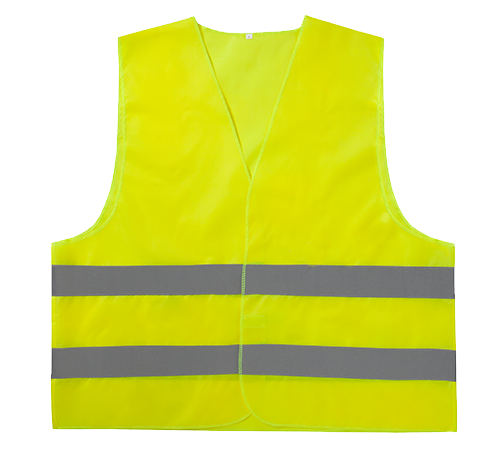
- A high-visibility vest: Required by law in several European countries when exiting a broken-down vehicle. Keeping one in the cabin rather than the boot means it is accessible when you actually need it.
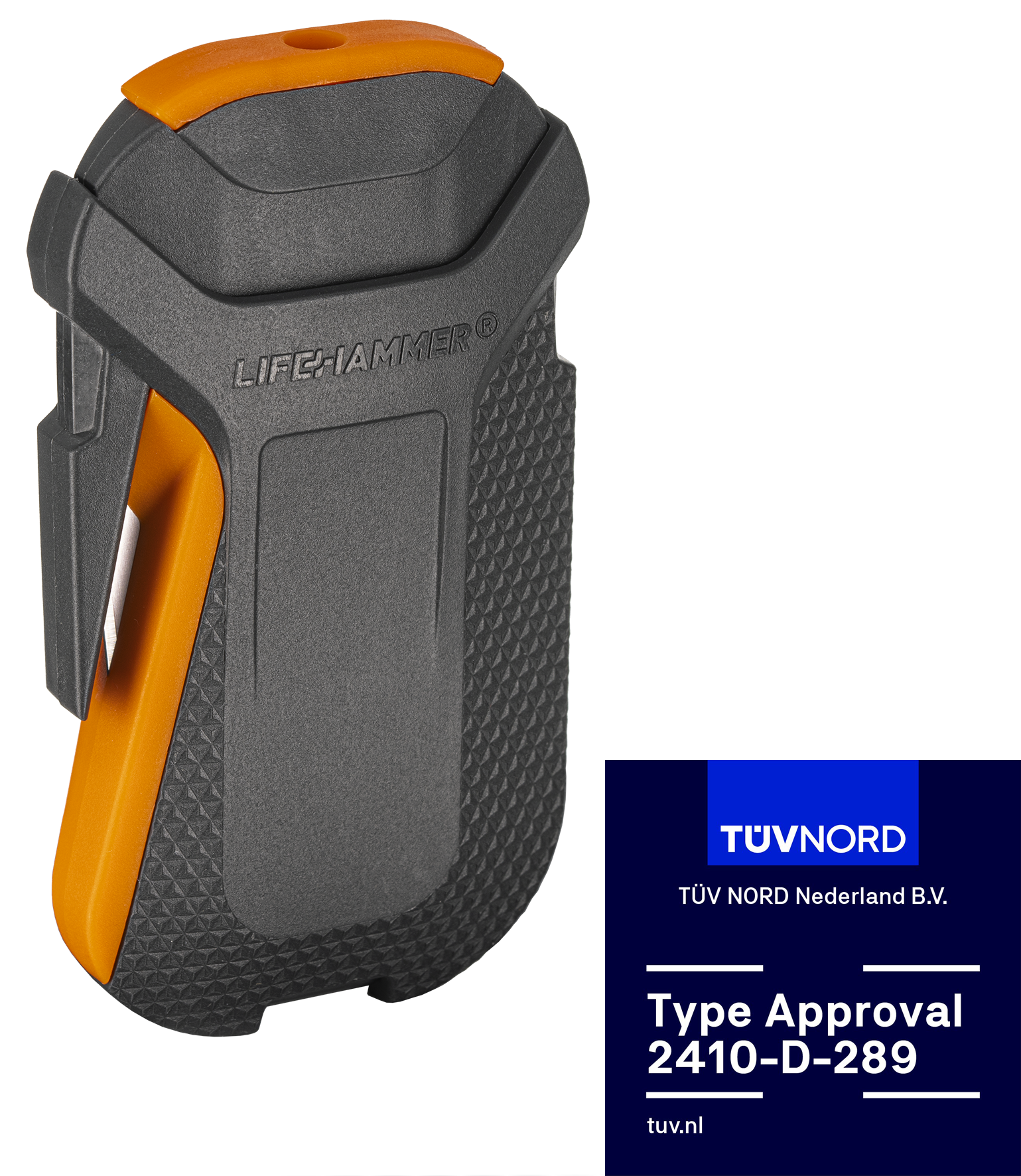
- A car escape tool: A seatbelt cutter and window-breaking tool stored within reach of the driver ensures that in the event of an accident, you can exit the vehicle quickly and help passengers do the same, including children who cannot operate these tools themselves.
- A portable booster seat: Useful for taxis, rental cars, and visits to family who do not have a child seat available.
The items that matter most are the ones you can actually reach when you need them. A vest in the boot or a tool buried under luggage provides much less practical value than one stored in the door pocket or centre console.
How Lifehammer® supports you with child car safety
At Lifehammer® we have been developing vehicle safety tools since 1983, and keeping families safe in the car is exactly the kind of situation our products are designed for. Whether you are setting up a new family car or reviewing what you already carry, we focus on tools that are reliable, compact, and genuinely useful when it counts.
- Our Safety Hammer SMART uses an automatic ceramic pin to break tempered side windows and includes an integrated seatbelt cutter. It attaches easily using 3M VHB double-sided adhesive tape and can be positioned within reach of the driver, away from airbag areas. This makes it accessible in an emergency, even when a child passenger cannot help themselves.
- The Safety Hammer Evolution offers the same window-breaking and seatbelt-cutting capability with a ceramic hammerhead and a secure mounting system, assembled using the hex key provided.
- All Lifehammer® safety hammers are TÜV certified and trusted by first responders and fleet operators across Europe. They are designed for ease of use under stress, including by adults acting quickly on behalf of children.
- Our Safety Vest Ultra comes in an ultra-flat vacuum pack that stores discreetly under any floor mat and decompresses immediately on opening. It is one-size-fits-all and suitable for drivers and passengers alike.
If you have questions about which products are right for your car or your family, our Q&A section covers the most common topics in straightforward detail.