 English
 Nederlands
 Deutsch




The most common car safety mistakes parents make include incorrect car seat installation, moving children to the next seat stage too early, and driving while distracted. These errors are surprisingly widespread, not because parents are careless, but because car safety guidance is often misunderstood or outdated. This article walks through the questions parents ask most often, with straightforward answers to help you feel genuinely prepared.
Why do children face higher risks in car accidents than adults?
Children face higher risks in car accidents because their bodies are still developing. Their skeletal structure, muscle tone, and proportions are fundamentally different from adults, which means standard vehicle safety systems, including seatbelts and airbags, are not designed with children in mind. Without the right restraint system for their size and age, children are significantly more vulnerable to serious injury, even in moderate collisions.
A child’s head is proportionally much larger and heavier relative to their body than an adult’s. In a frontal collision, this creates a very different force distribution through the neck and spine. Adult seatbelts are designed to restrain a body of adult proportions, which is why children need purpose-built restraints at every stage of their development.
Beyond anatomy, children are also less able to communicate discomfort or signal when a restraint is not sitting correctly. They may fidget with straps, loosen buckles, or slip out of position without a parent noticing, particularly on longer journeys. This makes regular checks during a drive just as important as the initial setup before departure.
What are the most common car seat installation errors parents make?
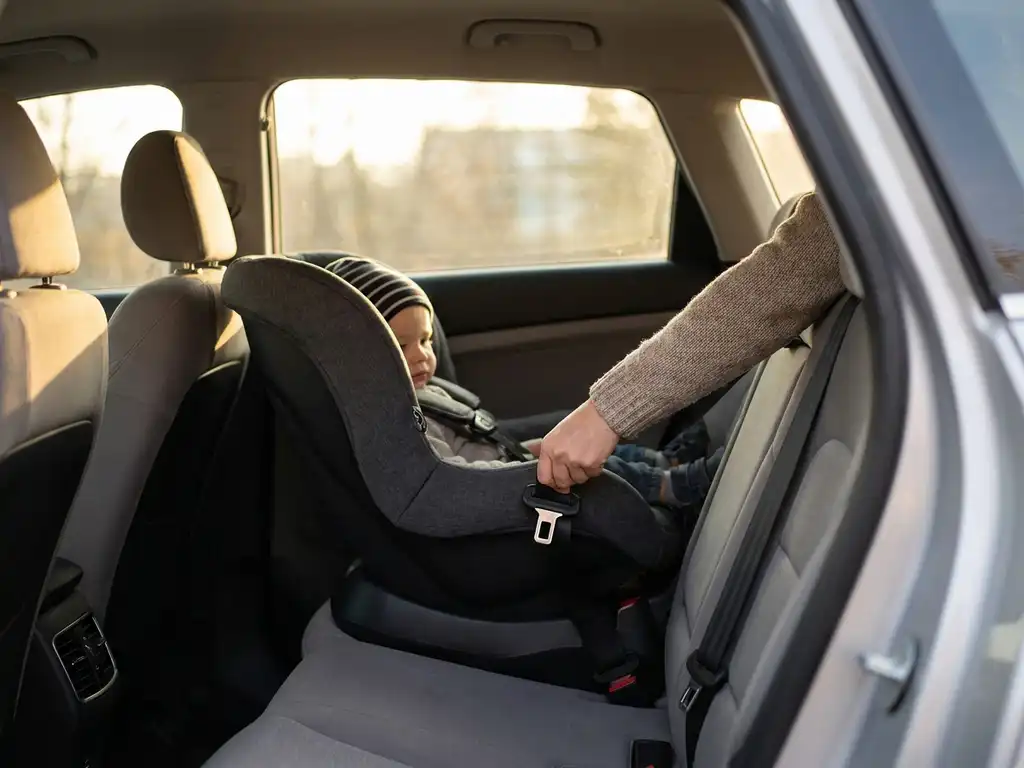
The most common car seat installation errors include fitting the seat too loosely, threading the harness incorrectly, and not following the specific instructions for that seat and vehicle combination. Research consistently shows that a large proportion of child car seats on the road are installed with at least one significant error, making this one of the most important areas of child car safety to get right.
Here are the errors parents most frequently make:
- The seat moves too much. When installed, a car seat should not shift more than about 2.5 centimetres in any direction at the belt path. If you can rock it significantly, it is not secure enough.
- Harness straps are too loose. You should not be able to pinch excess webbing at the shoulder. The harness should lie flat and firm against the child’s chest.
- Chest clip positioned incorrectly. On seats with a chest clip, it should sit at armpit level, not at the stomach, where it could cause internal injury in a crash.
- Rear-facing seat reclined at the wrong angle. Infant seats need to be reclined at the correct angle to keep a baby’s airway open and to manage crash forces properly. Most seats have an angle indicator built in.
- Using the wrong installation method. Many seats can be installed with either the vehicle seatbelt or an ISOFIX anchor system, but not both simultaneously. Mixing methods can compromise safety.
If you are unsure about your installation, many fire stations, hospitals, and road safety organisations offer free car seat checks. It is worth taking advantage of these services, especially when fitting a new seat for the first time.
When should children move from a booster seat to a regular seatbelt?
Children should move from a booster seat to a regular seatbelt when the seatbelt fits their body correctly without any additional support, which typically happens when a child is around 135 to 150 centimetres tall. Age alone is not a reliable guide. The fit of the belt across the body is the deciding factor, not how old the child is.
A properly fitting seatbelt should meet three conditions. The lap belt should lie flat across the upper thighs, not across the stomach. The shoulder belt should cross the chest and collarbone, not cut across the neck or face. And the child should be able to sit with their back flat against the seat for the full duration of a journey without slumping forward.
If a child still needs to lean away from the shoulder belt, or if the lap belt rides up onto the abdomen, they are not yet ready to use a standard seatbelt safely. Continuing in a booster seat until the fit is correct is the right call, regardless of what other children their age are doing.
Parents often move children out of booster seats too early because the child asks to, or because it seems like the next natural step. The physical fit test removes the guesswork and gives you a clear, objective answer.
How does distracted driving specifically affect children in the car?
Distracted driving is more dangerous when children are in the car because children are one of the most common sources of distraction themselves, and because parents often feel compelled to respond to them while driving. Studies in driver behaviour have found that attending to a child in the back seat can take a driver’s eyes off the road for several seconds at a time, which at motorway speeds covers a significant distance with no visual input.
The types of distraction children create are varied and often unpredictable. A dropped toy, a sibling argument, a child feeling unwell, or simply being asked a question can all draw a parent’s attention away from the road. Unlike a phone, which a driver can consciously choose to ignore, a child’s needs feel urgent and instinctive to respond to.
A few practical habits make a real difference here:
- Pull over safely if a child needs immediate attention rather than trying to manage it while moving.
- Set up the back seat before you leave, with everything a child might need within their reach, to reduce mid-journey requests.
- On longer journeys, plan regular stops so that children have time to move and reset, which reduces restlessness and the demands it creates.
- Establish a simple rule with older children that you do not answer questions or respond to requests until the car is stopped or at a red light.
What safety items should parents keep in the car for emergencies?
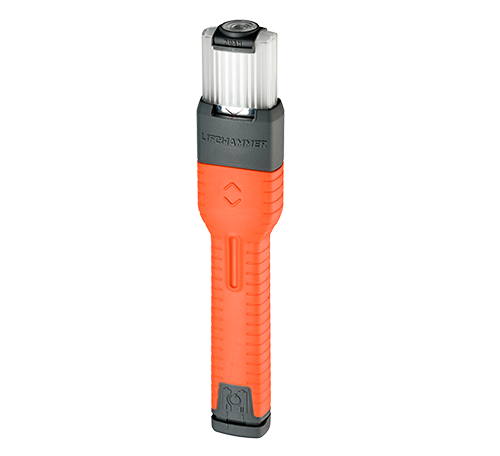
Parents should keep a small set of well-chosen safety items in the car at all times, including a first aid kit, a warning triangle or road flares, a high-visibility vest, a torch, and a car escape tool. These items cover the most realistic roadside emergencies and take up minimal space. The goal is not to prepare for every possible scenario, but to have the basics covered reliably.
For families with children, a few additions are worth considering beyond the standard list:
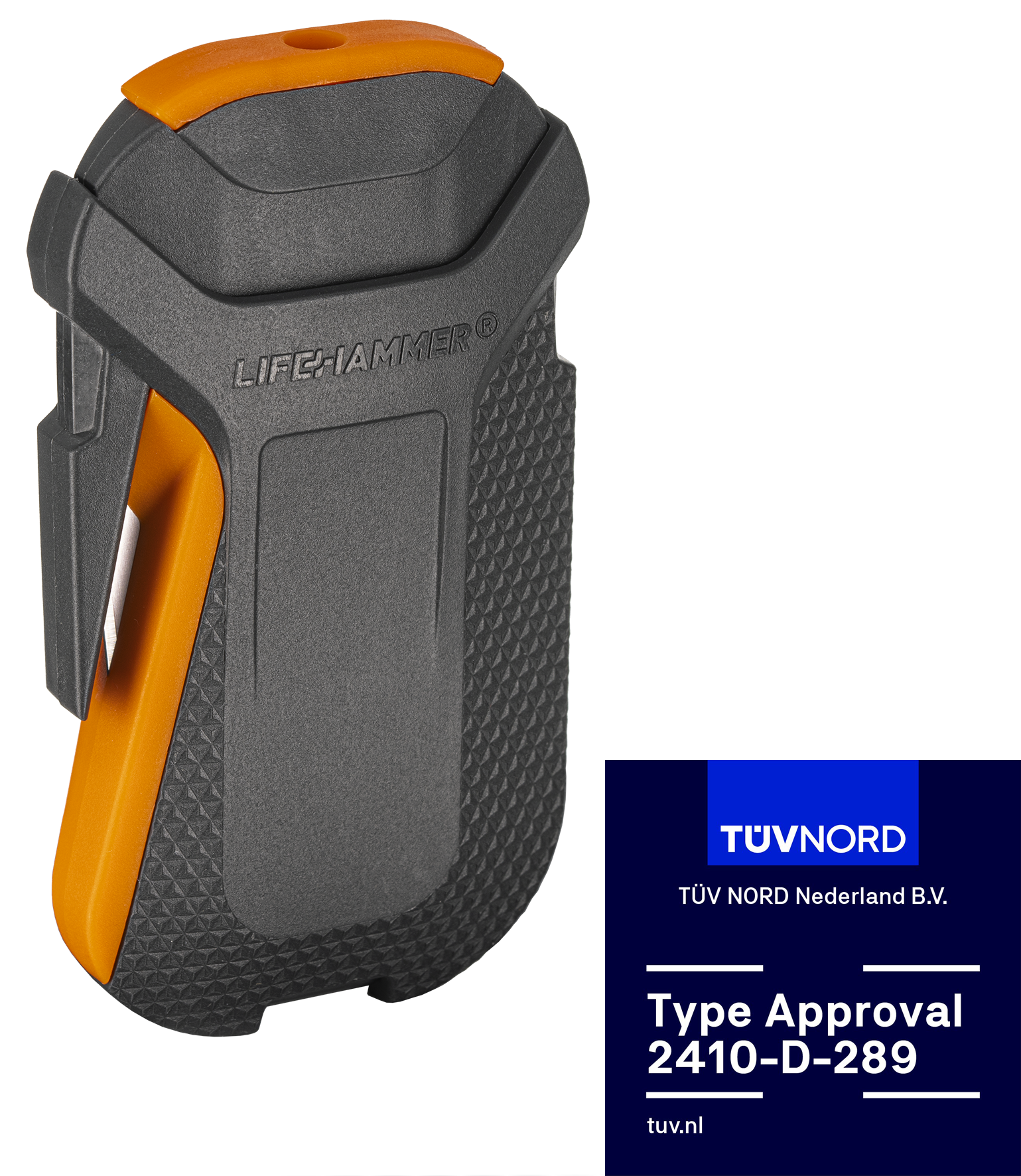
- A car escape tool. In the event of an accident where a door cannot be opened or a seatbelt jams, a safety hammer with an integrated seatbelt cutter allows you or a bystander to act quickly. Keep it within reach of the driver, not buried in the boot.
- A first aid kit suited to children. Standard kits often lack child-appropriate items. Check that yours includes suitable plasters, a fever thermometer, and any medication your child may need.
- Bottled water and a snack. In the event of a breakdown in warm weather, these matter more than most people expect, particularly with young children.
- A phone charger or power bank. A flat phone in a breakdown situation removes your ability to call for help.
- A blanket. Useful in cold weather breakdowns and can also provide comfort to a distressed child.
The most important thing is that these items are actually accessible. A first aid kit in a sealed bag at the bottom of a packed boot is not useful in an emergency. Keep safety items in a consistent, reachable location.
Should children sit in the front seat of a car?
Children should not sit in the front seat of a car until they are at least 12 years old or 135 centimetres tall, and even then it is safer to keep them in the rear. The back seat is consistently the safer position for children in a collision. Front passenger airbags are designed for adult bodies and can cause serious injury to a child, particularly a rear-facing infant seat placed in front of an active airbag.
If a rear-facing child seat must be placed in the front passenger seat, the passenger airbag must be deactivated. This is a legal requirement in many European countries and a firm safety rule regardless of local law. Never place a rear-facing seat in front of an active airbag under any circumstances.
For older children who do ride in the front, the same seatbelt fit rules apply. The belt must sit correctly across the chest and thighs, the seat must be moved back as far as practical from the dashboard, and the seat should be in an upright position. Even with these adjustments, the rear seat remains the better option when space allows.
How Lifehammer® supports you with child car safety
At Lifehammer® we have been developing vehicle safety tools since 1983, and family preparedness is exactly the kind of situation our products are designed for. Whether you are setting up a new family car, refreshing your emergency kit, or thinking through what you would actually do if something went wrong, we focus on tools that are reliable, compact, and genuinely useful when it counts.
- Our Safety Hammer SMART uses an automatic ceramic pin as its striking mechanism to break tempered side windows, and includes an integrated seatbelt cutter. It attaches easily using 3M VHB double-sided adhesive tape, keeping it within reach of the driver without requiring tools. Note: avoid placement near airbag areas.
- Our Safety Hammer Evolution features a ceramic hammerhead and seatbelt cutter, assembled with the included hex key. It is designed to be operated quickly under stress, including by someone who has never used it before.
- All Lifehammer® safety hammers are TÜV certified and trusted by first responders, fleet operators, and emergency services across Europe. These are not novelty items. They are tools that professionals rely on.
- Our Safety Vest Ultra stores flat under a floor mat and deploys immediately when needed, keeping you visible at the roadside while you manage the situation.
If you have questions about which products are right for your car or your family, our Q&A section covers the most common topics in straightforward detail.