 English
 Nederlands
 Deutsch



Looking at the content, I need to find any links matching the old URLs specified:
– `https://www.amazon.com/s?srs=20176372031&rh=p_89Lifehammer`
– `https://www.amazon.com/s?srs=20176372031&rh=p_89%3ALifehammer`
After reviewing the content, neither of these URLs appears in the content. The existing links in the content are:
1. `https://dutchpat.nl/life-in-nl/transport-mobility/driving-in-netherlands-expat-guide/`
2. `https://travelinformation.eu/netherlands-checklist-car/`
3. `https://www.travelinformation.eu/netherlands/driving-rules/`
4. `https://www.lifehammerproducts.com/en/product/safety-hammer-evolution/`
5. `https://www.lifehammerproducts.com/en/product/safety-vest-ultra/`
6. `https://www.lifehammerproducts.com/en/qa/`
Since the URLs to be replaced do not exist in the content, no changes are made per the guidelines.
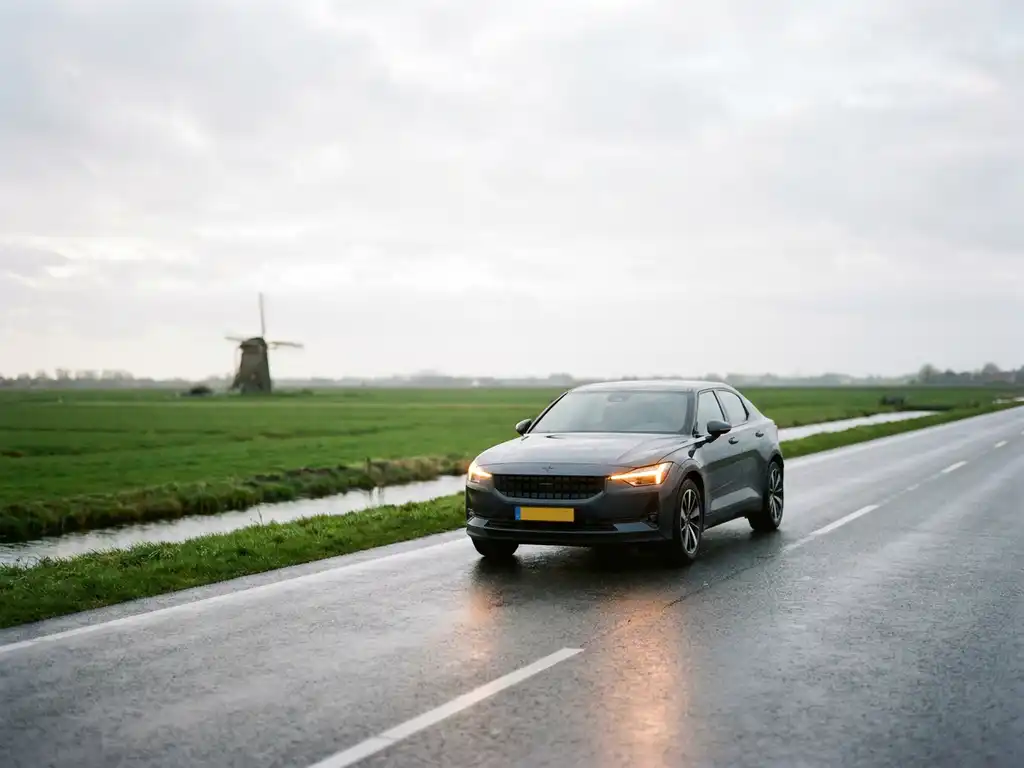
The Netherlands is one of Europe’s most rewarding countries to drive through. The roads are well maintained, the signage is clear, and the scenery shifts quickly from city skylines to open polders and coastal dunes. But Dutch traffic rules have their own logic, and a handful of them are genuinely different from what drivers from the UK, Germany, France, or further afield are used to. Getting those details right before you set off makes the whole trip more relaxed and keeps you on the right side of a fine enforcement system that can follow you home.
This guide walks through everything you need to know before driving in the Netherlands in 2026: the legal documents you must carry, how Dutch road rules differ from neighbouring countries, what to keep in your car, what to expect on different road types, and the mistakes that catch foreign drivers out most often.
What are the legal requirements for driving in the Netherlands?
To drive legally in the Netherlands, you need a valid driving licence, proof of third-party liability insurance (known locally as a WA-verzekering), a vehicle registration card (kentekencard), and a certificate of ownership (tenaamstellingsbewijs). These four documents form the baseline for any driver on Dutch roads.
If you hold an EU or EEA licence, you can drive in the Netherlands without any additional paperwork, right up to the licence’s expiry date. Non-EU licence holders can drive on their foreign licence for up to 185 days after registering with a Dutch municipality. If your licence does not include vehicle category codes or is not written in a Roman-alphabet language recognised in the Netherlands, an International Driving Permit is strongly recommended as a translation document. Tourists who have not registered with a Dutch municipality can drive on their foreign licence for the full duration of their authorised stay.
Beyond documentation, a few core rules apply to all drivers. Seatbelts are mandatory for every occupant. Children under 18 who are shorter than 135 cm must use an approved child restraint. The blood alcohol limit for experienced drivers is 0.05%, and for those who have held a licence for fewer than five years, or who are under 24, it drops to 0.02%. Using a handheld mobile phone at the wheel carries a substantial fine, and Dutch traffic fines are among the highest in the EU. Hands-free use is permitted.
How Dutch traffic laws differ from other European countries
Dutch traffic law has several features that are either unique in Europe or applied more strictly here than elsewhere. Understanding them before you arrive is more useful than discovering them roadside.
Speed limits and motorway rules
The most immediately practical difference is the motorway speed limit. During daytime hours, between 06:00 and 19:00, the limit on most Dutch motorways is 100 km/h. Between 19:00 and 06:00, selected stretches rise to 130 km/h. This day/night split was introduced to reduce nitrogen emissions and is unique in Europe. As of April 2025, three specific motorway sections now run at 130 km/h around the clock, but these are exceptions rather than the rule. On other road types, standard limits are 50 km/h in built-up areas (often 30 km/h in city centres), 80 km/h on rural roads, and 100 km/h on expressways.
Cyclist and pedestrian priority
The Netherlands applies strict liability principles that automatically favour vulnerable road users. In practical terms, this means that when a car is involved in an incident with a cyclist or pedestrian, the driver is presumed responsible unless they can demonstrate force majeure or deliberate wrongdoing by the other party. Many European countries use comparative fault systems instead. On the road, cyclists going straight at a junction have priority over cars making a turn, even when the car has a green light. At urban roundabouts, cyclists on the outer ring path generally have priority over entering vehicles, marked by distinctive “shark teeth” road markings.
Right before left at unmarked intersections
At any intersection without road markings or traffic signals, traffic approaching from the right has priority. This rule applies to all road users, including cyclists. In residential areas, the majority of intersections are unmarked, so this rule is in constant effect. It is one of the most common sources of confusion for drivers from countries where priority roads are more clearly signed.
Tolls and vignettes
Unlike Austria, Switzerland, or Slovenia, the Netherlands does not require a motorway vignette for passenger cars. The only car-specific toll as of 2026 is the A24 Blankenburg connection near Rotterdam, which costs around €1.51 per trip and must be paid online within three days of travel. The Westerscheldetunnel became free for passenger cars at the end of 2024. If you are crossing into the Netherlands from a country where vignettes are standard, you do not need to purchase anything at the border.
Recommended items to keep in your car in the Netherlands
The Netherlands takes a less prescriptive approach to in-car safety equipment than many of its neighbours. Unlike France, where a breathalyser and high-visibility vest are both legally required, or Germany, where a first aid kit and warning triangle are compulsory, Dutch law does not mandate that private passenger vehicles carry any specific safety equipment beyond the standard documentation.
That said, there is a clear list of items that are strongly recommended and, in some circumstances, become practically necessary:
- Warning triangle: Not required to carry, but its use becomes obligatory if your vehicle is stationary on the road, blocking traffic, and your hazard lights are not functioning. Place it approximately 30 metres behind the vehicle.
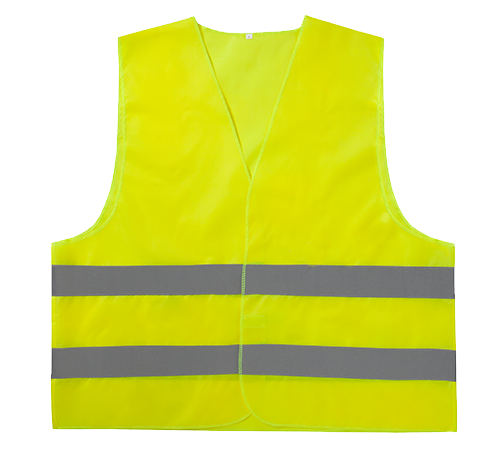
- Reflective vest: Strongly recommended, particularly if you need to exit the vehicle on a motorway or in low-visibility conditions.
- First aid kit: Not legally required, but a sensible addition to any car, especially for longer journeys.
- Spare bulbs and fuses: Police may stop drivers for faulty headlights. Carrying spares allows you to replace them on the spot and potentially avoid a fine.
- Fire extinguisher: Not required, but commonly included in well-prepared car kits.
- Spare tyre and basic tools: Recommended for rural or motorway driving where assistance may take time to arrive.
Drivers from the UK should note two additional requirements. UK-registered vehicles need headlamp beam deflectors to adjust for right-hand driving on continental roads. If the number plate does not include a UK or EU identifier, a UK sticker must be displayed on the rear of the vehicle. If you wear glasses or contact lenses and your licence specifies this as a condition, carrying a spare pair is a sensible precaution, though not a legal requirement in the Netherlands.
The emergency number throughout the Netherlands is 112, connecting to police, fire, and ambulance services. For non-urgent police matters, the number is 0900-8844.
Driving through Dutch cities, motorways, and rural roads
The Netherlands has one of the densest road networks in Europe, and the experience of driving varies considerably depending on whether you are navigating a city centre, a motorway, or a rural provincial road.
Cities
Dutch city centres, particularly Amsterdam, The Hague, and Utrecht, are genuinely challenging to drive in. Streets are narrow, tram lines run through traffic lanes, cyclists are everywhere, and parking is expensive and limited. The practical advice for most visitors is to use Park and Ride facilities on the outskirts and continue by public transport. If you do drive in, be aware that low-emission zones (milieuzones) now apply in several major cities. As of January 2025, diesel passenger cars must meet at least Euro 4 or Euro 5 standards depending on the zone type. These rules apply equally to foreign vehicles, and fines can be enforced across EU borders.
Motorways
Dutch motorways are numbered as A-roads and are generally well maintained and clearly signed. The most important thing to understand before joining one is the day/night speed limit structure described earlier. The Netherlands uses average-speed enforcement (trajectcontrole) across many motorway stretches, which measures your average speed between two fixed points over several kilometres. Slowing down for a single camera does not help. Fines begin at as little as 4 km/h over the limit, and under EU cross-border enforcement rules, Dutch fines follow drivers home.
Rural roads
Outside built-up areas, the default speed limit is 80 km/h. Rural N-roads are generally well surfaced, but some provincial and polder roads are narrower than they appear on a map. Most rural roads accommodate cyclists, who may be travelling at speed on dedicated paths running alongside. The right-before-left priority rule applies on unmarked rural intersections just as it does in towns.
Common mistakes foreign drivers make in the Netherlands
Most problems foreign drivers encounter in the Netherlands come down to a small number of recurring misunderstandings. Knowing them in advance removes the risk almost entirely.
- Setting cruise control to 130 km/h during the day: The daytime motorway limit is 100 km/h on most stretches, and average-speed cameras are widespread. This is the single most common and costly mistake on Dutch motorways.
- Failing to yield to cyclists when turning right: Cyclists going straight have priority over turning cars, even when the car has a green light. Before turning right, always check the cycle path running alongside the road.
- Misreading roundabout priority: At urban roundabouts, cyclists on the outer ring generally have priority over entering vehicles. Shark-teeth markings on the road surface indicate where you must yield.
- Ignoring the right-before-left rule: In residential areas with unmarked intersections, traffic from the right always has priority. This applies even when you are travelling on what feels like the main road.
- Not accounting for trams: In Amsterdam and The Hague, trams have priority over all other traffic at intersections and crossings, regardless of the signal phase for cars. This is a serious safety point, not just a fine risk.
- Driving an older diesel into a low-emission zone: Fines for milieuzone violations range from €65 to €250 depending on the city and can be enforced in your home country. Check your vehicle’s Euro standard before entering city centres.
- Assuming a vignette is required: No road vignette is needed for passenger cars on Dutch motorways. If you have been driving through Austria or Switzerland before entering the Netherlands, you do not need to purchase anything at the border.
- Using a handheld device at the wheel: Enforcement is strict and the fine is substantial. Mount your phone before you start driving and use it only hands-free.
- Parking without checking the rules: Blue zones require a parking disc. Parking within five metres of an intersection or pedestrian crossing is prohibited. Fines are enforced by the CJIB and can follow you across the EU.
How Lifehammer® supports you on the road in the Netherlands
At Lifehammer® we have been developing vehicle safety tools since 1983, and a well-prepared car kit is exactly the kind of thing our products are built for. Whether you are planning a road trip through the Netherlands or simply making sure your car is properly equipped before a longer journey, we focus on tools that are reliable, compact, and genuinely useful when it counts.
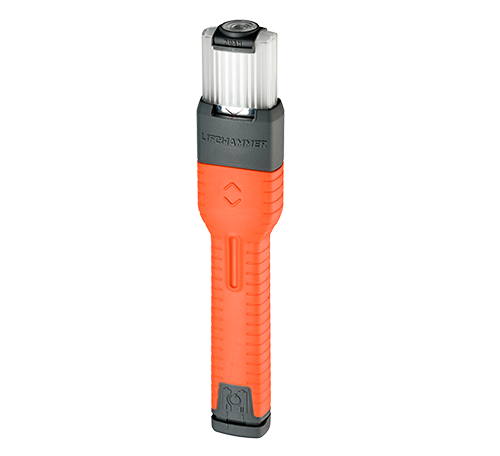
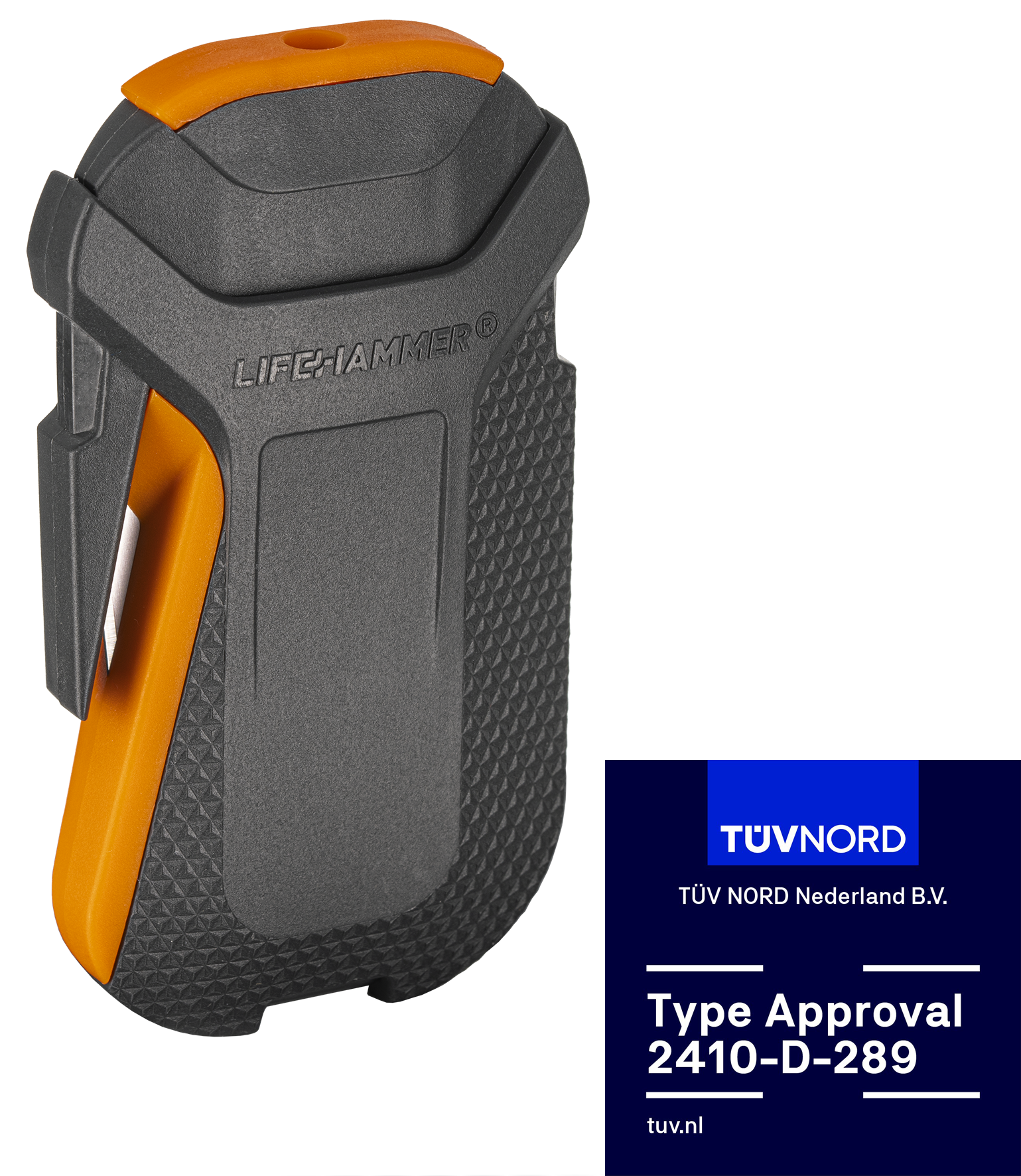
- Our safety hammer range includes four models. The Classic and Plus use a hardened carbon steel hammerhead; the Safety Hammer Evolution and the SMART model use an automatic ceramic hammerhead. All four cut seatbelts and break tempered side windows.
- All Lifehammer® safety hammers are TÜV certified and trusted by first responders and fleet operators across Europe, including the Netherlands, where the brand was built.
- Our Safety Vest Ultra comes in an ultra-flat vacuum pack that stores discreetly under any floor mat and decompresses immediately on opening. It is one-size-fits-all and suitable for drivers and passengers alike. Keeping one in the car is a straightforward way to cover the recommendation that Dutch authorities make for anyone who may need to exit their vehicle on a motorway or in low-visibility conditions.
If you have questions about which products are right for your car or your journey, our Q&A section covers the most common topics in straightforward detail.