 English
 Nederlands
 Deutsch



When driving in Poland, you are legally required to carry a valid driving licence, your vehicle registration document, proof of third-party liability insurance, a warning triangle, and a fire extinguisher. These are the non-negotiable items for any vehicle on Polish roads. The sections below cover each requirement in detail, along with what is recommended, what the motorway rules look like, and how to prepare before a long drive.
Is it mandatory to carry a warning triangle in Poland?
Yes, a warning triangle is compulsory in Poland for all vehicles with four or more wheels. It must be an E-marked (certified) triangle, kept in working condition, and stored somewhere accessible in the vehicle. Burying it under luggage in the boot is a common mistake that becomes a serious problem when you actually need it.
The triangle must be deployed at a specific distance behind your vehicle: roughly 30 to 50 metres on standard roads outside built-up areas, and at least 100 metres on motorways and expressways. In built-up areas, it is placed approximately one metre behind the vehicle or on top of it. The fine for not carrying one at all can reach several hundred Polish zloty, and failing to deploy it correctly in an emergency carries a separate penalty.
Poland also requires every passenger car to carry a fire extinguisher. It must be labelled ABC, contain at least one kilogram of firefighting agent, and be stored somewhere you can reach it quickly. According to mandatory car equipment guidance from Polish logistics and compliance sources, both items are required in practice for all vehicles on Polish roads, including foreign-registered ones. If you are driving a car registered outside Poland, it is strongly advisable to carry both, regardless of what your home country requires.
What documents do you legally need when driving in Poland?
When driving in Poland, you must carry your original driving licence, the vehicle registration document, and proof of valid third-party liability insurance (known in Poland as OC, short for Odpowiedzialność Cywilna). A digital copy of your insurance on a phone is accepted. Photocopies of your driving licence are not.
EU and EEA licences are valid in Poland without any additional documentation. If you hold a non-EU licence, the rules depend on your country of issue. US citizens, for example, must carry both their national licence and an International Driving Permit (IDP) to drive legally in Poland. The IDP must be obtained before you travel, as it cannot be issued in Poland.
For foreign-registered vehicles entering from outside the EU or EEA, a Green Card (international certificate of motor insurance) may also be required. EU-registered vehicles are not legally obliged to carry one, but having it provides clear, internationally recognised proof of cover if you are stopped or involved in an incident. Driving without valid OC insurance carries substantial fines, so confirming your cover is active and accessible before you cross the border is a straightforward step worth taking.
Do you need a first aid kit in your car in Poland?
A first aid kit is not legally mandatory in Poland for private passenger cars. Polish regulations require only a fire extinguisher and a warning triangle. However, Polish law does oblige every driver to render assistance to anyone injured in a road accident, which makes having a kit a practical necessity even if it is not a legal one.
The distinction matters. You will not be fined for driving through Poland without a first aid kit. But if you witness or are involved in a collision, you are legally expected to help until emergency services arrive. A basic kit, including bandages, gloves, a thermal blanket, and disinfectant, gives you the means to do that.
There is also a cross-border consideration worth knowing. If your journey takes you from Poland into Germany, Austria, the Czech Republic, or Slovakia, a first aid kit becomes mandatory in those countries. It is worth checking the requirements for each country on your route before you leave, as Polish road safety guidance makes clear that neighbouring countries apply stricter rules than Poland itself.
What safety equipment is recommended but not required in Poland?
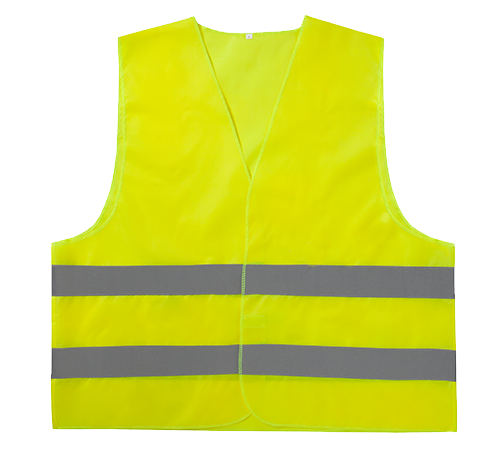
Several items are strongly recommended for driving in Poland but are not legally required for private cars. A high-visibility vest is the most important of these. While Polish law does not require you to carry one in the vehicle, wearing one when walking on a road outside built-up areas at night is required. In practice, not having one in the car means you cannot comply with that rule if you need to step out on a dark rural road.
Other useful items to carry include:
- A high-visibility vest for every occupant of the vehicle
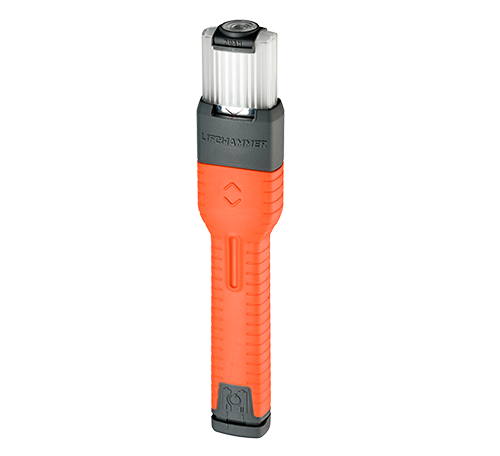
- A torch or flashlight, particularly useful on unlit rural roads
- Jumper cables and a tow rope
- Spare bulbs and fuses
- A basic tool kit
- A spare wheel or puncture repair kit, with a jack and lug wrench
- A first aid kit
Spare bulbs are worth particular attention. Poland requires dipped headlights to be used at all times, day and night, year-round. A burned-out headlight that goes unnoticed during a daytime city drive becomes both a safety issue and a legal one once you are on a dark expressway. Carrying a spare takes up almost no space and removes that risk entirely.
Are there any rules specific to driving on Polish motorways?
Poland’s motorways (marked with an “A”) have a speed limit of 140 km/h, one of the highest in the EU. Expressways (marked “S”) are limited to 120 km/h on dual carriageways and 100 km/h on single-carriageway sections. The urban speed limit is 50 km/h at all times.
On motorways and expressways, drivers must maintain a following distance of at least half their speed in metres. At 140 km/h, that means a minimum gap of 70 metres. Speed enforcement is camera-heavy, and the number of section-speed control installations has grown significantly in recent years. Cross-border fine enforcement applies to EU-registered foreign vehicles, so these limits apply to visitors just as firmly as to Polish residents.
On the question of tolls, Poland does not use a vignette system. Most state-managed motorway sections are free for passenger cars. Tolls apply only on privately operated concession sections of the A1, A2, and A4 motorways. According to Polish toll road guidance, payment can be made by cash or card at toll plazas, or through apps such as Autopay or AmberGO. Expressways (S-roads) are always free for cars.
Poland also applies one of the strictest drink-drive limits in Europe, with a blood alcohol threshold of 0.2 per mille. Above 0.5 per mille, the offence becomes criminal. Driving on the hard shoulder is forbidden except in the event of a breakdown.
What should you check before a long drive through Poland?
Before a long drive through Poland, check your tyres, fluid levels, lights, documents, and in-car safety equipment. These are the areas most likely to cause problems on the road, and most can be confirmed in under 20 minutes before you leave.
Start with the tyres. Check the pressure on all four road tyres when the vehicle is cold, and inspect the spare if you have one. Tyre tread should be well above the legal minimum of 1.6 mm, especially if your route includes motorway driving in variable weather. Next, check engine oil, coolant, brake fluid, and windscreen washer fluid. For longer journeys, consider carrying a small amount of spare oil and washer fluid.
Check all lights before departure. Dipped headlights are mandatory in Poland at all times, so a faulty headlight is not just a safety issue but an immediate legal one. Taillights, brake lights, and indicators should all be confirmed working.
On the documents and equipment side, make sure you have your original driving licence, registration document, and OC insurance proof accessible rather than buried in the glovebox. Confirm that your warning triangle and fire extinguisher are present, in good condition, and reachable without unpacking the boot. If your route includes any of the tolled motorway sections (A1, A2, or A4 concession stretches), downloading a payment app before you leave is more convenient than searching for one at a toll plaza.
How Lifehammer® supports you on the road in Poland
At Lifehammer® we have been developing vehicle safety tools since 1983, and road trip preparation is exactly the kind of situation our products are designed for. Whether you are doing a quick pre-departure check or building out a complete car kit from scratch, we focus on tools that are reliable, compact, and genuinely useful when it counts.
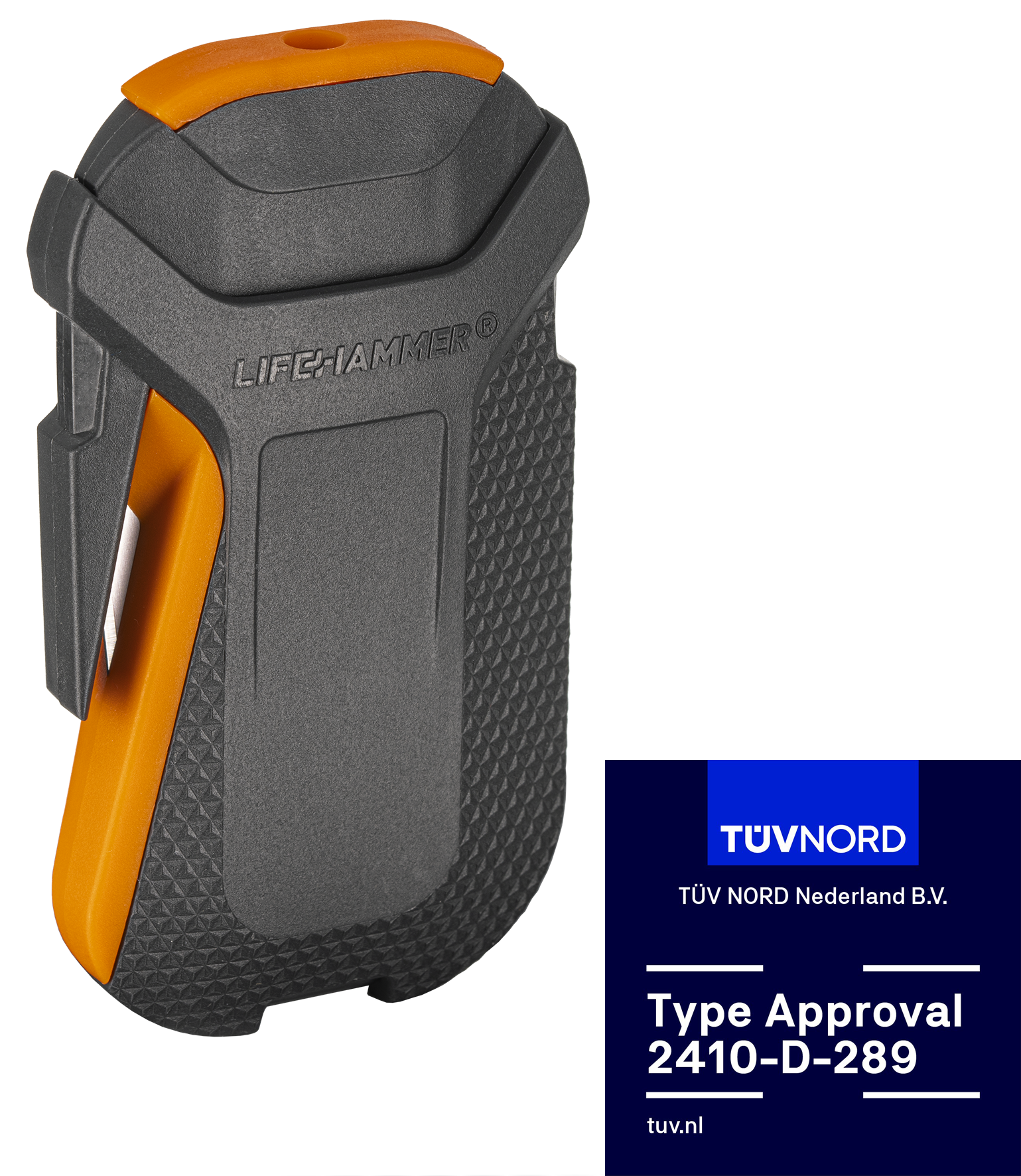
- Our safety hammer range includes four models. The Classic and Plus use a manual hardened carbon steel hammerhead; the Evolution and SMART use an automatic ceramic hammerhead. All four cut seatbelts and break tempered side windows.
- All Lifehammer® safety hammers are TÜV certified and trusted by first responders and fleet operators across Europe.
- Our Safety Vest Ultra comes in an ultra-flat vacuum pack that stores discreetly under any floor mat and decompresses immediately on opening. It is one-size-fits-all and suitable for drivers and passengers alike, making it a practical answer to Poland’s requirement to wear a high-visibility vest when walking on roads outside built-up areas at night.
If you have questions about which products are right for your car or your journey, our Q&A section covers the most common topics in straightforward detail.