 English
 Nederlands
 Deutsch





Child safety regulations for cars require children to use an approved child restraint system until they are 135 cm tall or 12 years old, whichever comes first. In the UK and across most of Europe, these rules are set in law and apply to every journey, no matter how short. The sections below cover the most common questions parents and carers have about keeping children safe and legal on the road.
At what age can a child sit in the front seat of a car?
In the UK, there is no minimum legal age for a child to sit in the front seat, but they must use the correct child restraint if they are under 135 cm tall or under 12 years old. If a rear-facing child seat is used in the front, the passenger airbag must be deactivated. Sitting in the back is strongly recommended for all children as the safer option.
The front seat is statistically more dangerous for children in a collision because of its proximity to the dashboard and the force of a deploying airbag. Even when a child meets the height or age threshold, many road safety organisations recommend keeping them in the rear until they are at least 13. If a rear-facing seat is placed in the front with an active airbag, the consequences in a crash can be severe, which is why deactivating the airbag is a legal requirement in this situation.
Practically speaking, if you have the choice, place children in the rear centre seat where possible. It puts the greatest distance between them and any side-impact zone and keeps them away from both the front and rear door panels.
What are the legal requirements for child car seats?
UK law requires all children under 135 cm tall or under 12 years old to use an appropriate child car seat. The seat must be the correct size and weight group for the child, and it must meet either the older ECE R44 standard or the newer i-Size (UN R129) standard. Using an unapproved or incorrectly fitted seat is illegal and can result in a fine.
There are two main approval standards currently in use across Europe:
- ECE R44: The older standard, which groups seats by the child’s weight. Still legal and widely available, but being phased out gradually.
- UN R129 (i-Size): The newer standard, which groups seats by the child’s height. It requires extended rear-facing travel up to at least 15 months and mandates side-impact protection testing.
When buying a seat, look for the approval label on the product. A seat sold without any approval marking does not meet legal requirements. Fit always matters as much as the seat itself. Research consistently shows that a large proportion of child seats are installed incorrectly, so reading the manual carefully and using a fitting service where available is time well spent.
There are limited exceptions to the legal requirement, for example in taxis or when all rear seat positions are already occupied by other children in restraints. In these cases, the child must travel in the rear without a restraint if none is available, but these exceptions are narrow and should not be treated as a routine workaround.
When can a child stop using a booster seat?
A child can stop using a booster seat when they reach 135 cm in height or turn 12 years old, whichever comes first. After that point, they can use the standard adult three-point seatbelt. However, height is the more reliable indicator: a child who is tall enough for the adult belt to fit correctly is safer without a booster than a smaller child using a belt that sits across their neck or stomach.
The adult seatbelt is designed to sit across the bony parts of the body: the shoulder, the chest, and the hip. In a smaller child, the same belt often crosses the soft abdomen and the throat instead, which can cause serious internal injuries in a crash. A booster seat raises the child so the belt geometry works correctly.
A simple check: if the lap belt sits flat across the upper thighs and the shoulder belt crosses the chest and shoulder without touching the neck, the child is likely ready to use the adult belt alone. If either part of the belt sits in the wrong position, continue using the booster regardless of age.
What’s the difference between forward-facing and rear-facing car seats?
Rear-facing car seats absorb crash forces by spreading the impact across the child’s back, head, and neck as a single unit. Forward-facing seats rely on a harness to hold the child, which places more concentrated force on the neck and spine in a frontal collision. Rear-facing is the safer option for younger children, and the i-Size standard now requires it for all children up to at least 15 months.
Rear-facing seats
Rear-facing seats are suitable from birth and are available in several groups: infant carriers (typically up to around 13 kg), extended rear-facing seats (which can accommodate children up to 25 kg or more), and combination seats that start rear-facing and convert later. The longer a child can remain rear-facing, the better the protection in a frontal impact, which is by far the most common type of serious collision. Several Scandinavian countries have long recommended rear-facing travel up to the age of four or beyond, and the evidence behind that recommendation is strong.
Forward-facing seats
Forward-facing seats become appropriate once a child has outgrown the rear-facing option, typically around the age of two to four depending on the seat and the child’s size. They use a five-point harness to distribute crash forces across the shoulders, hips, and between the legs. The harness must be fitted snugly, with no slack, and the top tether (where fitted) must be anchored correctly. Forward-facing seats are not inherently unsafe, but they do place more stress on the neck in a frontal crash compared to rear-facing alternatives.
What other safety items should children have in the car?
Beyond the legal requirement for a child restraint, there are several practical items worth keeping in the car when travelling with children. These do not replace the seat but complement it, covering situations that a car seat alone cannot address.
- Sun shades: Rear window sun shades reduce glare and heat for children in the back, particularly infants who cannot regulate body temperature as effectively as adults.
- First aid kit: A basic kit covering cuts, bumps, and minor injuries is useful on any journey, but especially on longer trips with children.
- Snacks and water: Dehydration and hunger increase distraction for both children and the driver. Keeping water accessible reduces the temptation to reach into bags while driving.
- Emergency escape tool: A window-breaking and seatbelt-cutting tool stored within reach of the driver gives you a way to act quickly if a door cannot be opened or a belt cannot be released after an incident. This is relevant for adults and older children alike.
- High-visibility vest: Required by law when exiting a vehicle on a motorway in several European countries. Having one in the car is good practice regardless of where you travel.
It is also worth thinking about how items are stored in the car. Loose objects in the rear become projectiles in a sudden stop. Use a boot organiser or a bag secured to a seat anchor, and keep heavy items low and forward rather than stacked on the parcel shelf.
How Lifehammer® supports child safety in the car
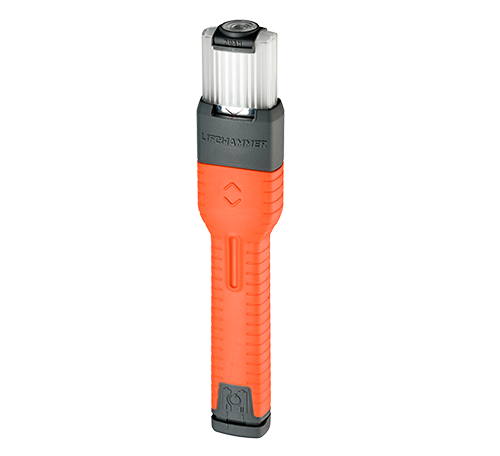
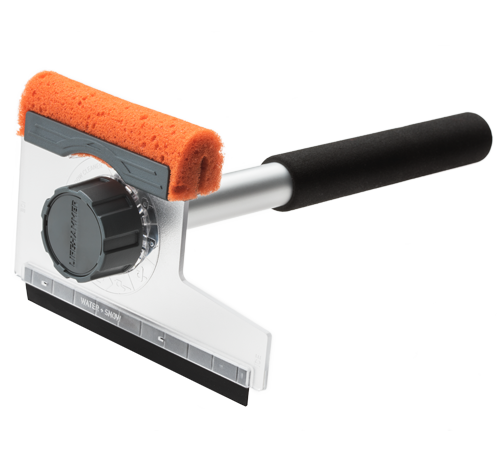
We develop car safety products that are built around real situations, not hypothetical ones. When it comes to travelling with children, having the right tools within reach matters. Here is what we offer that is directly relevant:
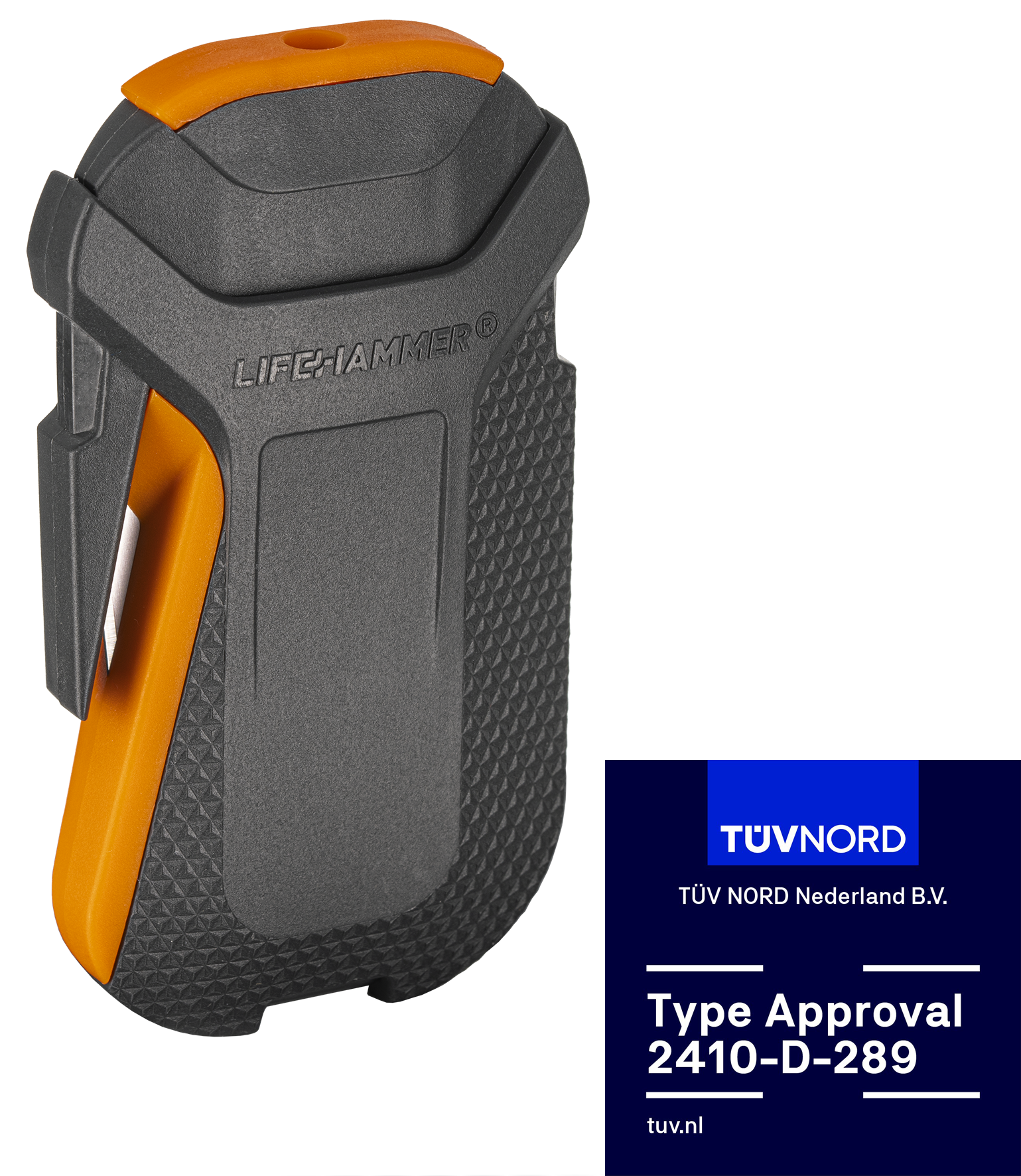
- The Lifehammer® Safety Hammer SMART uses a ceramic pin as its striking mechanism and can cut through a seatbelt quickly. It attaches using 3M VHB double-sided adhesive tape, so it stays within reach of the driver without requiring tools to mount. Note: avoid airbag areas when positioning it.
- Our Safety Vest Ultra keeps you visible when you need to exit the vehicle in low-light or roadside conditions, which is relevant any time you stop unexpectedly with children in the car.
- All Lifehammer® products are TÜV certified to German standards and trusted by first responders, police officers, and fleet operators across Europe.
If you have questions about which product is right for your car or your situation, you can find answers here. We are here to help you make a straightforward, well-informed choice.