 English
 Nederlands
 Deutsch




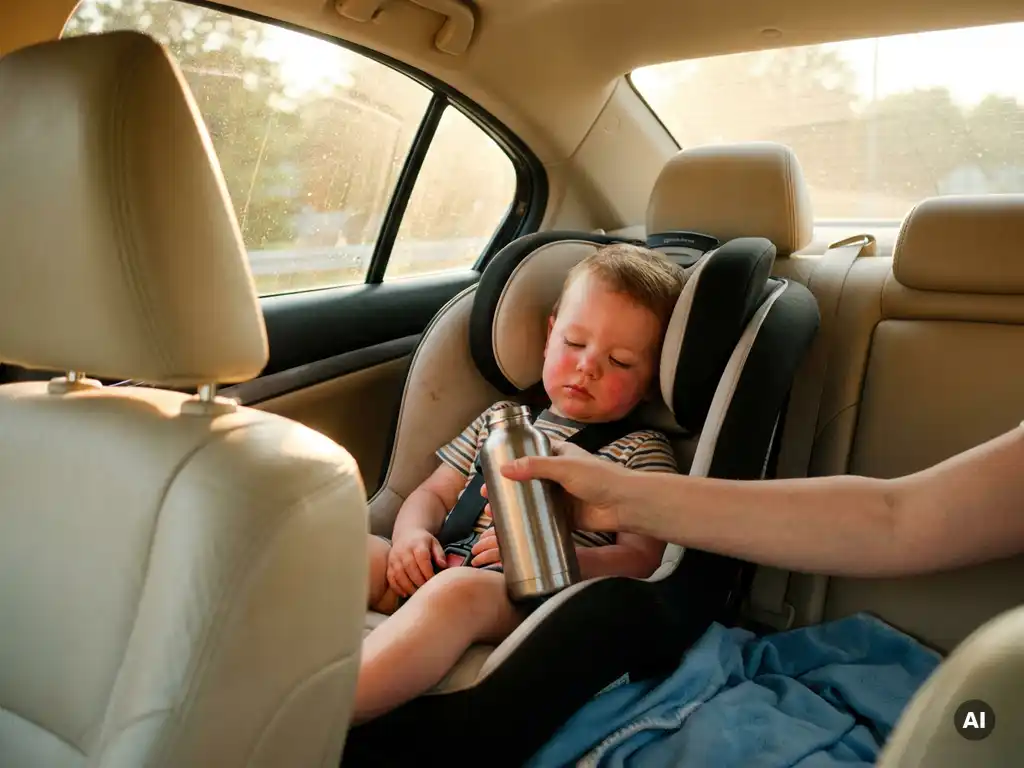
To protect children from overheating in the car in summer, never leave them unattended in a parked vehicle, use sunshades on the rear windows, run the air conditioning before and during the journey, and check on young passengers frequently. Children’s bodies heat up far faster than adults’, making even brief exposure to a hot car genuinely dangerous. The questions below walk through the risks, warning signs, and practical steps every family should know before driving in warm weather.
How hot does a car get in summer with the windows closed?
A car with closed windows can reach temperatures of 50 to 60 degrees Celsius (120 to 140 degrees Fahrenheit) on a hot summer day, even when the outside temperature is only around 25 to 30 degrees Celsius. The interior temperature can rise by 10 to 15 degrees within the first ten minutes, and by as much as 30 degrees within half an hour.
This happens because a car acts like a greenhouse. Solar radiation passes through the glass and heats the seats, dashboard, and interior surfaces. Those surfaces then radiate heat back into the enclosed space, but the warmth cannot escape. Parking in the shade reduces the peak temperature somewhat, but does not eliminate the risk. Cracking a window open provides only minimal relief and is not a safe substitute for proper ventilation or removing passengers from the vehicle.
Why are children more vulnerable to heat than adults in a car?
Children are more vulnerable to heat in a car because their bodies absorb heat faster and cool down less efficiently than adult bodies. A child’s body temperature rises three to five times more quickly than an adult’s in the same environment. Young children, particularly infants and toddlers, cannot regulate their own body temperature effectively and are entirely dependent on caregivers to manage their environment.
Several factors compound this vulnerability:
- Smaller body mass: Less body mass means less thermal buffer. Heat builds up in a child’s body more rapidly under the same conditions.
- Limited sweating capacity: Young children sweat less efficiently, which reduces their ability to cool themselves naturally.
- Inability to communicate or self-rescue: Infants and toddlers cannot tell you they are too hot, cannot open a door, and cannot move themselves to a cooler location.
- Dark clothing and car seats: Darker fabrics absorb more heat, and the padding of a car seat can trap warmth directly against a child’s body.
This combination means that car heat danger for kids is not a question of degree but of speed. What feels uncomfortable to an adult can become medically serious for a child within minutes.
What are the warning signs of heatstroke in children?
The warning signs of heatstroke in children include a body temperature above 40 degrees Celsius, flushed or red skin that is hot and dry rather than sweaty, rapid breathing, confusion or disorientation, and in severe cases, loss of consciousness. Heatstroke is a medical emergency and requires immediate action.
It is useful to distinguish between heat exhaustion and heatstroke, as they call for different responses:
Heat exhaustion typically presents with heavy sweating, pale or cool skin, weakness, dizziness, nausea, and a fast but weak pulse. The child is still conscious and responsive. Moving them to a cool environment and offering small sips of water is the immediate priority.
Heatstroke is more serious. The body’s cooling system has failed. Skin may be hot and dry, the child may be confused or unresponsive, and the pulse is often rapid and strong. Call emergency services immediately. While waiting, move the child to a cool place, remove excess clothing, and apply cool (not ice cold) water to the skin, particularly the neck, armpits, and groin.
Parents should trust their instincts. If a child seems unusually lethargic, confused, or distressed after being in a warm car, take it seriously and seek medical advice promptly.
How can you keep children cool during a car journey in summer?
To keep children cool during a summer car journey, run the air conditioning before departure, use rear window sunshades to block direct sunlight, dress children in lightweight and light-coloured clothing, and offer regular water breaks on longer trips. Planning around the coolest parts of the day also makes a meaningful difference.
Here are the most effective practical steps:
- Pre-cool the car: Start the engine and run the air conditioning for a few minutes before putting children in the car. This brings the interior temperature down before they are seated.
- Use sunshades: Attach UV-blocking sunshades to rear side windows. These reduce direct solar heat on children seated in the back and lower the overall cabin temperature.
- Check the car seat: Metal buckles and dark upholstery can become extremely hot. Check the temperature of the car seat before placing a child in it, and consider a light cover when the car is parked.
- Dress appropriately: Light, breathable fabrics in pale colours absorb less heat than dark or heavy materials.
- Hydrate regularly: Children need more fluids in hot weather. On longer journeys, plan regular stops and offer water consistently.
- Travel at cooler times: Where possible, schedule long drives for early morning or evening rather than the midday heat.
- Never leave children unattended: Even a brief errand can become dangerous. If you need to leave the car, take your children with you.
What should you do if a child is trapped in a hot car?
If a child is trapped in a hot car, call emergency services immediately and then act without delay to get the child out. Do not wait for help to arrive if the child is showing signs of distress. Breaking the car window is justified in a genuine emergency, and in many countries this is legally protected when a child’s safety is at risk.
If you need to break a window to reach a child, focus on a side window rather than the windscreen. Windscreens are made from laminated glass, which is designed to hold together and resist shattering. Side windows are made from tempered glass, which breaks more cleanly and is the correct target in an emergency exit or rescue situation. Strike the corner of the window rather than the centre, as this is the weakest point.
Once the child is out of the car:
- Move them to a cool, shaded area immediately.
- Remove excess clothing and cool the skin with water.
- Do not give a child who is confused or unresponsive anything to drink.
- Stay with the child until emergency services arrive.
Speed is what matters most in this situation. Acting quickly and calmly is far more important than waiting for the perfect solution.
Where should safety equipment be stored in a family car?
Safety equipment in a family car should be stored within reach of the driver or front passenger, not locked in the boot. In an emergency, you need to be able to access a safety hammer, first aid kit, or other tool without delay. Equipment stored in the glove compartment, in a door pocket, or mounted near the dashboard is far more useful than equipment buried under luggage.
For families with children, consider the following storage principles:
- Safety hammer: Mount it near the driver’s seat or front passenger area where an adult can reach it quickly. Avoid airbag deployment zones when choosing a mounting position.
- First aid kit: Keep a compact kit in the glove compartment or a side pocket. Check it periodically and replace any expired items.
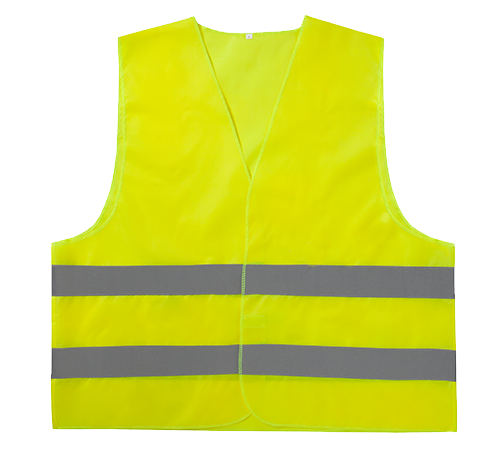
- Safety vest: Store it within the passenger compartment, not the boot. You may need it before you can safely open the boot in a roadside situation.
- Water and snacks: On summer journeys, keep a small supply accessible from the back seat so children can stay hydrated without requiring a stop.
The principle is simple: equipment you cannot reach in the first thirty seconds of an emergency is equipment that may not help you. Review your car’s safety setup at the start of each season and make sure every adult in the family knows where things are stored and how to use them.
How Lifehammer® supports you with car safety in summer
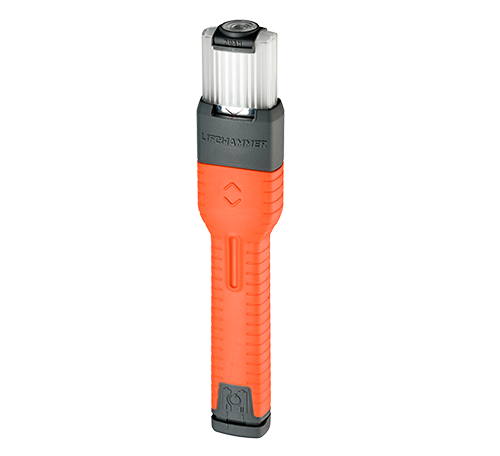
At Lifehammer® we have been developing vehicle safety tools since 1983, and summer family travel is exactly the kind of situation our products are designed for. Our focus is on tools that are reliable, compact, and genuinely useful when it counts – including in the high-pressure moments that warm weather and busy roads can bring.
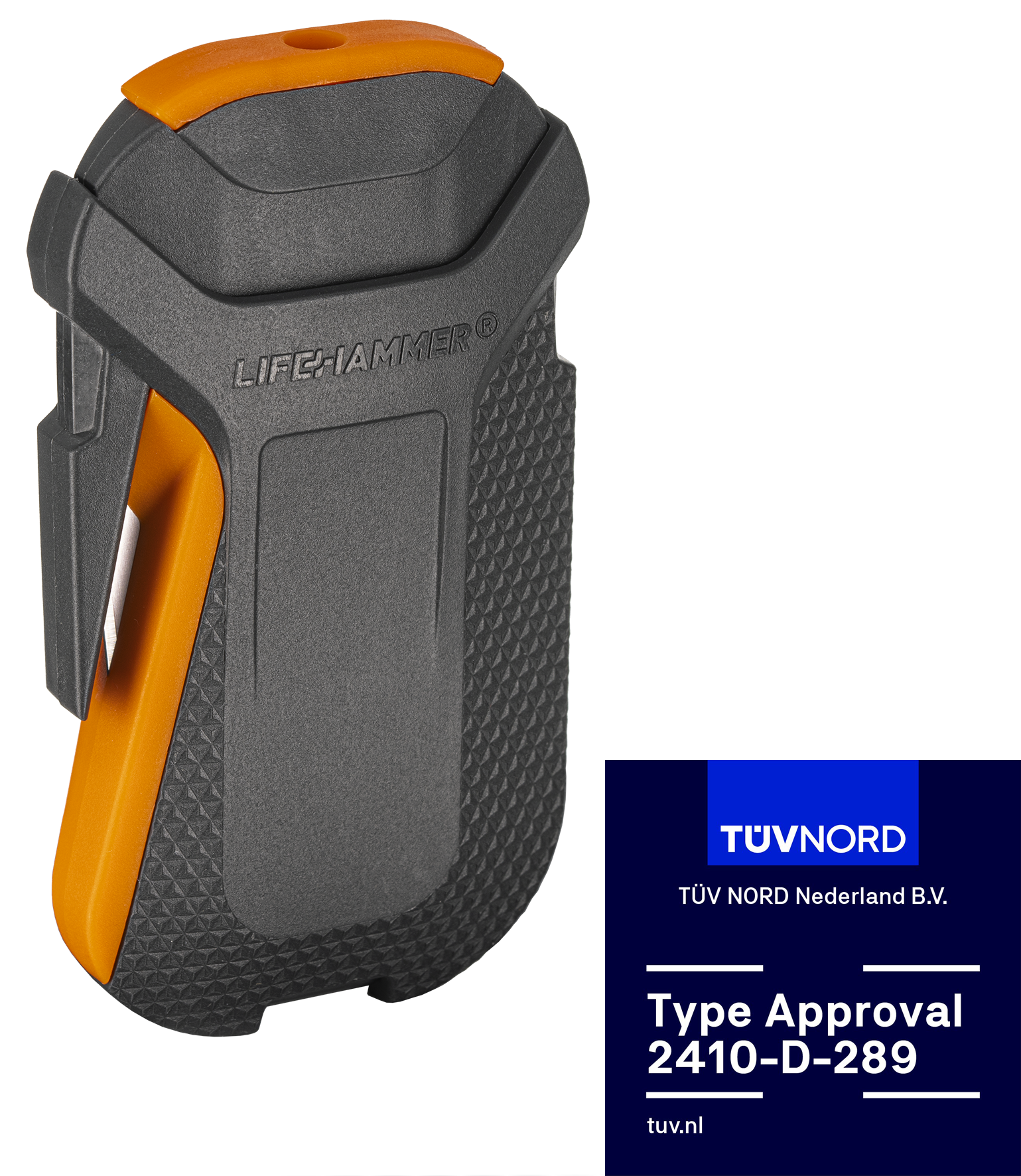
- Our safety hammer range gives every family a means of breaking tempered side windows and cutting jammed seatbelts in a rescue situation. The Classic and Plus models use a hardened carbon steel hammerhead; the Evolution and SMART use a ceramic striking mechanism. All four models cut seatbelts and break tempered side windows.
- All Lifehammer® safety hammers are TÜV certified and trusted by first responders and fleet operators across Europe – so you can be confident the tool will perform when you actually need it.
- Our Safety Vest Ultra comes in an ultra-flat vacuum pack that stores discreetly under a floor mat and decompresses immediately on opening. It is one-size-fits-all and suitable for both drivers and passengers.
- Mounting options are designed for real-world family cars. The SMART hammer can be positioned using 3M VHB double-sided adhesive tape, keeping it within reach without requiring tools. Always avoid airbag areas when choosing a mounting location.
If you have questions about which products are right for your car or your family’s needs, our Q&A section covers the most common topics in straightforward detail.