 English
 Nederlands
 Deutsch






Planning a safe long-distance road trip comes down to three things: preparing your car before you leave, packing the right items, and managing your own condition behind the wheel. Most road trip problems are predictable and preventable with a straightforward checklist approach. The questions below cover every stage of road trip preparation, from your first vehicle check to what to do if something goes wrong on the motorway.
What should you check on your car before a long drive?
Before a long-distance road trip, check your tyres, engine fluids, lights, brakes, and battery. These five areas account for the majority of roadside breakdowns and are all things you can inspect yourself in under 30 minutes. Catching a problem at home is far easier than dealing with it on a motorway hard shoulder.
Tyres and tyre pressure
Check tyre pressure when the tyres are cold, using the values listed in your vehicle handbook or on the sticker inside the driver’s door frame. Underinflated tyres increase fuel consumption and reduce handling stability, especially at motorway speeds. Inspect the tread depth and look for any visible cuts, bulges, or uneven wear. If you have not checked your spare tyre recently, include it in your inspection.
Fluids, battery, and lights
Top up engine oil, coolant, brake fluid, and windscreen washer fluid before you set off. A battery that struggles on cold mornings may fail entirely under the sustained demand of a long drive. Test all exterior lights, including headlights, indicators, brake lights, and fog lights. If a bulb is out, replace it before you travel rather than after, when you may be far from a garage.
How do you plan a long-distance route safely?
Safe road trip route planning means choosing roads that suit your vehicle, building in regular stops, and understanding the driving regulations of any countries you pass through. A good route is not just the fastest one. It accounts for rest, fuel availability, and realistic daily distances.
Map your journey in segments rather than treating it as a single continuous drive. Most road safety guidance recommends stopping every two hours or so, so plan your route around service stations, towns, or rest areas where you can take a proper break. If you are crossing borders, check whether your insurance covers you in each country and whether any specific equipment is legally required. Several European countries, for example, require drivers to carry a warning triangle or a reflective safety vest.
Download offline maps before you leave. Mobile signal is unreliable in rural areas and in some mountainous regions, and relying entirely on live navigation creates a genuine risk if your connection drops at a junction or interchange.
What should you keep in your car on a long road trip?
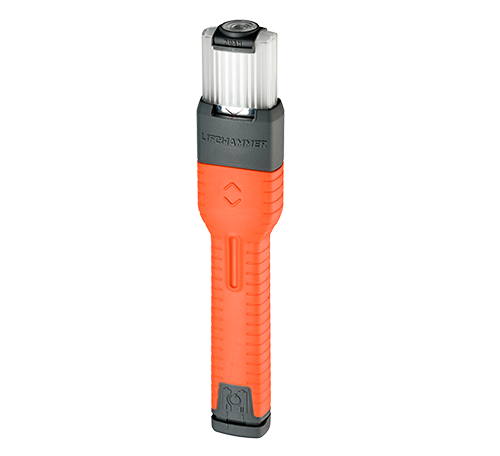
On a long road trip, your car should carry a warning triangle, a reflective safety vest, a first aid kit, a torch, jump leads or a portable jump starter, and a car escape tool. These items cover the most common emergency scenarios and take up minimal space in your boot.
Beyond emergency equipment, practical comfort items matter more than most people expect on a long drive. A phone charging cable, a reusable water bottle, snacks that do not require refrigeration, and a physical map or printed directions as a backup all reduce stress on the road. If you are travelling with children, add entertainment items and any medication they might need.
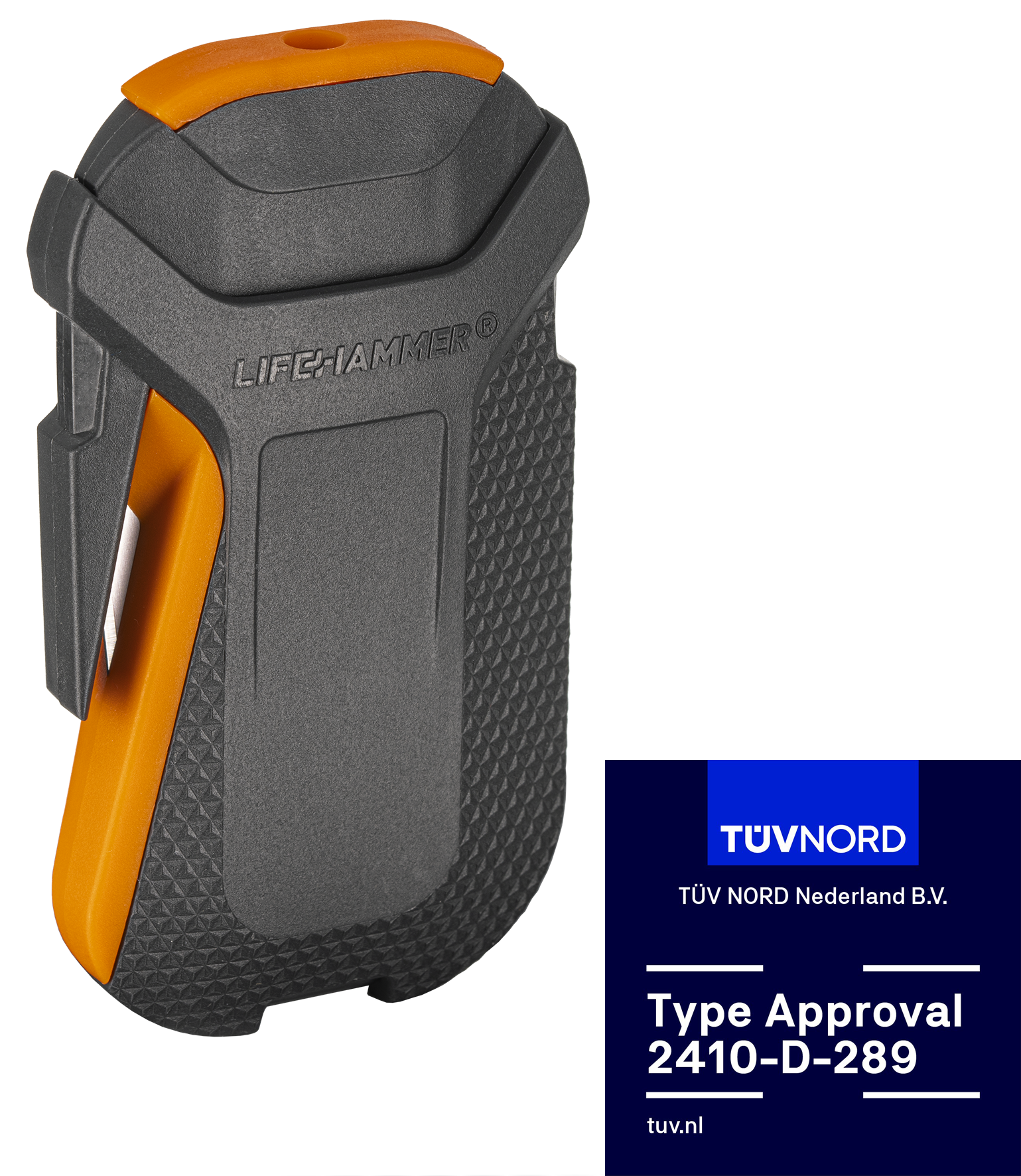
A car escape tool is one item that is easy to overlook because the situation it addresses feels remote. In the event of a collision where a door cannot be opened or a seatbelt becomes jammed, a safety hammer allows you to cut the belt and break a tempered side window to get out. It is a compact, low-cost item that stores in a door pocket or centre console and requires no maintenance.
How do you stay alert and avoid fatigue on a long drive?
To stay alert on a long drive, take a break of at least 15 minutes every two hours, avoid driving in the early afternoon when alertness naturally dips, and never start a long journey already tired. Driver fatigue is one of the leading causes of serious motorway accidents, and it is also one of the most underestimated risks because fatigue impairs your ability to judge your own impairment.
Caffeine can help in the short term, but it is not a substitute for rest. If you feel genuinely drowsy, the most effective response is to pull over safely and sleep for 20 to 30 minutes. Opening a window or turning up the radio are not reliable solutions once fatigue has set in.
Splitting a very long journey across two days is often the most sensible choice. If that is not possible, consider sharing the driving with a co-driver so each person gets regular rest periods. Travelling at night to avoid traffic may seem efficient, but driving in darkness adds visual strain and coincides with the body’s natural low-alertness period between 2am and 6am.
What should you do if your car breaks down on a motorway?
If your car breaks down on a motorway, move to the hard shoulder or emergency refuge area as quickly as possible, switch on your hazard lights, and exit the vehicle from the left-hand side (or right-hand side in countries where traffic drives on the left). Once out, move behind the barrier and call your breakdown service from a safe distance from the carriageway.
Do not stay in the vehicle on the hard shoulder unless it is genuinely unsafe to get out. Stationary vehicles on motorways are at significant risk from passing traffic, and the area behind a barrier is considerably safer. Place your warning triangle at least 45 metres behind the vehicle on ordinary roads, but do not place one on a motorway hard shoulder, as doing so puts you in danger from live traffic.
Keep your breakdown service number saved in your phone before you travel. If you are driving in another country, find out the local emergency number in advance. In most European countries, 112 connects you to emergency services and works across networks even without a signal on your registered provider.
How Lifehammer® supports you on a long-distance road trip
At Lifehammer® we have been developing vehicle safety tools since 1983, and road trip preparation is exactly the kind of situation our products are designed for. Whether you are doing a quick pre-departure check or building out a complete car kit, we focus on tools that are reliable, compact, and genuinely useful when it counts.
- Our safety hammer range includes four models. The Classic and Plus use a manual hardened carbon steel hammerhead; the Evolution and Smart use an automatic ceramic hammerhead. All four cut seatbelts and break tempered side windows.
- All Lifehammer® safety hammers are TÜV certified and trusted by first responders and fleet operators across Europe.
- Our Safety Vest Ultra comes in an ultra-flat vacuum pack that stores discreetly under any floor mat and decompresses immediately on opening. It is one-size-fits-all and suitable for drivers and passengers alike.
If you have questions about which products are right for your car or your journey, our Q&A section covers the most common topics in straightforward detail.