 English
 Nederlands
 Deutsch





When driving through Spain, you need to carry your driving licence, passport or national ID, vehicle registration document, and proof of insurance. You also need to have two warning triangles and a high-visibility vest inside the car. Spain has some of the most specific road rules in Europe for foreign drivers, and the fines for non-compliance are significant. This article covers everything from legal documents to motorway rules and what to pack for a long drive.
Is it legal to drive in Spain with a UK or EU licence?
Yes, it is legal to drive in Spain with a valid UK or EU driving licence. EU licence holders can drive in Spain without any additional documentation. UK licence holders can also drive in Spain using their UK licence alone, as Spain continues to recognise UK licences for short-term visits under the post-Brexit arrangements currently in place in 2026.
If you hold a non-EU, non-UK licence, you will generally need an International Driving Permit (IDP) alongside your national licence. An IDP is not a standalone document — it must be carried together with your original licence at all times. Drivers from countries that have bilateral agreements with Spain may be exempt, so it is worth checking your specific country’s status before travelling.
One practical point worth noting: if your EU or UK licence is more than 15 years old or shows significant wear, carry a second form of photo ID as well. Spanish traffic officers can be thorough, and a clearly legible licence avoids unnecessary delays.
What documents do you legally need to carry in Spain?
When driving in Spain, you are legally required to carry four documents: your valid driving licence, your passport or national identity card, the vehicle’s registration certificate (known as the V5C in the UK or the equivalent in your country), and proof of valid motor insurance. Failing to produce any of these on request from a police officer can result in an on-the-spot fine.
If you are driving a rental car, the rental agreement serves as your proof of authorisation to drive the vehicle and should be kept in the car at all times. If you are driving someone else’s car, carry a letter of authorisation from the registered owner alongside the registration document.
For UK drivers, a Green Card (international motor insurance certificate) is no longer mandatory for travel to Spain as of 2026, but carrying one is still recommended as it simplifies things if you are involved in an incident or stopped at a border. Check with your insurer before you travel to confirm your cover is valid in Spain and whether they can provide one.
What safety equipment is compulsory in a car in Spain?
Spain requires all drivers to carry two warning triangles and at least one high-visibility vest inside the vehicle cabin (not in the boot). These are mandatory under Spanish traffic law and must be available immediately if you need to stop on the road. Using a single triangle or storing your vest in the boot does not meet the legal requirement.
Here is a summary of the compulsory safety equipment for driving in Spain:
- Two warning triangles: To be placed in front of and behind the vehicle if you stop on the road or hard shoulder
- At least one high-visibility vest: Must be worn before you exit the vehicle on any road — and it must be stored inside the passenger compartment, not the boot
- Spare wheel or tyre repair kit: Not strictly mandatory by law, but strongly recommended as you are responsible for any hazard your vehicle creates
- Spare bulbs and fuses: Not legally required for foreign-registered vehicles, but recommended for longer trips
A few items that are commonly believed to be mandatory in Spain but are not legally required for foreign-registered vehicles include fire extinguishers and first aid kits. These are required for Spanish-registered vehicles in certain categories, but not for tourists driving their own or a rental car on a short visit.
It is also worth noting that Spain does not require a GB or UK sticker on the rear of the car if your number plate already displays the national identifier. However, if your plate does not include this, you must display the appropriate sticker.
What are the rules for driving on Spanish motorways and roads?
On Spanish motorways (autopistas and autovías), the standard speed limit is 120 km/h. On dual carriageways it is 100 km/h, on conventional roads outside built-up areas it is 90 km/h, and in urban areas it is typically 30 km/h or 50 km/h depending on the road type. Speed limits are strictly enforced, and Spain operates a points-based penalty system that applies to foreign drivers as well.
Speed limits and lane discipline
The right lane is the default driving lane in Spain. The left lane is for overtaking only, and remaining in the left lane when not overtaking is an offence. Motorcycles are permitted to use the hard shoulder on some roads, which can catch drivers from other countries off guard.
Radar speed cameras are widespread on Spanish motorways, and mobile speed traps are common on national roads. Average speed cameras, which measure your speed over a distance rather than at a single point, are increasingly used on Spanish roads. Driving at a consistent speed throughout a stretch of road is the safest approach.
Mobile phones and hands-free rules
Using a handheld mobile phone while driving is prohibited in Spain and carries a significant fine as well as a loss of points from your licence. Hands-free systems are permitted, but holding the phone even briefly — for example at traffic lights or while stationary — is still an offence. Sat-nav devices must be mounted securely on the dashboard or windscreen and must not obstruct your view.
Alcohol limits
The legal blood alcohol limit in Spain is 0.5 g/L for most drivers. For drivers who have held their licence for fewer than two years, and for professional drivers, the limit is lower at 0.3 g/L. Random breath tests are common, particularly at night and during public holidays. The safest approach is to avoid alcohol entirely if you are driving.
What should you keep in your car for a long drive through Spain?
For a long drive through Spain, you should keep the legally required safety equipment, your full set of documents, water, a phone charger, a basic first aid kit, and a car escape tool within easy reach. Spain includes long stretches of motorway with significant distances between service stations, particularly in central and southern regions, so preparation matters more than on shorter urban drives.
A practical car kit for driving through Spain includes:
- Two warning triangles and a high-visibility vest — legally required and stored inside the cabin
- Water and snacks — gaps between services can be 50 km or more on some routes
- Phone charger and a portable power bank — for navigation and emergencies
- Basic first aid kit — not legally required but practical on long journeys
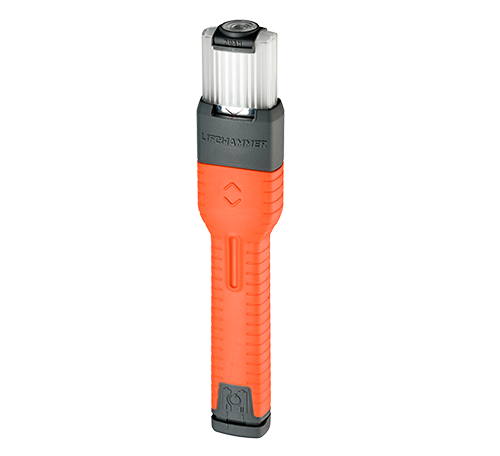
- Car escape tool — a safety hammer that can cut a seatbelt and break tempered glass gives you a reliable option if you ever need to exit a vehicle quickly
- Sunglasses — Spain’s light levels, particularly in summer, make driving without them genuinely tiring and potentially dangerous
- Printed or downloaded offline maps — mobile signal can drop in mountainous and rural areas
- Tyre pressure gauge and a tyre inflator or repair kit — useful on longer routes where a flat tyre might leave you far from help
If you are travelling with children, Spain requires appropriate child restraints for all passengers under 135 cm in height. Children must be seated in an approved child seat or booster seat regardless of age. This is enforced, and fines apply.
What are the most common fines for foreign drivers in Spain?
The most common fines for foreign drivers in Spain relate to speeding, using a mobile phone while driving, failing to carry mandatory safety equipment, and not wearing a seatbelt. Spain has a points-based system, and while foreign drivers cannot have points deducted from a non-Spanish licence, fines are still issued and can be collected on the spot or pursued through EU enforcement channels.
Common fines and their approximate ranges include:
- Speeding: From around 100 euros for minor excess speed up to 600 euros or more for serious violations, with possible vehicle immobilisation
- Mobile phone use while driving: Around 200 euros and points deducted for Spanish licence holders
- Not wearing a seatbelt: Around 200 euros per person not belted
- Missing mandatory safety equipment: Fines vary but can reach 200 euros for each missing item
- Driving under the influence of alcohol: Starting at 500 euros and rising significantly depending on the level detected
- Using a sat-nav mounted incorrectly or obstructing view: Around 80 to 200 euros
Spain participates in the EU cross-border enforcement directive, which means fines issued to EU drivers can be pursued in their home country. UK drivers are in a different position post-Brexit, but Spanish authorities can still detain a vehicle or require on-the-spot payment for serious violations. The simplest approach is to treat Spanish road rules with the same seriousness you would apply at home.
How Lifehammer® supports your drive through Spain
We design products for exactly the kind of journey described in this article: long drives, unfamiliar roads, and the quiet confidence that comes from knowing you have thought of everything. Our focus is on reliability and quality that works when it matters — not products that look the part but fail under pressure.
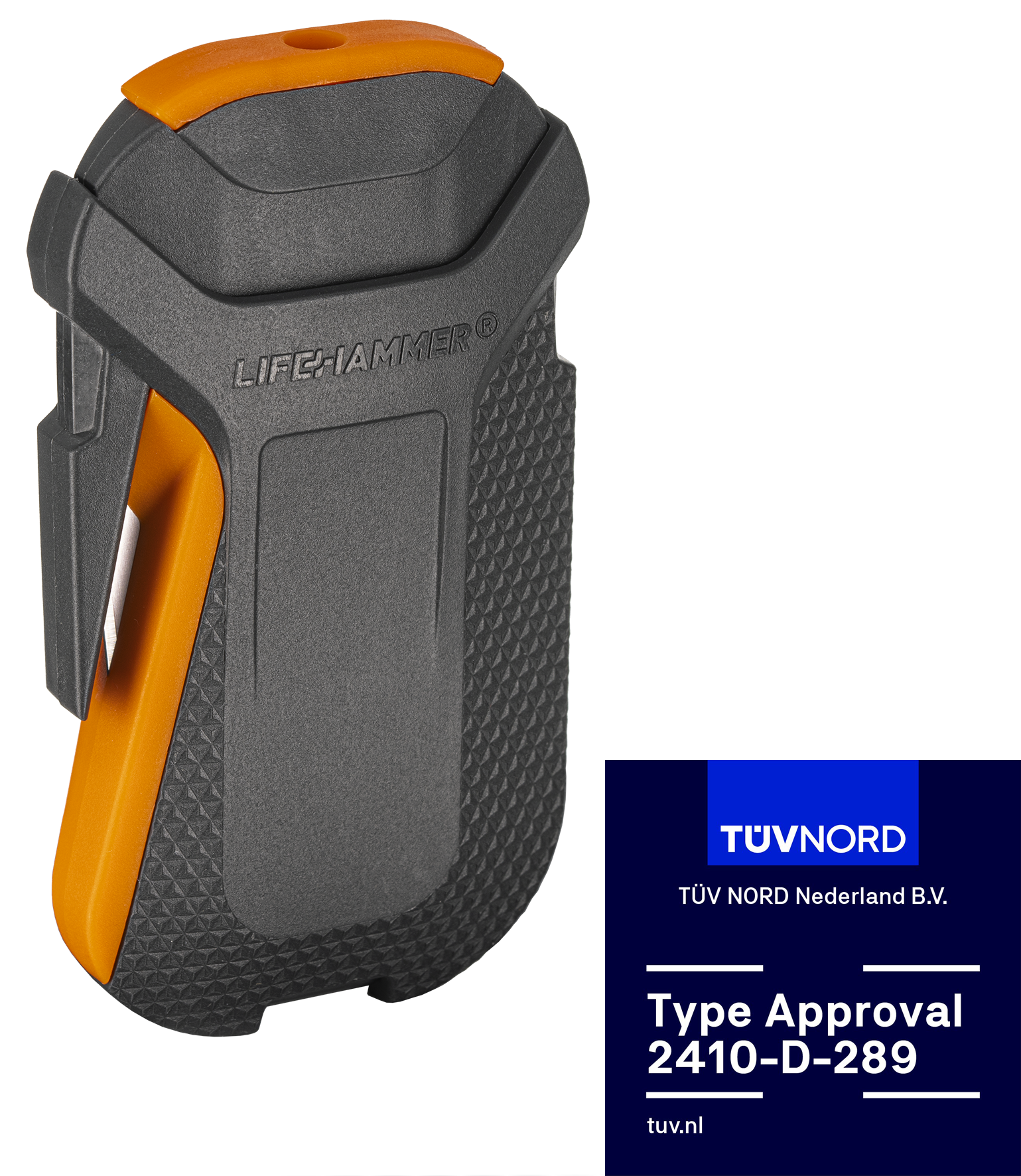
- The Lifehammer® Safety Hammer SMART uses a ceramic pin as its striking mechanism to break tempered glass and includes a seatbelt cutter — compact, easy to mount with 3M VHB adhesive tape, and designed to sit within reach without taking up space
- Our products are TÜV certified to German standards and trusted by first responders and fleet operators across Europe — the same quality standard applies to every product we make for everyday drivers
- The Safety Vest Ultra meets the high-visibility requirements that Spain legally mandates, making it a practical addition to any Spain road trip kit
- We have been developing car safety products since 1983, and our European heritage means our products are built around the specific conditions and legal requirements of roads like Spain’s
If you have questions about which product fits your car or your journey, our FAQ page covers the details in plain language.