 English
 Nederlands
 Deutsch




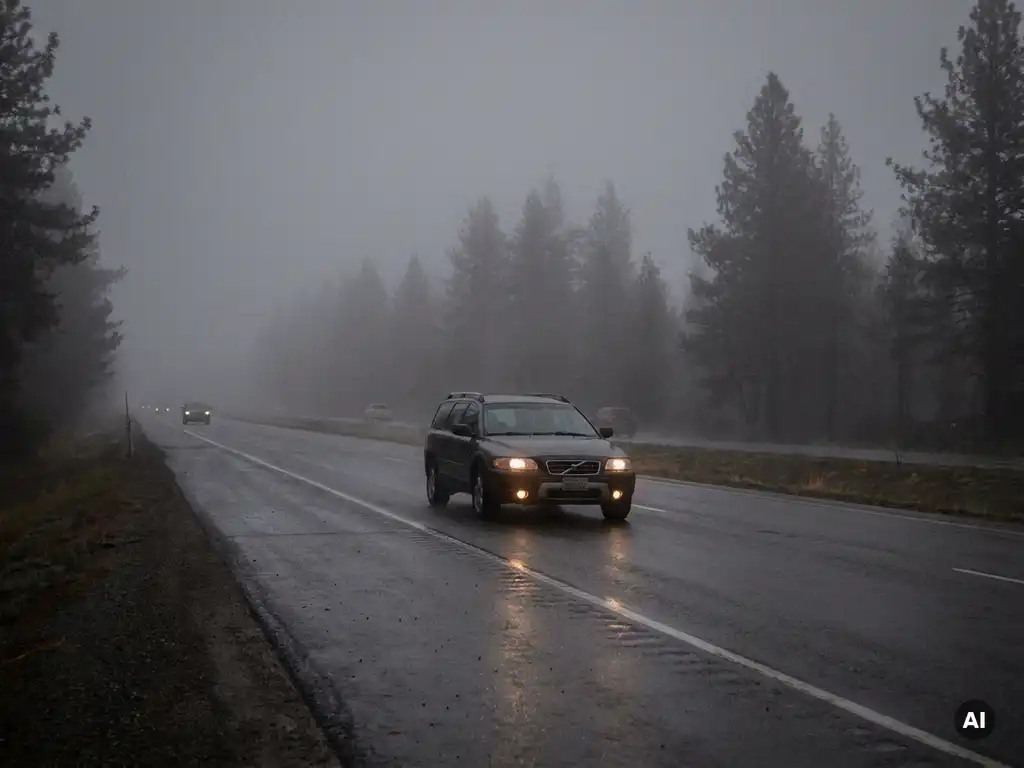
Turn your fog lights on when visibility drops below 100 metres due to fog, heavy rain, snow, or smoke. That is the standard threshold used across most European countries, including the UK, and it applies to both front and rear fog lights. The rules around which lights to use, and when to switch them off, are more specific than many drivers realise.
Fog lights are not simply a stronger version of your normal headlights. They serve a distinct purpose, and using them incorrectly can be just as problematic as not using them at all. The sections below cover the practical rules, the legal side, and what else you should be doing when visibility falls.
What’s the difference between front and rear fog lights?
Front fog lights are low-mounted lamps positioned to illuminate the road surface directly ahead without reflecting back off the fog. Rear fog lights are a single bright red light (or two, depending on the vehicle) mounted at the back of the car, designed to make your vehicle visible to drivers following behind. They serve opposite purposes: front fog lights help you see, rear fog lights help others see you.
Front fog lights sit close to the road and project a wide, flat beam that cuts under the fog rather than into it. This reduces the amount of light that bounces back at the driver, which is the main problem with standard headlights in dense fog. They are typically yellow or white and are standard on most modern cars, though not all vehicles include them.
Rear fog lights are significantly brighter than standard tail lights, which is why they are effective in low-visibility conditions but genuinely dazzling in clear weather. In most European countries, cars are required to have at least one rear fog light. The symbol on your dashboard is usually an orange or red light with horizontal lines and a wavy line through them, facing rearward.
What counts as poor visibility when driving?
Poor visibility in the context of fog light rules means you cannot see clearly for 100 metres or more ahead. This is the legal threshold in the UK and across much of Europe. At that distance, you should be able to see another vehicle or a road feature clearly. If you cannot, conditions qualify as poor visibility and fog light use becomes appropriate.
In practice, 100 metres is roughly the length of a football pitch. If you are uncertain whether conditions meet the threshold, a useful check is whether you can clearly make out a stationary vehicle or large object at that distance. If the answer is no, your fog lights should be on.
Poor visibility is not limited to fog. Heavy rain, blizzard conditions, dense spray from motorway traffic, smoke, or sand storms can all reduce visibility to the same degree. The cause does not change the rule. What matters is the distance at which you can see clearly, not the specific weather event creating the problem.
Should you use front fog lights, rear fog lights, or both?
In most low-visibility conditions, rear fog lights are the higher priority. They make your vehicle visible to drivers behind you, which addresses one of the most serious risks in fog: rear-end collisions. Front fog lights are useful when visibility ahead is also compromised, but they are not always necessary if your standard headlights are providing adequate forward illumination.
The practical guidance is as follows:
- Rear fog lights: Switch these on whenever visibility drops below 100 metres. This is the minimum action you should take in poor conditions.
- Front fog lights: Use these in addition to your standard dipped headlights when forward visibility is severely reduced and your headlights are reflecting back off the fog rather than lighting the road ahead.
- Both: In very dense fog where forward and rearward visibility are both compromised, using both front and rear fog lights together is appropriate.
Always switch fog lights off as conditions improve. If visibility lifts above 100 metres, rear fog lights in particular should be turned off. They are bright enough to dazzle following drivers in clear conditions and can obscure your brake lights, which creates a genuine safety risk.
Is it illegal to drive with fog lights on in clear conditions?
Yes, in most European countries it is illegal to use rear fog lights when visibility is not seriously reduced. In the UK, for example, using rear fog lights in clear conditions is an offence under the Road Vehicles Lighting Regulations. The same applies in many other European jurisdictions. Front fog lights are generally treated differently and are not always subject to the same restriction, though using them unnecessarily is still considered poor practice.
The reason rear fog lights are restricted is straightforward: they are extremely bright. When used in clear conditions, they dazzle drivers behind you, reduce the visibility of your brake lights, and create unnecessary distraction. The same intensity that makes them useful in fog makes them actively harmful when the road is clear.
Front fog lights in clear conditions are less likely to result in a fine, but they can still dazzle oncoming drivers if the vehicle is set up a certain way. The general principle across European road law is that you should only use lights that are appropriate for the conditions at hand. Using fog lights as a style choice or out of habit is not in keeping with that principle.
How are fog lights different from full beam headlights?
Full beam headlights project a long, high-intensity beam designed for dark roads with no oncoming traffic. In fog, this beam hits the water droplets in the air and reflects back at the driver, reducing forward visibility rather than improving it. Fog lights, by contrast, are angled low and spread wide to illuminate the road surface beneath the fog layer, avoiding the reflection problem.
Full beam is the wrong choice in fog for this reason. The brighter the light you project into a fog bank, the more light bounces back. Many drivers instinctively reach for full beam when they cannot see well, but in foggy conditions this makes the situation worse. Dipped headlights combined with front fog lights give better forward visibility than full beam alone.
The positioning of fog lights also matters. Because they are mounted low on the front bumper, they project the beam below the densest part of the fog, which often sits at eye level or above. Full beam headlights, mounted higher and angled forward, project directly into that dense layer. This is why the two light types behave so differently in the same conditions.
What else should you do when driving in fog?
Switching on the correct lights is only one part of driving safely in fog. Reduced visibility requires a wider set of adjustments to how you drive, how you follow other vehicles, and how you prepare before setting off.
- Reduce your speed: Your stopping distance needs to match your visibility distance. If you can only see 50 metres ahead, you need to be travelling at a speed that allows you to stop within 50 metres. This often means driving significantly slower than the posted limit.
- Increase your following distance: The two-second rule becomes inadequate in fog. Increase the gap between you and the vehicle ahead to give yourself more time to react if they brake suddenly.
- Use dipped headlights, not full beam: As covered above, full beam reflects off fog and reduces your forward visibility. Keep to dipped headlights and use front fog lights if your vehicle has them.
- Listen as well as look: At low speeds in dense fog, opening your window slightly at junctions can help you hear approaching vehicles before you see them.
- Do not rely on the vehicle in front: Following another vehicle’s tail lights is a natural instinct in poor visibility, but it can give a false sense of security. Maintain your own safe stopping distance regardless of what the car ahead is doing.
- Check your mirrors before slowing: In fog, the driver behind you may not be maintaining a safe gap. Checking your mirrors before braking gives you a moment to assess whether a gentle, progressive slowdown is safer than a sudden stop.
- Delay your journey if conditions are severe: If fog is forecast to be dense and widespread, the most practical decision is sometimes to wait. No journey is improved by driving in conditions that significantly exceed your ability to react.
How Lifehammer® supports you with driving in fog
At Lifehammer® we have been developing vehicle safety tools since 1983, and being prepared for difficult driving conditions is exactly what our products are designed to support. Fog and low-visibility driving are situations where having the right equipment in your car already makes a difference, before you even need to reach for it.
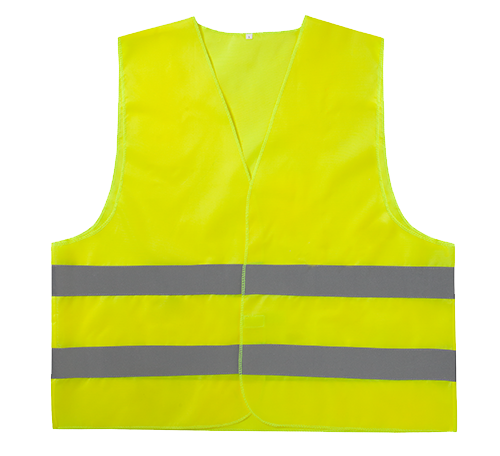
- Our Safety Vest Ultra is stored in an ultra-flat vacuum pack that fits discreetly under any floor mat and decompresses immediately on opening. In fog-related incidents or roadside situations where you need to be visible outside the vehicle, a high-visibility vest is not optional in many European countries. It is one-size-fits-all and suitable for both drivers and passengers.
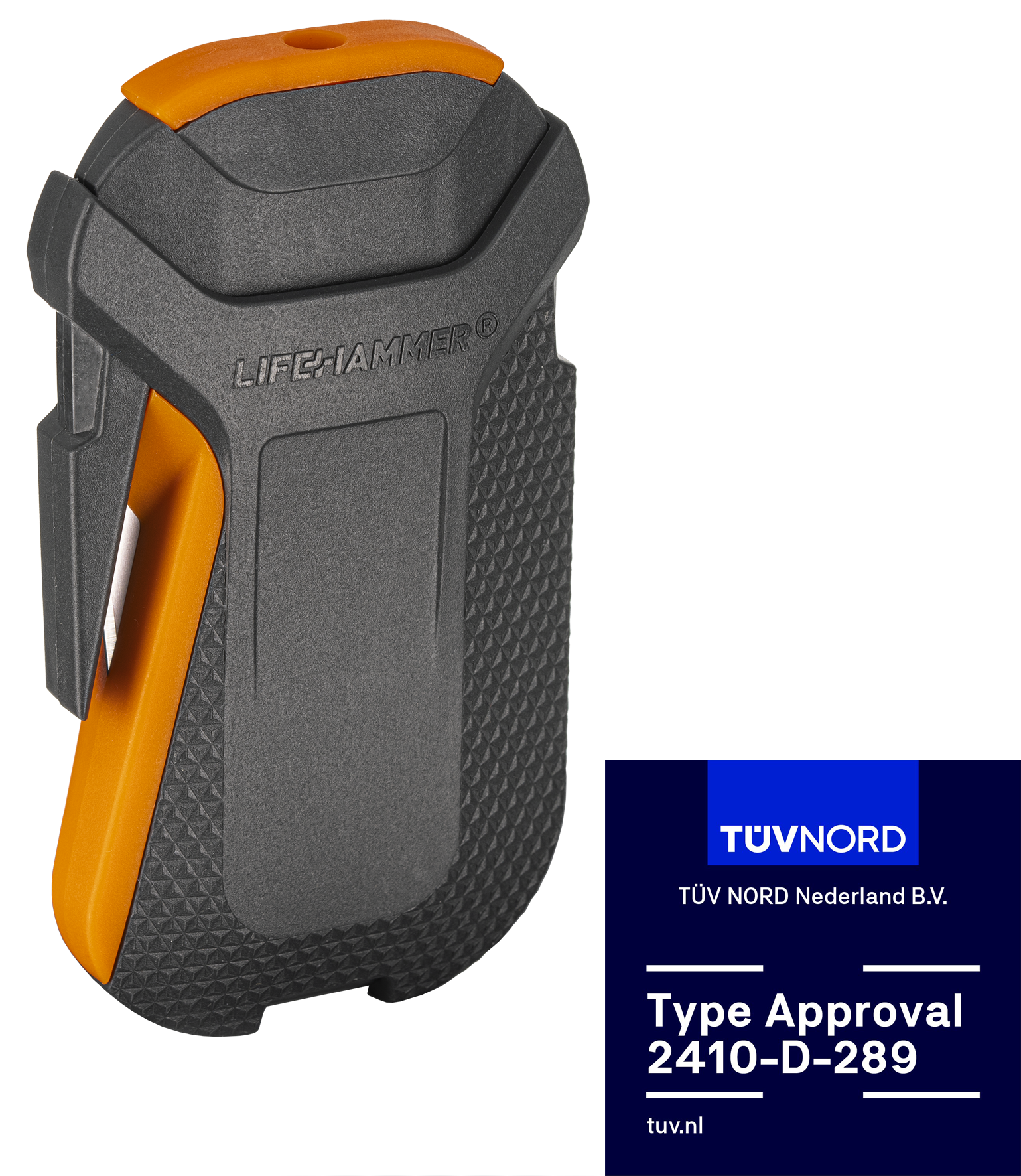
- Our safety hammer range gives you a reliable means of escape if a vehicle becomes undriveable after a collision in poor visibility. The Classic and Plus models use a hardened carbon steel hammerhead; the Safety Hammer Evolution and Safety Hammer SMART use an automatic ceramic striking mechanism. All four models cut seatbelts and break tempered side windows.
- All Lifehammer® safety hammers are TÜV certified and trusted by first responders and fleet operators across Europe.
If you have questions about which products suit your vehicle or your regular driving conditions, our Q&A section covers the most common topics in straightforward detail. You can also find our products on Amazon if you prefer to order there.