 English
 Nederlands
 Deutsch




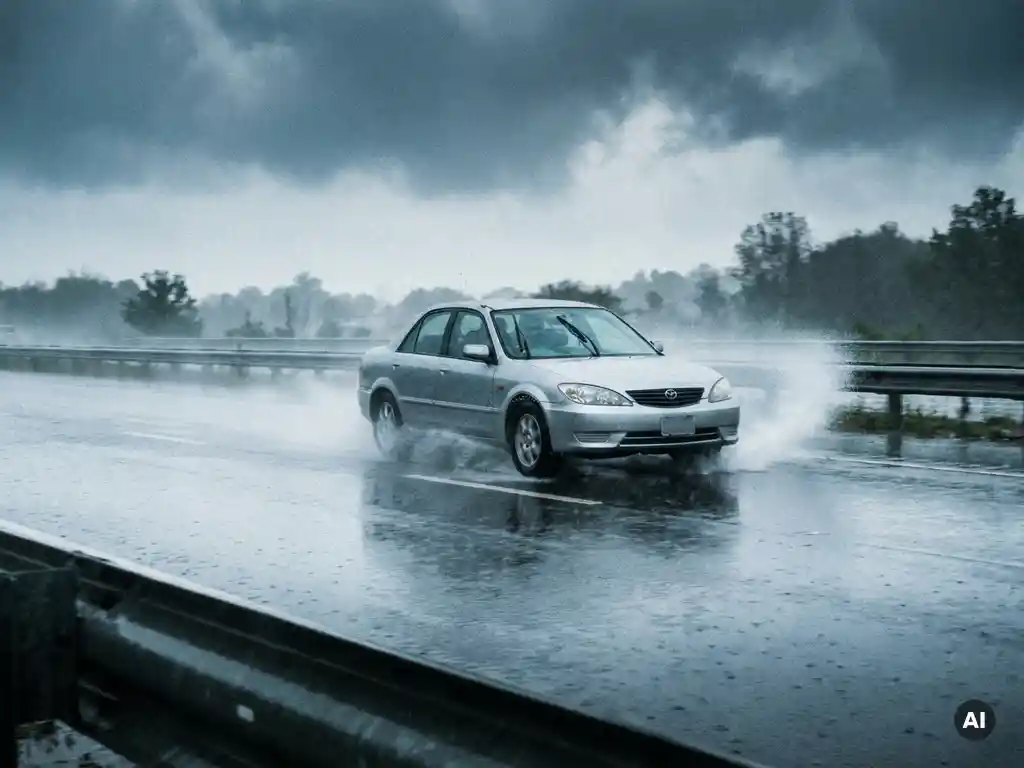
Aquaplaning most often occurs when a vehicle is travelling at speed on a wet road and the tyres can no longer channel water away fast enough to maintain contact with the surface. At that point, a thin layer of water builds between the tyre and the road, and the vehicle effectively floats. It happens quickly, often without warning, and once it begins, the driver has very limited ability to steer or brake effectively until the tyres regain grip.
The conditions that make aquaplaning most likely are a combination of speed, water depth, tyre wear, and road surface. Understanding each of these factors gives you a much clearer picture of when the risk is highest and what you can do to reduce it. The sections below address the most common questions about aquaplaning in direct, practical terms.
Why is aquaplaning so difficult to control once it starts?
Aquaplaning is difficult to control because steering and braking both depend on tyre contact with the road surface. When a layer of water lifts the tyres off the tarmac, those inputs lose their effect almost entirely. The car continues moving in whatever direction it was already heading, and neither turning the wheel nor pressing the brake pedal can redirect it until the tyres touch down again.
The physics behind this are straightforward. A tyre works by pressing against the road and creating friction. That friction is what allows you to accelerate, slow down, and change direction. Water disrupts that contact by acting as a lubricant between the rubber and the surface. The faster you are travelling, the more water builds up in front of the tyre, and the harder it becomes for the tread to push it aside in time.
What makes the experience particularly disorienting is that the steering wheel may feel lighter than usual rather than heavy or resistant. Drivers sometimes interpret this as the car handling well, when in fact it signals a loss of traction. The natural instinct to brake hard or make a sharp correction often makes the situation worse, because abrupt inputs can cause the car to spin when the tyres do eventually regain grip.
At what speed does aquaplaning typically begin?
Aquaplaning can begin at speeds as low as 80 km/h on a wet road, though the precise threshold depends on tyre condition, water depth, and vehicle weight. At higher speeds, the risk increases significantly. On motorways in heavy rain, aquaplaning can occur even when drivers feel they are travelling at a reasonable pace for the conditions.
Speed is the single most controllable factor in aquaplaning risk. The faster a tyre rotates, the less time it has to move water out of the contact patch. Slowing down in wet conditions is not about being overly cautious; it is about giving your tyres the time they need to do their job. Reducing speed from 110 km/h to 90 km/h in heavy rain can meaningfully lower the likelihood of losing contact with the road.
It is worth noting that the relationship between speed and aquaplaning is not linear. Risk does not increase gradually and predictably. Instead, there is often a threshold beyond which the water film forms rapidly and grip disappears suddenly. This is why wet-weather driving requires a consistent reduction in speed, not just a slight adjustment when conditions look particularly bad.
What road and weather conditions make aquaplaning most likely?
Aquaplaning is most likely when there is standing water on the road surface, particularly in the early stages of rainfall. Light rain after a dry spell can be especially hazardous, because water mixes with oils and residue on the road before it washes them away, creating a particularly slippery surface. Deep puddles, flooded wheel tracks, and poorly drained roads all increase the risk significantly.
Road geometry also plays an important role. Roads with inadequate camber or worn surfaces tend to hold water in shallow sheets rather than allowing it to run off. Motorways are often better drained than older rural roads, but wheel ruts worn into the surface by heavy vehicles can channel water in ways that catch drivers off guard.
Weather intensity matters too. Heavy, sustained rainfall creates more standing water than a brief shower, but even moderate rain can be enough if the road surface is already saturated. Night driving adds an additional layer of difficulty, because it is harder to see where water has pooled. Slowing down and increasing following distance in any of these conditions is a straightforward way to reduce exposure to aquaplaning risk.
How do tyre condition and tread depth affect aquaplaning risk?
Tyre tread depth has a direct and significant effect on aquaplaning risk. Tread channels are designed to move water away from the contact patch so the rubber can press against the road. As tread wears down, those channels become shallower and less effective. A tyre at the legal minimum tread depth of 1.6 mm provides far less protection against aquaplaning than a tyre with 4 mm or more of tread remaining.
The tread pattern itself also matters. Tyres designed for wet weather typically feature wider grooves and specific channel geometries that direct water outward from the contact patch efficiently. Summer tyres and worn all-season tyres can perform poorly in heavy rain, even when they appear to be in reasonable condition.
Tyre pressure is another factor that is often overlooked. An underinflated tyre has a contact patch that deforms under load, which can reduce the effectiveness of the tread pattern and increase the risk of the tyre riding up on a water film. Checking tyre pressure regularly is one of the simplest and most effective things you can do to maintain wet-weather grip.
Replacing tyres before they reach the legal minimum is a practical way to keep aquaplaning risk low. Many tyre manufacturers recommend replacement at 3 mm of remaining tread for wet-weather driving, rather than waiting until the legal limit is reached.
What should you do if your car starts aquaplaning?
If your car starts aquaplaning, the most important thing to do is avoid sudden inputs. Do not brake sharply, do not turn the wheel abruptly, and do not accelerate. Ease off the accelerator gently to allow the car to slow down gradually, keep the steering wheel pointed in the direction you want to travel, and wait for the tyres to regain contact with the road surface.
The instinct to brake hard is understandable but counterproductive. Sudden braking can cause the wheels to lock, which removes any remaining ability to steer. If your car has ABS, the system will prevent full wheel lock, but heavy braking while aquaplaning still risks a loss of directional control when traction returns.
Once the tyres regain grip, you may feel a slight jolt or pull as the car reconnects with the road. At that point, make smooth, controlled corrections rather than sharp ones. If the car has drifted toward a lane edge, steer back gradually rather than jerking the wheel.
The most useful preparation for aquaplaning is not learning how to recover from it, but reducing the conditions that cause it in the first place: lower your speed in wet weather, maintain your tyres, and increase your following distance so you have more time to react if something unexpected happens ahead.
Does ESP or ABS prevent aquaplaning?
Neither ESP nor ABS prevents aquaplaning. Both systems are designed to manage traction and stability when the tyres are in contact with the road. When a tyre is floating on a film of water, there is no contact for these systems to work with. ESP and ABS cannot restore grip that the road surface is not providing.
That said, these systems do help in the moments around an aquaplaning event. ABS prevents wheel lock during braking, which means that if you brake as the car begins to regain contact, the system can help you maintain some directional control rather than locking up completely. ESP monitors the car’s direction and can apply braking to individual wheels to correct a skid once traction returns.
The practical implication is that drivers should not treat the presence of ESP or ABS as a reason to drive faster in wet conditions. These systems are a safety net for moments when things go wrong, not a substitute for appropriate speed and tyre maintenance. Relying on electronic assistance to manage aquaplaning risk is a misunderstanding of what these technologies are designed to do.
Modern vehicles increasingly include traction control systems that can detect sudden changes in wheel spin, which may provide a small amount of warning that aquaplaning is occurring. But detection is not the same as prevention. The fundamentals of wet-weather driving remain the same regardless of what technology your vehicle carries.
How Lifehammer® supports you with wet-weather driving safety
At Lifehammer® we have been developing vehicle safety tools since 1983, and wet-weather driving preparedness is exactly the kind of situation our products are designed to support. Aquaplaning and other wet-road hazards are reminders that conditions can change faster than any driver can fully anticipate. Being equipped for those moments is a straightforward form of responsibility.
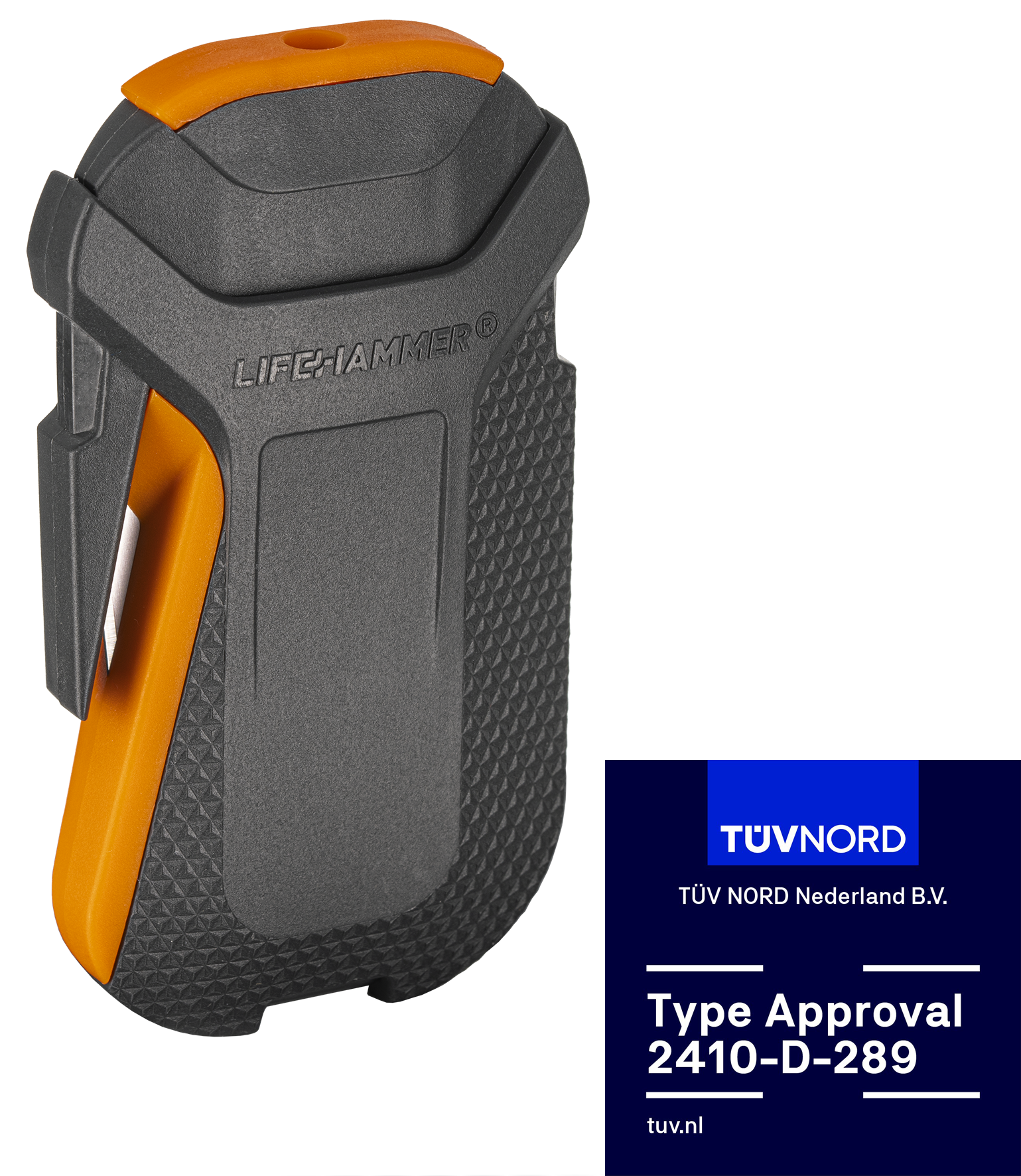
- Our Safety Hammer Evolution uses a ceramic hammerhead to break tempered side windows in an emergency, and includes a seatbelt cutter for swift exit. It is TÜV certified and trusted by first responders across Europe.
- The Safety Hammer SMART uses the same ceramic pin mechanism and seatbelt cutter in a compact, low-profile design that can be mounted discreetly using 3M VHB double-sided adhesive tape, keeping it within reach without requiring tools.
- Our Safety Vest Ultra comes in an ultra-flat vacuum pack that stores under any floor mat and decompresses immediately on opening. In poor visibility conditions, including heavy rain and low light, being seen matters as much as being safe.
- All Lifehammer® safety hammers are TÜV certified and have been relied on by police officers, firefighters, and fleet operators for decades. That standard of reliability is what we build every product to.
If you have questions about which products suit your vehicle or driving habits, our Q&A section covers the most common topics in straightforward detail. And if you are ready to add a safety hammer to your car, you can find our full range on Amazon.