 English
 Nederlands
 Deutsch




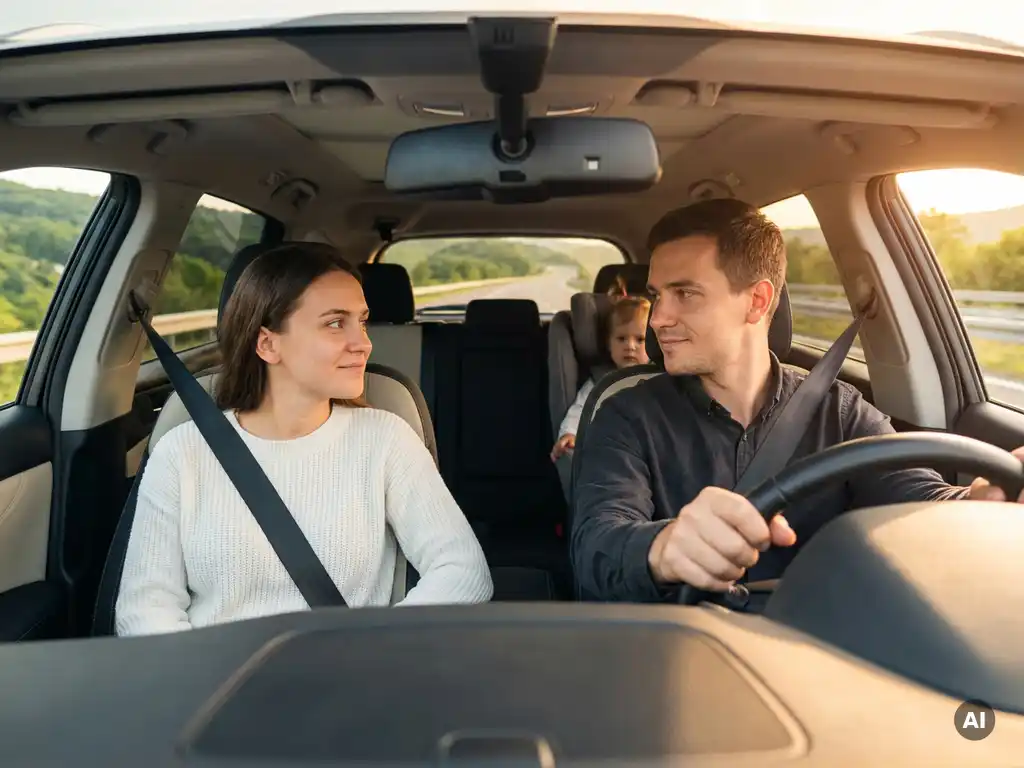
Most drivers spend years behind the wheel without ever thinking about what they would do if something went seriously wrong. That is not a criticism: it is simply how driving works. You develop routines, you trust your car, and you focus on the journey ahead. But there is a difference between driving confidently and driving prepared. Understanding how your car behaves in an emergency, and what you can do in the first moments after an accident, is one of the most practical things you can know as a driver.
This article builds that knowledge progressively, from what physically happens to a vehicle in a collision, through to how you can help others at the scene safely. Each section adds a layer, so by the end you have a complete, practical picture of car emergency preparedness.
What actually happens to a car in a serious accident
In a serious collision, a car absorbs and redirects enormous forces in a fraction of a second. Modern vehicles are engineered with crumple zones, sections of the bodywork designed to deform in a controlled way, absorbing impact energy before it reaches the passenger cabin. This is intentional engineering, not a flaw.
What this means in practice is that the exterior of a car can look dramatically damaged while the cabin remains structurally intact. It also means the reverse can be true: a vehicle that looks relatively unharmed from the outside may have sustained internal damage that affects how doors, windows, and electronic systems function.
One important detail many drivers do not realise: the electrical system of a modern car can be disrupted or shut down entirely following an impact. Power windows, central locking, and electronic seat adjustments all depend on that system. For example, if a collision triggers the car’s safety systems or damages the battery connection, the powered features you rely on every day may simply stop responding.
Why everyday car features can fail when you need them most
Building on what we know about electrical disruption after a collision: the features most likely to fail are the ones most drivers assume will always work. Power windows are perhaps the clearest example. In normal conditions, they open and close instantly. In a car emergency where the electrical system has been compromised, they may not respond at all.
Door frames can also warp during a collision, making manual opening difficult or impossible even when the locking mechanism is functioning. A door that opened perfectly that morning may require significant force to move after even a moderate impact, or may not open from the inside at all.
Seatbelts present a different kind of challenge. They are designed to lock under sudden deceleration, which is exactly what happens in a crash. After the initial impact, a seatbelt that has locked under load may not release with a normal press of the button. This is not a malfunction; it is the belt doing its job, but it means that escaping a vehicle after an accident can require cutting the belt rather than simply unbuckling it.
- Power windows depend on a functioning electrical system and may not operate after an impact
- Door frames can deform under collision forces, blocking manual exit
- Seatbelt buckles may lock under load and not release normally after a crash
- Central locking can engage or disengage unpredictably when electronics are disrupted
The escape sequence: what to do in the first 60 seconds
Knowing what can fail prepares you to act in the right order when it matters. The first 60 seconds after a car accident are not the time to figure out a plan; they are the time to follow one. Here is a clear sequence based on what emergency professionals recommend.
- Stay calm and assess. Take a breath. Check whether you are injured. Do not attempt to move if you suspect a serious neck or spinal injury, unless there is an immediate threat such as fire or water.
- Release your seatbelt. Try the buckle first. If it does not release, use a seatbelt cutter. A dedicated car escape tool with a built-in cutter is designed to cut through a belt cleanly and quickly.
- Try the door. If the door will not open, try the window. If the window is powered and unresponsive, you will need to break the glass. Only tempered side windows can be broken using a safety hammer or ceramic pin tool; laminated glass, which is used for windscreens, cannot be broken this way.
- Exit low and move away. Once out, move away from the vehicle and get to a safe position away from traffic.
The reason this sequence matters is that each step depends on the one before it. Trying to exit through a door before releasing your seatbelt wastes critical time. Attempting to break a window without the right tool can cause injury without achieving the result. A clear, practised sequence removes the need to make decisions under pressure.
What to keep in your car and where to keep it
Applying the escape sequence above only works if you have the right tools within reach. This is where preparation moves from theory into practice. The most important principle here is accessibility: a tool stored in the boot of your car is not useful to someone trapped in the driver’s seat.
A car escape tool, one that combines a seatbelt cutter with the ability to break tempered glass, should be stored within arm’s reach of the driver’s seat. The glovebox is one option, but the best position is mounted directly to the dashboard, door pillar, or centre console, so you can reach it without leaning or searching. Avoid placing any mounted tool in or near airbag deployment zones.
Beyond an escape tool, a well-prepared car kit for emergencies typically includes:
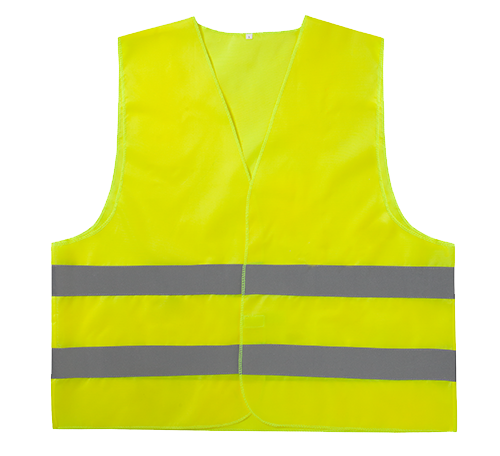
- A high-visibility safety vest, stored inside the cabin rather than the boot so it is accessible before you exit the vehicle
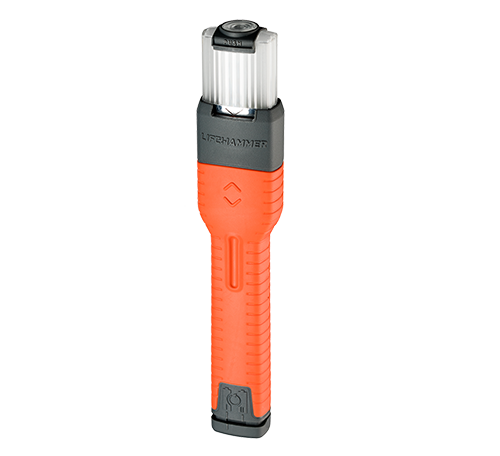
- A torch or light source for low-visibility situations
- A basic first aid kit
- A warning triangle or road flare to alert other drivers at the scene
Where you store things matters as much as what you store. Items in the boot are useful for helping others but not for self-rescue. Think of your car in two zones: the cabin for immediate personal safety, and the boot for wider emergency response.
How to help others after an accident safely
Once you have exited the vehicle safely and moved to a secure position, the situation shifts. You may be in a position to assist other drivers, passengers, or bystanders, and how you do that matters both for their safety and yours.
The first step is to make the scene visible. Switch on your hazard lights if your car is still accessible and it is safe to do so. Put on a high-visibility vest before approaching any other vehicle; this is a legal requirement in many European countries and a practical one regardless. Other drivers need to see you before they can avoid you.
When approaching another vehicle after an accident, keep these principles in mind:
- Do not move an injured person unless there is an immediate danger such as fire, flooding, or oncoming traffic. Moving someone with a spinal injury without proper support can cause serious harm.
- Call emergency services first. Give your location clearly and describe what you can see. Let the professionals direct what happens next.
- Stay with the person and keep them calm. Talk to them, reassure them, and keep them still and warm if possible.
- If a door or window needs to be opened to reach someone, use a car escape tool on the tempered side glass only, never on the windscreen, which is laminated and will not break in the same way.
Helping others effectively after a car emergency is less about heroic action and more about clear thinking. Staying visible, calling for help promptly, and knowing what not to do are as important as any physical intervention.
How Lifehammer® supports you in a car emergency
At Lifehammer® we have been developing vehicle safety tools since 1983, and car emergency preparedness is exactly what our products are designed for. Whether you are equipping your first car or updating what you carry, we focus on tools that are reliable, compact, and built to perform when it counts.
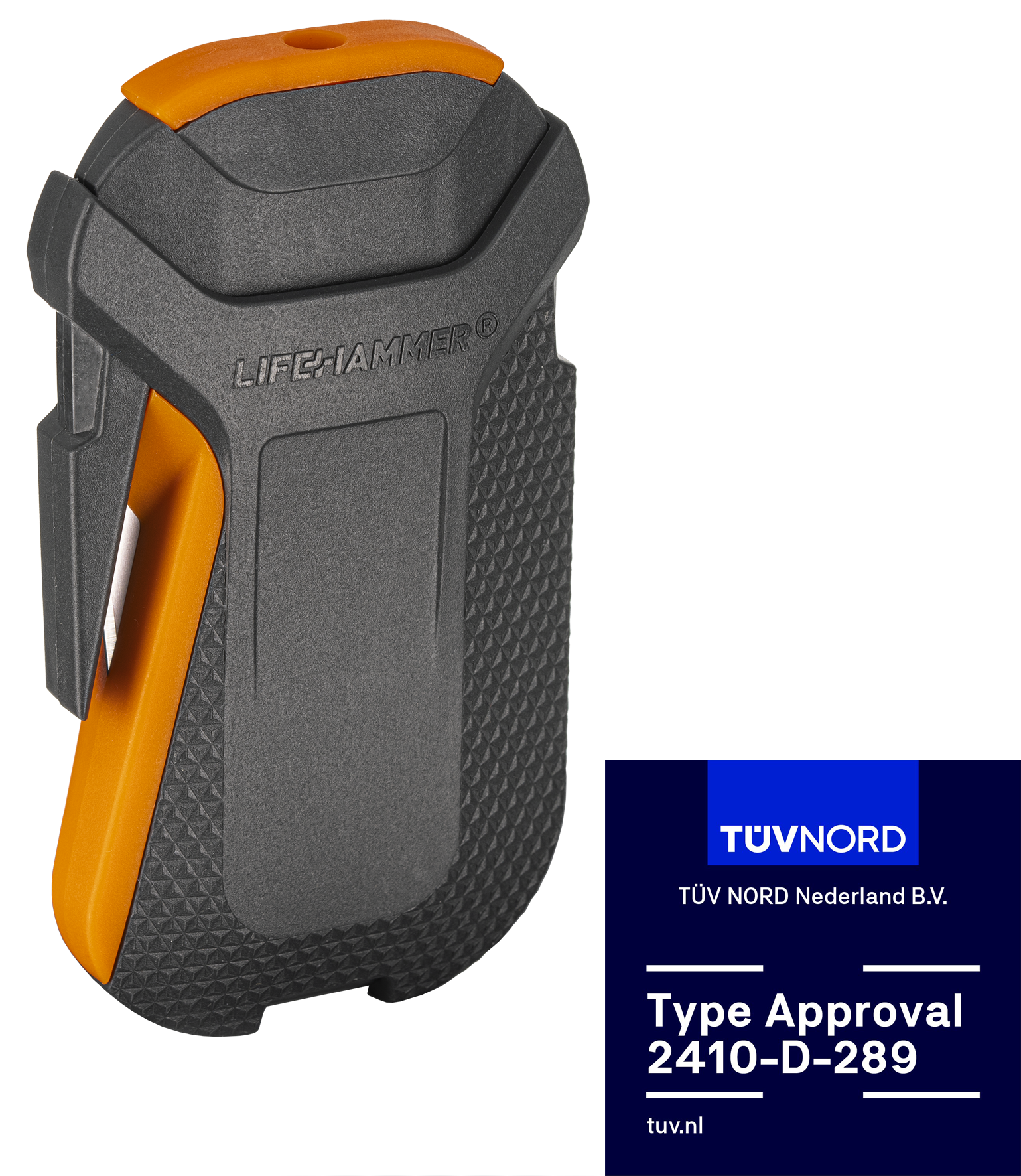
- Our safety hammer range includes four models to suit different needs and preferences. The Classic and Plus use a hardened carbon steel hammerhead, while the Safety Hammer Evolution and Safety Hammer SMART use an automatic, spring-loaded striking mechanism with a ceramic pin to break the glass. All four cut seatbelts and are designed to break tempered side windows.
- All Lifehammer® safety hammers are TÜV certified and trusted by first responders and fleet operators across Europe, offering the same standard of reliability for everyday drivers.
- Our Safety Vest Ultra comes in an ultra-flat vacuum pack that stores discreetly inside the cabin and decompresses immediately on opening, so it is ready before you exit the vehicle, not after.
- Mounting options vary by model: the Safety Hammer SMART can be positioned using 3M VHB double-sided adhesive tape, while other models use a hex key for secure installation. All are designed to keep the tool within reach of the driver’s seat.
If you have questions about which products are right for your car, our Q&A section covers the most common topics in straightforward detail. You can also find Lifehammer® products on Amazon if you prefer to order there.