 English
 Nederlands
 Deutsch






Summer road trips are one of the great pleasures of family life. Long stretches of open road, new destinations, children excited in the back seat. But hot weather driving brings a specific set of challenges that catch many families off guard. High temperatures affect your vehicle, your concentration, and your passengers in ways that cooler seasons simply do not. A safe road trip in summer requires more than a full tank of fuel and a good playlist. It requires preparation. These ten tips will help you cover all the important bases before you set off and while you are on the road.
What makes summer road trips uniquely risky
Heat is a compounding factor. It affects your tyres, your engine, your ability to concentrate, and the comfort and safety of everyone in the vehicle. On a hot day, the interior of a parked car can reach dangerous temperatures within minutes. Roads soften and expand in extreme heat, changing handling. Glare from the sun reduces visibility. And the temptation to push through long distances without a break is stronger when the destination feels close.
Family road trips add another layer of responsibility. When children or pets are on board, the consequences of poor preparation are more serious. Understanding where the risks come from is the first step toward managing them sensibly. The tips below address the most common and most preventable hazards of hot weather driving.
1: Check your car before leaving home
A pre-departure vehicle check is the single most effective thing you can do for road trip safety. Heat puts extra strain on components that might be quietly underperforming in normal conditions, and a breakdown on a remote summer road is far more uncomfortable and risky than one in mild weather.
Before you leave, check your tyre pressure. Tyres naturally expand in heat, and underinflated tyres are more prone to blowouts at motorway speeds. Check your coolant level, engine oil, brake fluid, and windscreen washer fluid. Inspect your windscreen wipers, and make sure all lights are functioning. If your car has not had a service recently, a quick check by a mechanic before a long trip is time well spent.
This step is particularly important for families who load the car heavily with luggage and equipment. Extra weight affects braking distance and tyre wear, so knowing your vehicle is in good condition before adding that load matters.
2: Pack a dedicated car emergency kit
A road trip checklist should always include a car emergency kit. This is not about expecting the worst. It is about being equipped to handle the unexpected calmly and effectively. A well-stocked kit means you are not reliant on help arriving quickly, which on remote summer routes may take longer than you expect.
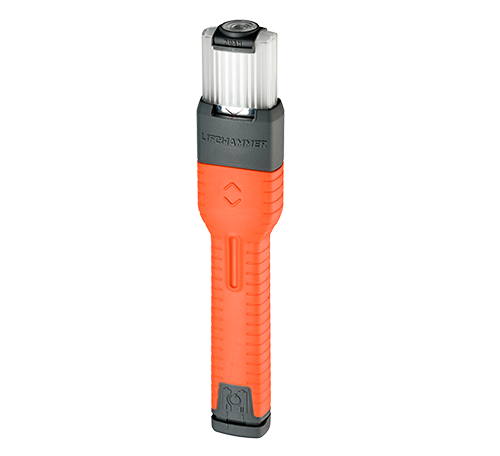
A practical summer car emergency kit includes a first aid kit, a reflective warning triangle or road flares, a high-visibility vest, a torch, a phone charger or power bank, a basic tool kit, a tyre repair kit or inflator, and a supply of water. In summer specifically, add sunscreen, insect repellent, and a foil emergency blanket.
Keep the kit stored accessibly, not buried under luggage in the boot. In a genuine roadside situation, you need to reach it quickly and without unpacking the entire car.
3: Plan rest stops to beat driver fatigue
Driver fatigue is one of the leading causes of serious road accidents, and heat makes it worse. Warm car interiors, long straight roads, and the monotony of motorway driving all accelerate the onset of tiredness. On a hot summer day, fatigue can set in faster than you expect, even on a journey you have done many times before.
Plan your rest stops before you leave, and treat them as fixed points in your journey rather than optional. For most drivers, a break of at least fifteen minutes every two hours is a useful guideline. Step out of the car, move around, and get some fresh air. Avoid heavy meals before driving, as they contribute to drowsiness.
For families with children, planned stops also reduce pressure. Children need to move and stretch, and a scheduled break at a rest area or service station gives everyone a reset before the next leg of the journey.
4: Keep children and pets safe from heat
Children and animals are far more vulnerable to heat than adults. Their bodies regulate temperature less efficiently, and they cannot always communicate discomfort clearly. In a car, this becomes a serious concern, particularly during traffic delays or when air conditioning is not working at full capacity.
Never leave a child or pet unattended in a parked car, even for a short time. On a warm day, interior temperatures can rise to dangerous levels in under ten minutes. Keep children hydrated throughout the journey, and dress them in light, breathable clothing. Sunshades on rear windows help reduce direct sun exposure and keep the back seat cooler.
For pets, ensure they have access to water and good ventilation. If you are travelling with a dog, plan your stops at places where they can safely get out and cool down. Avoid walking pets on tarmac during peak heat hours, as the surface temperature can cause burns to their paws.
5: Stay hydrated throughout the journey
Dehydration affects concentration, reaction time, and decision-making. Research in driver behaviour consistently shows that even mild dehydration has a measurable impact on driving performance. On a hot day, your body loses fluids faster, and the air conditioning in a car can accelerate this further by drying out the cabin air.
Bring more water than you think you will need, and drink regularly rather than waiting until you feel thirsty. Thirst is a late indicator of dehydration, not an early warning. Avoid relying on caffeinated drinks or sugary sodas as your primary hydration source during the drive. Water is the most effective option.
For children, make water available at all times and encourage them to drink at every rest stop. Setting a simple routine, such as having a drink every time you stop for fuel, helps build the habit into the journey naturally.
6: Protect yourself from sun glare while driving
Sun glare is a genuine road safety hazard. Low sun angles in the morning and late afternoon can make it almost impossible to see clearly, even with a clean windscreen. In summer, this is compounded by longer days and the fact that more journeys begin or end during high-glare periods.
Keep a pair of good-quality polarised sunglasses within easy reach of the driver. Polarised lenses reduce reflected glare from road surfaces and other vehicles more effectively than standard tinted lenses. Keep your windscreen clean, both inside and outside, as dirt and smearing dramatically worsen glare. Use your sun visor and adjust it as the sun moves.
If glare becomes severe enough to impair visibility significantly, slow down and increase your following distance. It is better to arrive a few minutes later than to push through conditions where you cannot see clearly.
7: Know what to do if your car overheats
Engine overheating is more common in summer, particularly in slow-moving traffic where the cooling system is working harder without the benefit of airflow. If your temperature gauge begins to rise toward the red zone, act calmly and methodically.
Turn off the air conditioning immediately, as this reduces the load on the engine. If the gauge continues to rise, turn on the heater at full blast. This draws heat away from the engine and into the cabin, which is uncomfortable but effective. Pull over safely as soon as you can, turn off the engine, and wait for it to cool before opening the bonnet. Never remove the coolant cap while the engine is hot.
Once the engine has cooled, check the coolant level. If it is low and you have coolant available, top it up carefully. If you are unsure, call for roadside assistance rather than attempting to continue. Driving an overheating engine can cause serious and expensive damage.
8: Drive at cooler times of day
If your schedule allows it, planning your driving around the temperature is one of the most practical adjustments you can make for a safe family road trip in summer. The hottest part of the day typically falls between midday and late afternoon, and this is also when road surfaces are at their most stressed and driver fatigue is most common.
Early morning departures offer cooler temperatures, lighter traffic in many areas, and a fresh start for both driver and passengers. Evening driving, once the heat has begun to drop, is another good option for longer legs of the journey. If you are crossing very hot regions, consider splitting a long drive into an early morning section and a late afternoon or evening section, with a proper rest in the middle of the day.
This approach is especially practical for families. Children travel better when they are comfortable, and a cooler car makes the journey more manageable for everyone on board.
9: Prepare for emergencies on remote routes
Remote summer routes present a specific challenge: help may be far away. If your journey takes you through areas with limited mobile signal or sparse traffic, your level of preparation needs to reflect that. Self-sufficiency matters more when you cannot rely on a breakdown service arriving quickly.
Download offline maps before you leave so that navigation does not depend on a data connection. Let someone know your planned route and expected arrival time. Carry more water than you would on a familiar urban route. Know the location of the nearest town or service station along your planned path.
A fully charged phone, a portable power bank, and a basic roadside emergency kit are not luxuries on remote routes. They are sensible preparation for the kind of situation that can turn a minor inconvenience into a serious problem if you are not equipped.
10: Keep a safety tool within easy reach
A car emergency kit is only as useful as its most accessible item. In an urgent situation, you do not have time to search through a bag in the boot. A vehicle escape tool belongs within arm’s reach of the driver and front passenger at all times, not stored away where it cannot be reached quickly.
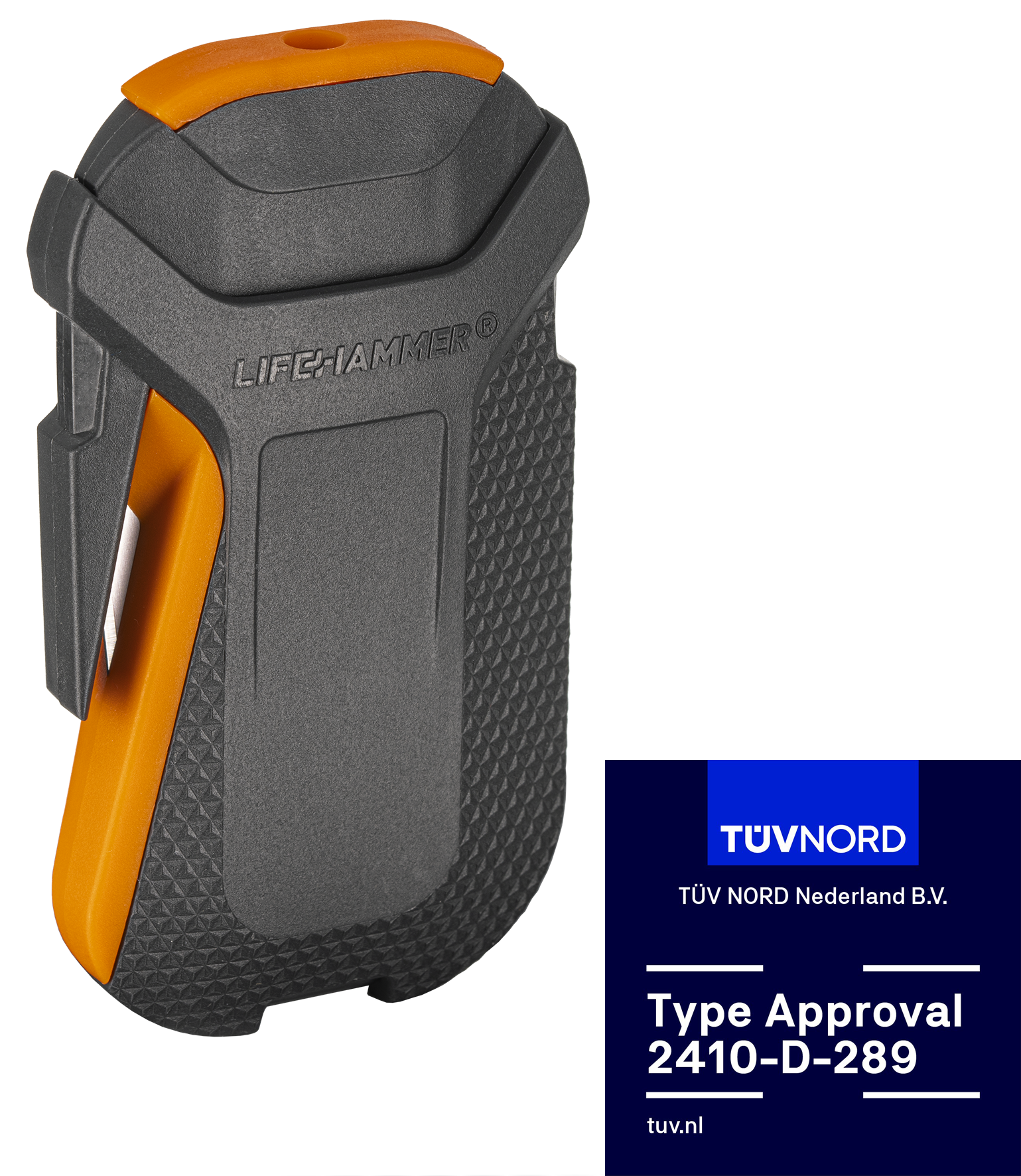
A safety hammer allows you to break tempered side window glass and cut through a jammed seatbelt. These are the two most common physical barriers people face when they need to exit a vehicle quickly. The spring-loaded or hammer mechanism requires minimal force, which matters when you are under stress or when a child or older passenger needs to use it.
Mount the tool in a fixed, consistent location so that every adult in the family knows exactly where it is. Familiarity with where the tool is stored means you do not have to think about it in a moment when clear thinking is already difficult.
Arrive safely — every trip, every season
A safe road trip comes down to preparation, awareness, and the right tools. The tips above cover the most important variables for hot weather driving, from your vehicle’s condition to your own physical state behind the wheel. None of them require significant effort or expense. They simply require that you think ahead.
At Lifehammer® we have been developing vehicle safety tools since 1983, and road trip preparation is exactly the kind of situation our products are designed for. Whether you are doing a quick pre-departure check or building out a complete car kit from scratch, we focus on tools that are reliable, compact, and genuinely useful when it counts.
- Our safety hammer range includes four models. The Classic and Plus use a manual hardened carbon steel hammerhead; the Evolution and Smart use an automatic ceramic hammerhead. All four cut seatbelts and break tempered side windows.
- All Lifehammer® safety hammers are TÜV certified and trusted by first responders and fleet operators across Europe.
- Our Safety Vest Ultra comes in an ultra-flat vacuum pack that stores discreetly under any floor mat and decompresses immediately on opening. It is one-size-fits-all and suitable for drivers and passengers alike.
If you have questions about which products are right for your car or your journey, our Q&A section covers the most common topics in straightforward detail.