 English
 Nederlands
 Deutsch






Being trapped in a car after an accident is one of the most disorienting situations a driver can face. The noise stops, the adrenaline kicks in, and your instincts push you to get out fast. But moving too quickly or in the wrong direction can make things worse. Knowing what to do in advance means you can act with a clear head rather than react in panic.
This guide walks you through exactly what to do if you find yourself unable to get out of your car after an accident. Follow these steps in order, stay methodical, and give yourself the best chance of getting out safely.
Stay calm and assess your situation first
Before you do anything else, take a breath. Your body is flooded with stress hormones, and your instinct will be to pull, push, and force your way out immediately. Resist that. A few seconds of stillness can prevent you from wasting energy on the wrong exit or aggravating an injury.
Check yourself first. Are you injured? Can you move your arms and legs without sharp pain? If you suspect a serious spinal injury, limit your movement as much as possible and focus on getting help rather than forcing your way out. If you are able to move, take stock of your surroundings before acting.
- Turn off the engine if it is still running
- Check for signs of fire or smoke; if present, escaping quickly becomes the priority
- Assess whether the car is stable or at risk of rolling
- Confirm whether you are in water; if so, wait until the pressure equalises before attempting to open the door
Once you have a clear picture of what you are dealing with, you can move through the following steps with purpose rather than panic.
Check every exit before forcing anything
When one door won’t open, the natural response is to pull harder. But the problem might not be the door; it might be your position, the lock, or a jammed mechanism. Before you force anything, check all your options systematically.
- Try the door handle again, both the inner and outer mechanism if reachable
- Check whether the door is locked, and unlock it manually if the electronic locks are unresponsive
- Try the door on the opposite side of the vehicle
- Check if the rear doors or the boot can be opened from inside
Doors that appear jammed are sometimes just misaligned from impact. A firm push outward while pulling the handle can release a door that seemed stuck. If all doors are genuinely blocked, move on to the next steps.
Cut your seatbelt if it won’t release
After a collision, seatbelts sometimes lock up completely. The pretensioner mechanism that keeps you safe during impact can leave the belt too tight to release, or the buckle itself may be jammed or bent. Do not spend more than a few seconds pulling at it before switching to a different approach.
A seatbelt cutter is the right tool for this situation. A small, recessed blade designed for this purpose cuts through the webbing cleanly and quickly, even under tension. Standard scissors or a pocket knife are far less effective and harder to use in a confined, stressful space.
- Hold the belt away from your body to create a small gap between the webbing and your chest
- Position the cutter at the belt; most dedicated tools have a hook or slot that guides the blade into the right position
- Pull firmly in a single motion; the belt should cut cleanly
- Once free, brace yourself before moving, as your position in the seat may shift
With the seatbelt cut, you now have full freedom of movement. If the doors are still blocked, the next step is to create a new exit.
Break the window to escape when doors won’t open
If all doors are blocked and you are unable to exit through any standard opening, breaking a side window is your most practical escape route. This is where knowing your car’s glass matters. Tempered glass, the single-pane safety glass used in most side and rear windows, is designed to shatter into small, relatively harmless pieces when struck at a concentrated point. It can be broken with the right tool.
Do not attempt to break a windscreen. Windscreens are made from laminated glass, which holds together even under significant force and cannot be broken using a standard safety hammer or similar tool. Focus on a side window instead, ideally one away from oncoming traffic or hazards outside.
- Choose a side window, preferably one that gives you the safest exit route
- Strike the corner of the glass, not the centre; the edges are the weakest points
- Use a pointed striking tool such as a safety hammer or ceramic pin device designed for this purpose
- Once the glass shatters, use your arm or a piece of clothing to clear any remaining fragments from the frame before climbing through
- Exit carefully, checking the ground outside before putting weight on it
A firm, focused strike at the corner of a tempered window is enough to shatter it. Hesitation or a glancing blow will not be effective; commit to the strike with intention.
Signal for help if you can’t escape on your own
If injury, the car’s position, or blocked exits prevent you from getting out independently, your priority becomes making yourself visible and audible to others. Emergency services can reach you faster if you are actively signalling your location.
- Sound the horn continuously if it still works; this is your most effective audible signal
- Activate your hazard lights if the electrical system is still functioning
- Call emergency services immediately; give your location, the nature of the accident, and your condition
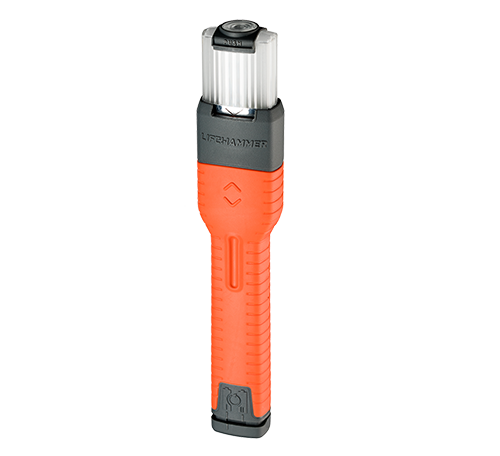
- If you have a reflective vest or torch within reach, use them to increase your visibility
- Wave through the window or shout to attract the attention of other drivers or bystanders
Stay as calm as possible while you wait. Conserve your energy, keep the line open with emergency services if you can, and continue signalling until help arrives.
Keep a car escape tool within reach before you need it
Everything in this guide depends on one important condition: having the right tools available and accessible at the moment you need them. A seatbelt cutter and window-breaking tool stored in the boot of your car are of no use when you are trapped in the front seat. Positioning matters as much as ownership.
Mount your escape tool within arm’s reach of the driver’s seat, on the door pillar, the centre console, or the dashboard. The tool should be easy to locate in the dark and simple to operate under stress. Avoid areas near airbags when choosing a mounting position.
- Choose a tool that combines a seatbelt cutter and window breaker in a single compact unit
- Mount it where you can reach it without unbuckling your seatbelt
- Make sure any passenger-side tools are equally accessible to passengers
- Check the mounting regularly to confirm the tool has not shifted or been dislodged
Having the right tool in the right place is the single most useful thing you can do before an emergency. Everything else in this guide becomes significantly easier when you are not searching for equipment under pressure.
How Lifehammer® supports you with car accident escape
At Lifehammer® we have been developing vehicle safety tools since 1983, and helping drivers prepare for exactly this kind of situation is at the heart of what we do. We focus on tools that are reliable, easy to access, and designed to work under real-world stress.
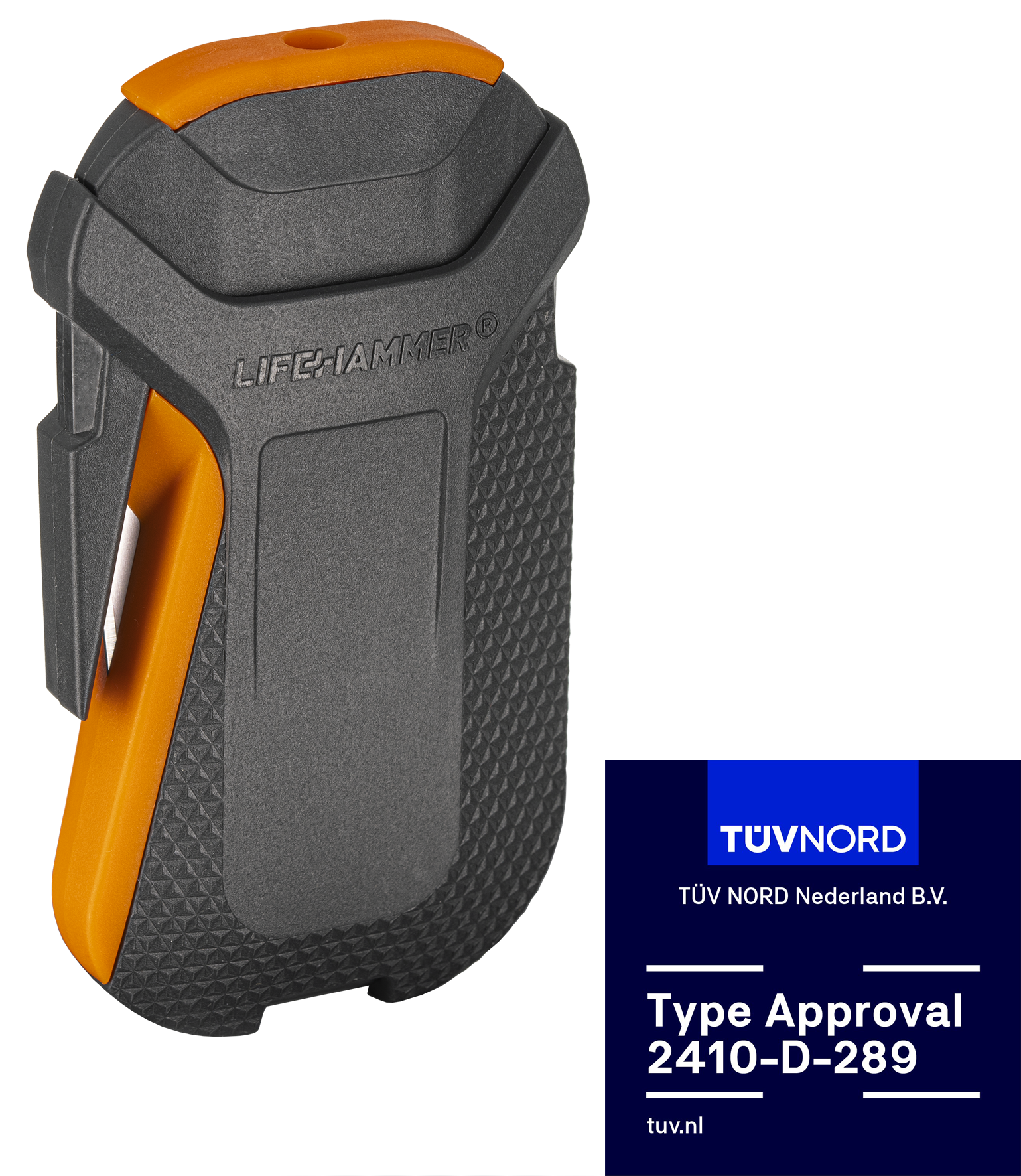
- Our safety hammer range includes four models suited to different preferences and vehicles. The Classic and Plus use a hardened carbon steel hammerhead; the Safety Hammer Evolution and Safety Hammer SMART use an automatic ceramic striking mechanism. All four models cut seatbelts and break tempered side windows.
- The Safety Hammer SMART can be mounted using 3M VHB double-sided adhesive tape, making it straightforward to position within reach of the driver without tools or screws. Avoid airbag areas when choosing your mounting spot.
- All Lifehammer® safety hammers are TÜV certified to German standards and trusted by first responders, police officers, and fleet operators across Europe.
- If you want to be visible after an accident while waiting for help, our Safety Vest Ultra stores flat under a floor mat and deploys immediately when you need it.
If you are unsure which product fits your car or how to mount it correctly, our Q&A section covers the most common questions in straightforward detail. You can also find our products on Amazon if you prefer to order there.