 English
 Nederlands
 Deutsch







Knowing how your car’s emergency door release works could matter more than you think. Most modern vehicles have an interior release mechanism built into the door panel, but that mechanism depends on certain conditions to function, and those conditions are not always guaranteed in an emergency. This article walks through where the release is located, how it works, what can go wrong, and what you can do to stay prepared.
Where is the emergency door release located in most cars?
In most cars, the interior door release is the handle or lever built into the door panel, typically positioned at a comfortable pulling height for a seated adult. This is not a separate emergency feature: it is the standard door handle, which also serves as the primary exit mechanism. In a genuine emergency, this is the first thing you use to open the door from the inside.
On some vehicles, particularly older models or those designed for specific markets, there is also a manual cable release accessible by removing or lifting a small panel near the door latch. This cable bypasses the electronic components and connects directly to the latch mechanism. Its exact position varies by make and model, so checking your owner’s manual is the most reliable way to locate it for your specific vehicle.
In newer cars with fully electronic door systems, there may be a dedicated emergency release button or pull tab, often marked in a contrasting colour such as yellow or red. These are more common in electric vehicles and high-end models where the standard handle is electronically actuated rather than mechanically linked to the latch.
How does a car’s interior door release mechanism actually work?
A car’s interior door release works by connecting the door handle to the latch via a mechanical cable or rod. When you pull the interior handle, it pulls the cable, which retracts the latch bolt and allows the door to swing open. In traditional vehicles, this is a purely mechanical system with no electrical dependency: pulling the handle physically moves the latch.
In more modern vehicles, particularly those with electronic door handles or soft-touch systems, the process is different. Pressing or touching the handle sends a signal to a control unit, which then activates a motor or solenoid to release the latch. This adds a layer of electronic dependency that was not present in older designs.
Understanding which type your car uses matters because the two systems behave very differently when things go wrong. A mechanical cable system is robust and simple. An electronic system is smoother and more design-friendly, but it introduces components that can fail under certain conditions, most notably when the vehicle loses power.
What happens to the door release when a car loses power?
When a car loses power, mechanically linked door handles continue to work normally because they do not rely on electricity. However, if your vehicle uses an electronic door release system, losing power can prevent the door from opening via the standard handle. This is one of the less discussed risks of increasingly electronic vehicle design, and it applies to a growing number of cars on the road in 2026.
Most manufacturers that use electronic door systems are required to include a manual override. This is often a small pull tab, a recessed cable, or a secondary lever hidden within the door panel or armrest area. The challenge is that many drivers are unaware it exists until they need it, and finding it under stress, in low light, or in a disorienting situation is far more difficult than locating it calmly in advance.
Electric vehicles present a particular consideration here. Because they rely heavily on electronic systems throughout, a complete power loss or a crash that disables the vehicle’s electrical architecture can affect door operation in ways that would not occur in a conventional petrol or diesel car. Several EV manufacturers have addressed this with prominent manual releases, but the design and location differ significantly between brands and model years.
The practical takeaway is straightforward: find the manual override in your own car before you ever need it. Sit in the back seat, check the door panels, and read the relevant section of your owner’s manual. It takes five minutes and removes a significant unknown.
Why do rear doors sometimes fail to open from the inside?
Rear doors on many cars have a child lock feature that, when activated, prevents the door from being opened from the inside. This is a deliberate safety mechanism designed to stop children from opening doors while the vehicle is moving. When the child lock is engaged, the interior handle becomes disconnected from the latch, and the door can only be opened from the outside.
Child locks are typically engaged using a small switch or slot on the inner edge of the rear door, accessible only when the door is already open. They are easy to activate accidentally, for example, when loading luggage or when children play with the door edge. If a rear door won’t open from the inside and there is no obvious mechanical fault, checking the child lock position is always the first step.
Beyond child locks, rear doors can also fail to open due to a damaged latch, a bent door frame after a collision, or corrosion in the cable mechanism. These are less common but worth knowing about. A door that feels stiff, clicks but does not release, or requires excessive force to open should be inspected by a mechanic: latch components do wear over time.
What should you keep in your car in case a door won’t open?
If a car door cannot be opened and you need to exit the vehicle quickly, breaking a side window is the most reliable alternative. For this to be possible, you need a tool capable of breaking tempered glass, the type used in most car side and rear windows. Standard objects like keys, shoes, or bare hands are not effective against tempered glass. A purpose-built safety hammer with a hardened striking point is the appropriate tool for this situation.
A seatbelt cutter is equally important. In a scenario where a door won’t open, being able to release a jammed or locked seatbelt quickly gives you full freedom of movement to reach a window or find an alternative exit. Many safety hammers combine both functions in a single compact tool.
- A safety hammer designed to break tempered glass; keep it within arm’s reach of the driver, not in the boot
- A seatbelt cutter for situations where the standard release mechanism is stuck or inaccessible
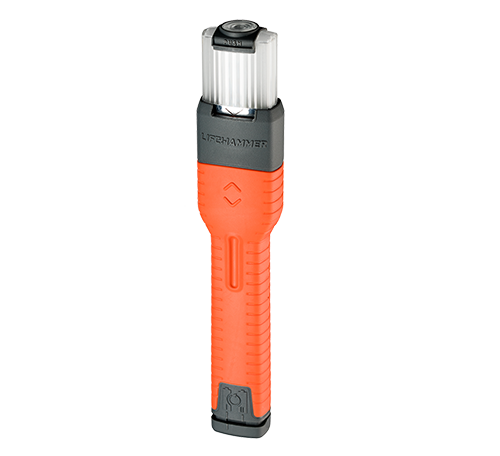
- A small torch or LED light for visibility if you are trying to locate a manual release or exit point in low light or at night
- Basic knowledge of your car’s layout: knowing where the manual door override is before an emergency removes one variable when it matters most
Placement is as important as ownership. A safety hammer stored in the glove compartment or boot is difficult to reach when you are restrained in a seat or disoriented. The most effective position is mounted within arm’s reach of the driver, on the door panel, centre console, or A-pillar, so it is accessible without needing to search for it.
How Lifehammer® supports you with car emergency exit preparedness
At Lifehammer®, we have been developing vehicle safety tools since 1983, and exiting a vehicle safely is exactly what our products are designed for. Whether you drive a conventional car or a fully electric vehicle, we focus on tools that are reliable, compact, and genuinely useful when it counts.
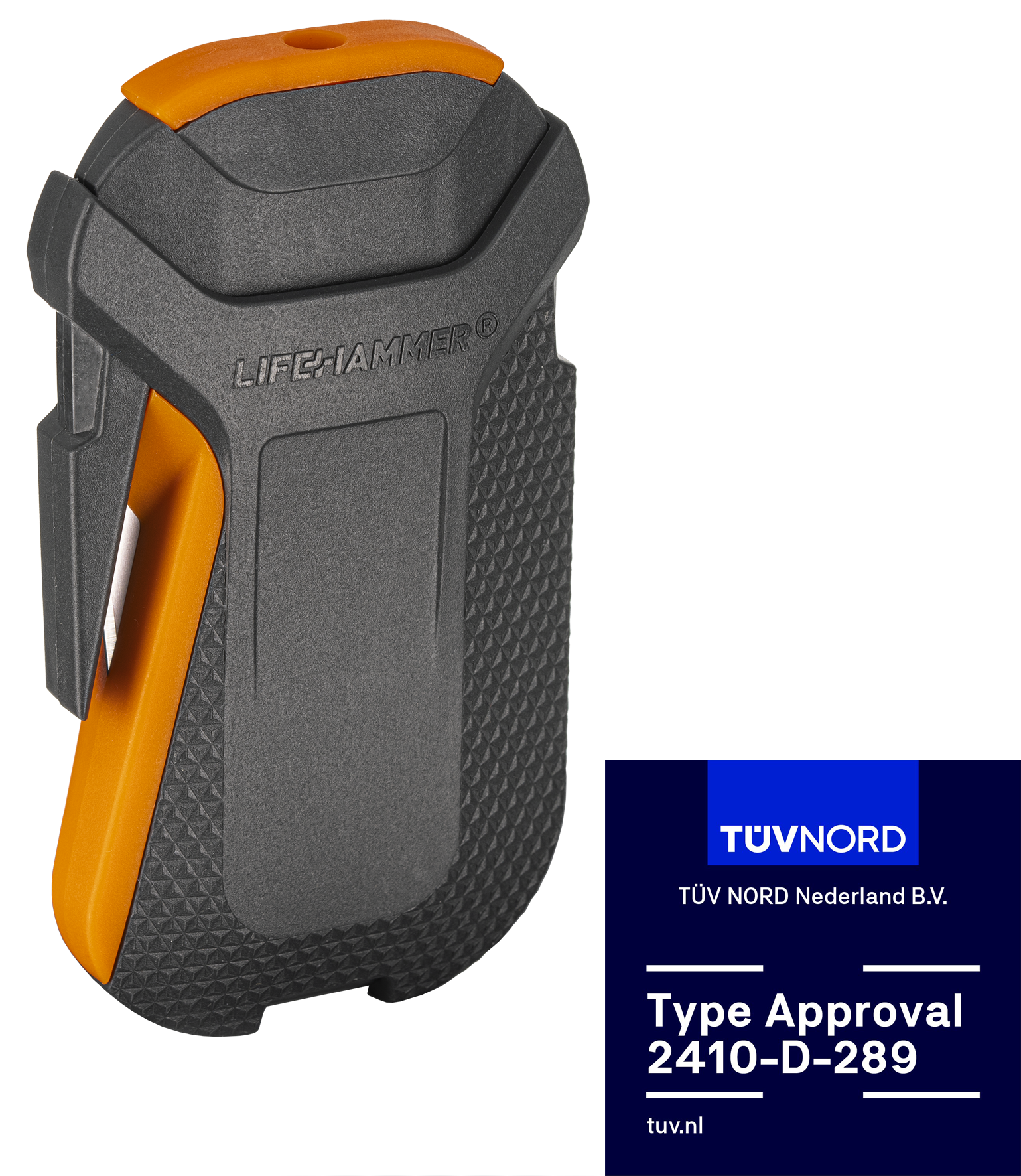
- Our safety hammer range includes four models. The Classic and Plus use a hardened carbon steel hammerhead; the Safety Hammer Evolution and Smart use an automatic ceramic striking mechanism. All four models cut seatbelts and break tempered side windows.
- All Lifehammer® safety hammers are TÜV certified and trusted by first responders and fleet operators across Europe: the same standard of reliability that makes them worth keeping in your own car.
- Our mounting systems are designed to keep your safety hammer within arm’s reach of the driver, not buried in the boot. Several models can be positioned using 3M VHB adhesive tape, making installation straightforward without requiring tools.
- Our Safety Vest Ultra stores flat under any floor mat and deploys immediately, useful if you need to signal for help after exiting a vehicle on a busy road.
If you have questions about which product suits your car or how to position it correctly, our Q&A section covers the most common topics in straightforward detail. You can also find our products on Amazon if you prefer to order directly.