 English
 Nederlands
 Deutsch



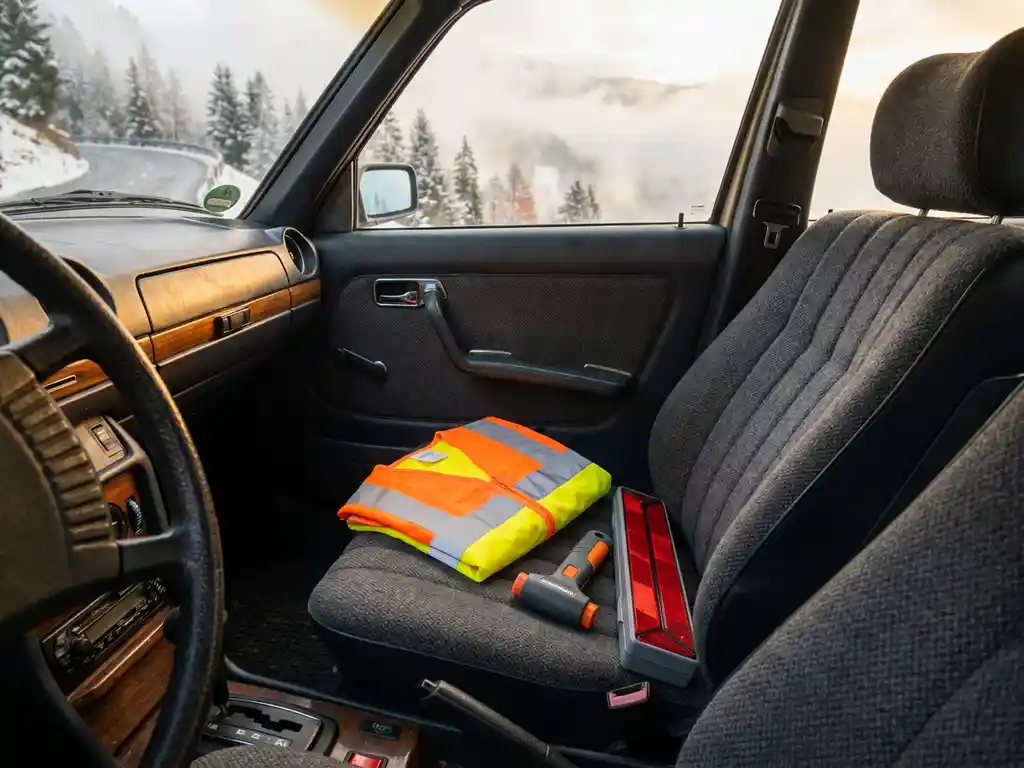
In Switzerland, drivers are required to carry a warning triangle and a high-visibility vest in their vehicle. A first aid kit, on the other hand, is not required by law, but is strongly recommended. Traveling well prepared not only makes you safer on the road, but also helps you avoid unnecessary fines. This article answers the most important questions about mandatory equipment and useful additional gear for driving in Switzerland.
What items are legally required in a car in Switzerland?
In Switzerland, the law requires every vehicle to carry a warning triangle and a high-visibility vest. Unlike in Germany or Austria, there is no legal requirement for a first aid kit. Nevertheless, the Swiss Federal Roads Office (ASTRA) explicitly recommends it as part of a sensible basic kit.
The exact mandatory requirements for passenger cars in Switzerland in 2026 are as follows:
- Warning triangle: Required for all passenger cars. It must be placed at a sufficient distance behind the vehicle in the event of a breakdown or accident.
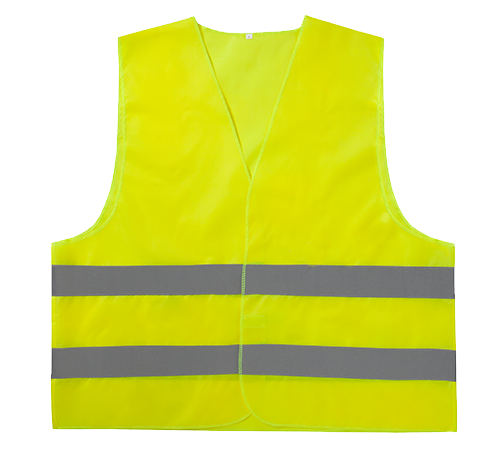
- High-visibility vest: Mandatory since 2014. At least one vest with reflective strips must be kept within easy reach inside the vehicle — not stored in the trunk.
- Fire extinguisher: Not required for private vehicles, but legally mandated for certain commercial vehicles and coaches.
- First aid kit: Not required by law, but officially recommended.
A common misconception is that the same rules apply in Switzerland as in Germany. That is not the case. Drivers entering Switzerland from Germany must comply with Swiss regulations, not German ones. The first aid kit that is mandatory in Germany is good preparation for Switzerland, but it is not a legal requirement there.
Do Swiss equipment requirements also apply to foreign drivers?
Yes, Swiss regulations apply to all vehicles traveling on Swiss roads, regardless of the country of registration. A driver with German, Austrian, or French license plates must carry the same minimum equipment as a Swiss vehicle owner.
Anyone driving into Switzerland with a German-registered vehicle should therefore check before departure that a warning triangle and high-visibility vest are within easy reach. While these are also required in Germany, enforcement in Switzerland is consistent, and a missing warning triangle can be noticed at the border or during a traffic stop.
Foreign drivers should also be aware of the motorway vignette requirement: anyone wishing to use Swiss motorways needs a valid annual vignette. It is not technically part of vehicle equipment, but driving without one can result in substantial fines. The vignette is available at border crossings, gas stations, and online.
What happens if you don’t have the required equipment?
Anyone stopped in Switzerland without the required equipment can expect a fine. The amount varies depending on the violation, but typically falls in the two- to three-digit franc range. If a breakdown occurs without a warning triangle being placed, the consequences can be even more severe if it results in a traffic hazard.
Beyond the financial aspect, there is a practical reason to always have the equipment on hand: it protects you when it matters most. A warning triangle that isn’t in the car is useless if you break down on a country road at night. A high-visibility vest buried under luggage in the trunk is hardly quick to reach in the dark.
Swiss authorities are known for consistently enforcing traffic regulations. Foreign drivers should not assume that checks are rare or that ignorance will be accepted as an excuse.
What else should you keep in your car in Switzerland?
Beyond the legally required minimum, there are a number of items that are worth having for driving in Switzerland. Traveling well prepared means you won’t have to rely on outside help and can act independently in an emergency.
Recommended additional equipment for driving in Switzerland:
- First aid kit: Not legally required, but belongs in any responsible driver’s basic kit.
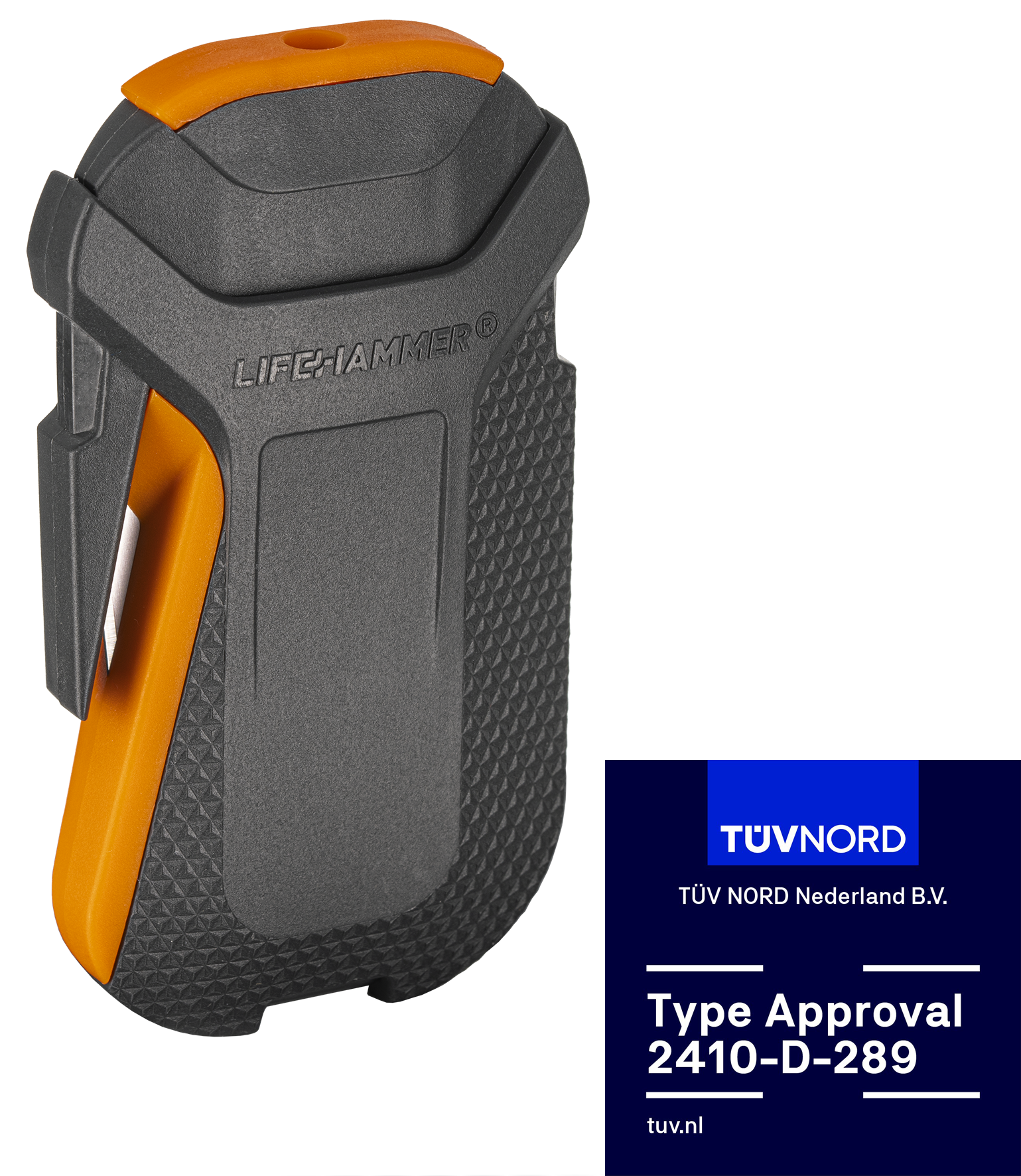
- Safety hammer: For breaking side windows and cutting seatbelts in accidents where doors or belts become jammed.
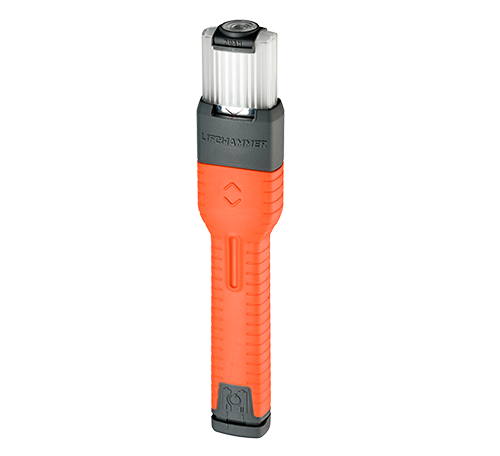
- Flashlight: Essential during breakdowns at night or in tunnels.
- Tow rope or jump start cables: Useful in remote areas with longer roadside assistance response times.
These items are no guarantee of safety, but they significantly increase your ability to act in unexpected situations. Especially in Switzerland, where mountain roads, long tunnels, and unpredictable weather are part of everyday driving, a well-thought-out kit pays off.
What equipment do you specifically need for driving through alpine passes?
For drives over Swiss alpine passes, drivers should additionally plan for snow chains, warm clothing, and sufficient fuel. Many passes are closed seasonally, and even in summer, weather conditions can change rapidly. Being well prepared makes the difference between a safe journey and a dangerous situation.
Snow chains and winter tires
Switzerland has no general legal requirement for winter tires, but on certain routes and in wintry conditions, snow chains are mandatory. Corresponding signs indicate where this applies. Anyone stopped on such a route without chains risks a fine and will be required to turn back. Snow chains should be checked for completeness before departure and ideally fitted at least once in advance, so the process goes quickly when it counts.
Tunnels and long alpine descents
Switzerland is home to some of Europe’s longest road tunnels, including the Gotthard Road Tunnel. Special rules apply inside tunnels: lights must be on, a safe following distance must be maintained, and overtaking is prohibited. In the event of a breakdown inside a tunnel, the warning triangle must be placed and all occupants should exit the vehicle and make their way to the emergency exits. A flashlight is especially valuable in such situations.
Long alpine descents put significant strain on the brakes. Using engine braking and taking short, regular breaks protects both the vehicle and the driver. If you notice an unusual smell or reduced braking performance, stop immediately and allow the brakes to cool down.
How Lifehammer® supports your vehicle equipment for Switzerland
At Lifehammer®, we have been developing safety products for drivers who want to travel well prepared for over 40 years. Our products are TÜV-certified to German standards and have been used by emergency services such as fire departments and police for decades. For driving in Switzerland — whether over alpine passes or through long tunnels — we offer equipment that works exactly when you need it.
What we offer for your trip to Switzerland:
- Safety hammer: The Lifehammer® range includes four models: the Classic and Plus use a manual hardened carbon steel hammerhead; the Evolution and Smart use an automatic ceramic hammerhead. All models feature a seatbelt cutter and break tempered side windows reliably.
- High-visibility vest: Our Safety Vest Ultra comes in an ultra-thin vacuum pack, fits under any floor mat, and meets Switzerland’s high-visibility vest requirement.
- Mounting systems: Easy installation: no screws required. Attaches to the car door or center console, stays securely in place, and is immediately at hand in an emergency.
If you have questions about our products or the right equipment for your trip, you’ll find all the answers in our FAQ section.