 English
 Nederlands
 Deutsch





Every driver should know that escaping a locked or damaged vehicle comes down to three things: being able to cut a jammed seatbelt, break a tempered side window, and reach a tool to do both. Standard car doors can fail after a collision, and power systems can cut out entirely, leaving you dependent on a manual emergency escape tool. The questions below cover the practical details every driver needs to think through before they ever need them.
What actually stops people from escaping a damaged vehicle?
The two most common barriers to escaping a damaged vehicle are a jammed seatbelt and a door that will not open. After a collision, seatbelt retractors can lock permanently, and a bent frame or swollen door panel can make even an undamaged door impossible to push open. If the vehicle’s electronics fail, power windows and central locking may stop working entirely, removing options you would normally rely on.
Water adds another layer of difficulty. In a submerged vehicle, the pressure difference between the water outside and the air inside makes it nearly impossible to open a door until the cabin is almost fully flooded. By that point, the situation is urgent and the window of time to act is short. These are not rare edge cases. They are predictable failure points that have clear, practical solutions, which is why having a plan and the right tool matters.
How do you break a car window in an emergency?
To break a car window in an emergency, you need to strike a tempered side window at one of its corners with a hard, focused point. Tempered glass is designed to shatter into small, relatively harmless pieces when struck with sufficient force at the right spot. The centre of a tempered window is the strongest point; striking the corner requires significantly less force and is far more reliable.
It is important to know that not all car windows can be broken this way. Laminated glass, the type used for windscreens and increasingly for side windows in newer vehicles, cannot be broken using a standard safety hammer. Always target tempered side or rear windows, which are the ones most commonly used as escape routes. If you are unsure which windows in your car are tempered, check your vehicle manual or look for the glass type marking etched into the corner of each window.
What’s the difference between a safety hammer and a standard escape tool?
A dedicated safety hammer is purpose-built to do two things reliably under stress: break a tempered window and cut a seatbelt. A standard escape tool is often a multi-function device where neither capability is optimised. The distinction matters most when you are disoriented, injured, or working in the dark, conditions where a simple, well-designed tool outperforms a complicated one.
Quality also varies significantly. Entry-level tools sold cheaply online may use materials that degrade over time or fail under real impact. A safety hammer built to a certified standard uses either hardened carbon steel or an ultra-hard ceramic striking mechanism, both of which are tested to perform consistently. The seatbelt cutter should be recessed and protected so it does not accidentally catch on other objects, but deploys cleanly when you need it. These are the details that separate a tool you can rely on from one that might let you down.
Where should you keep a car escape tool for it to actually work?
A car escape tool should be stored within arm’s reach of the driver’s seat, typically mounted on the door panel, the centre console, or the dashboard area near the A-pillar. If it is in the glove compartment, the boot, or a bag on the back seat, you may not be able to reach it after a collision. The tool is only useful if it is accessible from your seated position, even if you cannot move freely.
Mounting matters as much as location. A tool that slides around loose in the door pocket is not reliable. Look for a mounting system that holds the tool securely but allows fast, one-handed removal. If you use an adhesive-based mount, position it away from airbag deployment zones. The goal is for the tool to be exactly where your hand goes naturally in a moment of stress, without having to think about it.
Should passengers also have access to a car escape tool?
Yes. Passengers, particularly those in the rear seats, should have access to their own emergency escape tool, or at minimum know where the driver’s tool is stored and how to use it. In a collision, the driver may be incapacitated. A rear passenger cannot reliably reach a tool mounted near the driver’s seat. If you regularly carry passengers, especially children or elderly family members, this is worth thinking through specifically.
For families, a second tool mounted on the back of the centre console or within reach of rear passengers is a straightforward addition. Children old enough to understand what it is can be shown where it is kept and what it does, not to alarm them, but so that in an unlikely emergency, they are not helpless. Preparedness is a practical habit, not a reason for anxiety.
What else should be in a car emergency kit alongside an escape tool?
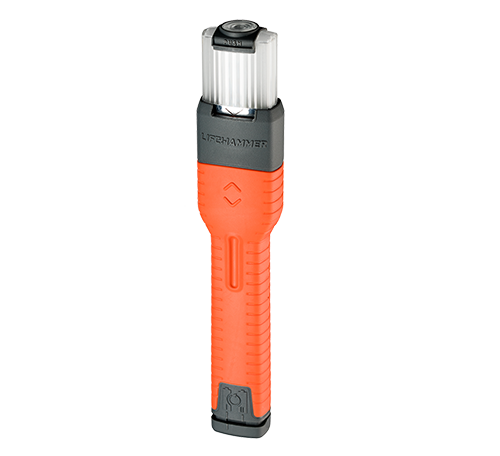
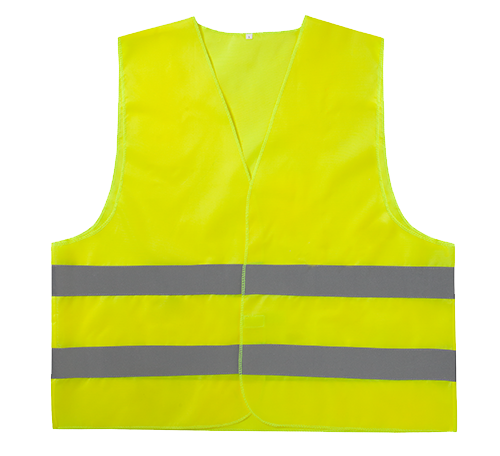
A car emergency kit built around an escape tool should also include a high-visibility safety vest, a warning triangle or LED road flares, a torch, a basic first aid kit, and a phone charger or power bank. Together, these address the most common post-collision needs: being seen by other drivers, signalling for help, and managing minor injuries while waiting for assistance.
- High-visibility vest: Required by law in many European countries if you exit your vehicle on a road. Keep it inside the cabin, not the boot, so you can put it on before getting out.
- Warning triangle or road flares: Alerts approaching drivers to a hazard ahead, reducing the risk of a secondary incident.
- Torch: Useful for signalling, inspecting damage in the dark, or navigating away from a vehicle at night.
- First aid kit: A compact kit with bandages, antiseptic wipes, and adhesive dressings covers the most common minor injuries.
- Phone charger or power bank: A flat battery makes calling for help impossible. A charged power bank is a simple fix.
The kit does not need to be large or expensive. The point is to have the right things in the right place, so that if something goes wrong, you spend your energy on the situation rather than searching for what you need.
How Lifehammer® supports you with vehicle emergency preparedness
At Lifehammer®, we have been developing vehicle safety tools since 1983, and the questions covered in this article reflect exactly the kind of situations our products are designed for. Whether you are equipping your first car, preparing for a long road trip, or thinking through what your passengers can access in an emergency, we focus on tools that are reliable, compact, and built to perform when it counts.
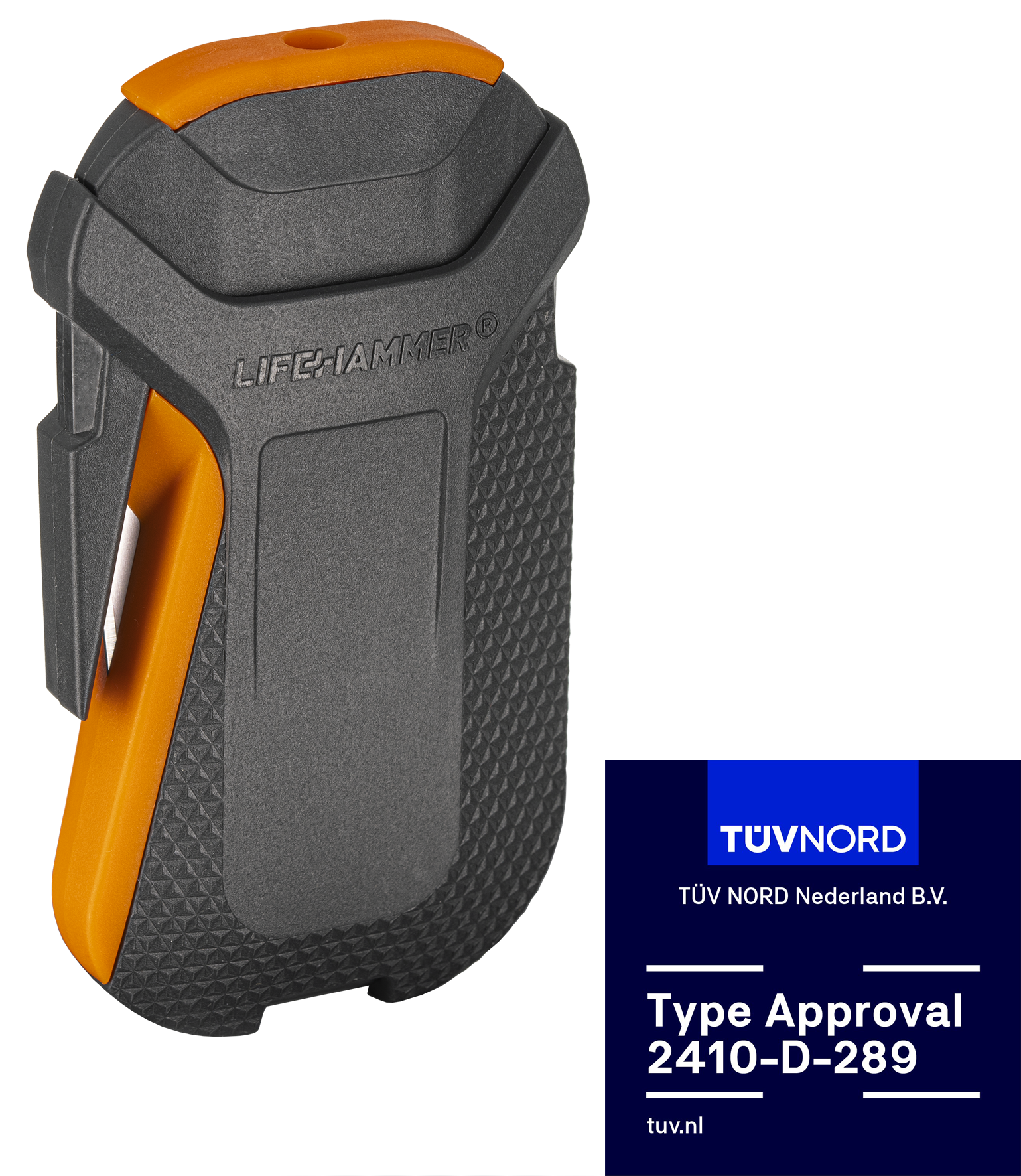
- Our safety hammer range includes four models to suit different preferences. The Classic and Plus use a hardened carbon steel hammerhead; the Safety Hammer Evolution and Safety Hammer SMART use an automatic ceramic striking mechanism. All four models cut seatbelts and break tempered side windows.
- All Lifehammer® safety hammers are TÜV certified according to German standards and trusted by first responders, fleet operators, and emergency services across Europe.
- Our Safety Vest Ultra comes in an ultra-flat vacuum pack that stores discreetly under any floor mat and decompresses immediately on opening. It is one-size-fits-all and suitable for drivers and passengers alike.
- Mounting options are available for every setup: adhesive-based systems for flexible positioning, and bracket systems for a permanent, secure fit.
If you have questions about which products are right for your vehicle or your situation, our Q&A section covers the most common topics in straightforward detail. You can also find our products on Amazon if you prefer to order there.