 English
 Nederlands
 Deutsch



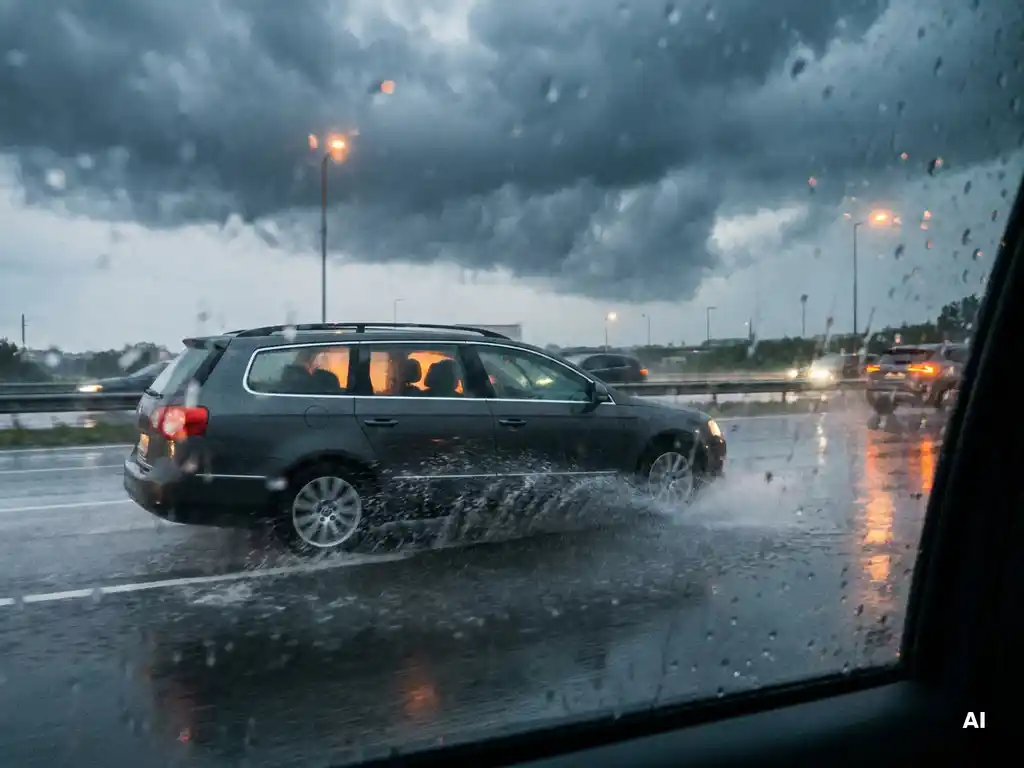
Aquaplaning and skidding are both situations where a car loses grip, but they have different causes and require different responses. Aquaplaning happens when a layer of water builds up between your tyres and the road surface, lifting the car off the tarmac entirely. Skidding occurs when your tyres lose traction due to excessive speed, braking, acceleration, or steering input on a slippery surface. Understanding the difference matters because the correct response to each is not the same, and reacting the wrong way can make either situation worse.
What actually causes a car to aquaplane?
Aquaplaning occurs when your tyres cannot displace water fast enough to maintain contact with the road surface. As speed increases on a wet road, water pressure builds up at the front of the tyre. When that pressure exceeds the weight of the car pressing the tyre down, a thin film of water forms underneath and the tyre effectively floats. At that point, steering and braking have little to no effect.
Several factors increase the likelihood of aquaplaning. Tyre tread depth plays a major role, since the grooves in a tyre are designed to channel water away from the contact patch. Worn tyres with shallow tread cannot move water efficiently, which means aquaplaning can begin at lower speeds. Tyre pressure also matters: underinflated tyres deform and lose their ability to channel water effectively. Road conditions, including standing water, flooded dips, and smooth tarmac that does not drain well, all contribute. Higher speeds make the problem significantly worse, because the faster you travel, the less time your tyres have to displace the water ahead of them.
What causes a car to skid?
A skid happens when one or more tyres lose traction with the road surface and begin to slide rather than roll. This can be triggered by braking too hard, accelerating too sharply, steering too aggressively, or a combination of these inputs on a surface that offers reduced grip. Unlike aquaplaning, the tyres remain in contact with the road during a skid, but friction is no longer sufficient to control the car’s direction or speed.
Skids are most commonly caused by driver inputs that exceed what the available grip can handle. Black ice, wet leaves, loose gravel, and freshly laid tarmac all reduce the friction between tyres and the road, lowering the threshold at which a skid can begin. Overspeeding into a corner, braking late, or applying power too early out of a bend are typical triggers. Modern cars equipped with electronic stability control and anti-lock braking systems can detect and partially correct skids, but these systems have limits and cannot fully substitute for appropriate speed and smooth inputs.
How do you tell the difference between aquaplaning and skidding while it’s happening?
The two sensations are distinct once you know what to feel for. Aquaplaning tends to feel like the car has suddenly become weightless or disconnected from the road. The steering goes light, the car may drift in a direction you did not choose, and engine noise can change as the driven wheels spin freely. It often happens quickly and without much warning. Skidding, by contrast, usually involves a more physical sensation of the car sliding or rotating, with the rear stepping out, the front pushing wide, or all four wheels locking under braking.
The key distinction is contact. During aquaplaning, the tyres are not meaningfully touching the road at all. During a skid, they are in contact but sliding across the surface. This is why steering input feels almost completely absent during aquaplaning, while during a skid you may still feel some response, particularly if only one or two wheels have lost grip. If your car suddenly feels as though it is floating and your steering wheel offers no resistance or feedback, aquaplaning is the more likely cause.
How should you respond to aquaplaning versus a skid?
Responding to aquaplaning
When aquaplaning begins, the most important thing is to avoid making sudden inputs. Do not brake hard and do not turn the wheel sharply. Instead, ease off the accelerator gently and hold the steering wheel straight and steady. As your speed drops, the water film beneath the tyres will reduce and grip will return gradually. Once you feel the steering reconnect with the road, you can begin to steer and brake normally again.
Responding to a skid
The correct response to a skid depends on which end of the car is sliding. If the rear slides out (oversteer), steer gently in the same direction as the slide to bring the car back into line, a technique known as countersteering. Avoid overcorrecting, as this can send the car into a spin in the opposite direction. If the front tyres are sliding wide (understeer), ease off the accelerator and reduce steering input slightly to allow the tyres to regain grip. In both cases, smooth and measured inputs are more effective than sharp reactions. If your car has anti-lock brakes, apply firm, continuous pressure rather than pumping the pedal.
Which driving conditions make aquaplaning and skidding more likely?
Aquaplaning is most likely during heavy rainfall, particularly at higher motorway speeds where standing water has little time to drain. Roads with poor camber, worn surface texture, or blocked drainage channels are higher risk. The first rain after a dry spell can also be deceptive, as oil and residue on the road mix with water to create a particularly slippery surface before it washes away.
Skidding becomes more likely in cold temperatures, especially around or just below freezing when ice forms invisibly on road surfaces. Shaded sections of road, bridges, and underpasses tend to freeze before open stretches. Autumn roads covered in wet leaves are a frequently underestimated hazard, as compacted leaves can be almost as slippery as ice. Both aquaplaning and skidding are more likely when tyres are worn, underinflated, or mismatched across the axles.
What can drivers do to reduce the risk of both?
Reducing the risk of both aquaplaning and skidding comes down to tyre condition, speed management, and smooth driving technique. Keeping your tyres in good condition is the single most effective step you can take, since tread depth and correct inflation directly affect how well your car handles water and maintains grip on slippery surfaces.
- Check tyre tread regularly. The legal minimum in most European countries is 1.6mm, but many experts recommend replacing tyres before they reach 3mm in wet conditions, as grip deteriorates noticeably below this level.
- Maintain correct tyre pressure. Check your vehicle handbook for the recommended pressure and inspect tyres at least once a month, as pressure drops gradually over time.
- Reduce speed in wet or cold conditions. Aquaplaning risk rises sharply with speed on wet roads. Slowing down gives your tyres more time to displace water and reduces the consequences if grip is lost.
- Increase following distance. Longer stopping distances are needed in wet and icy conditions. A gap that feels comfortable in dry weather may not be sufficient when braking is compromised.
- Avoid sudden inputs. Smooth acceleration, braking, and steering reduce the likelihood of triggering a skid. The more gradually you make changes to speed or direction, the less likely you are to exceed available grip.
- Be alert to changing road surfaces. Bridges, shaded areas, and junctions can be significantly more slippery than the surrounding road, even when the rest of the route feels fine.
How Lifehammer® supports you on the road
At Lifehammer® we have been developing vehicle safety tools since 1983, and understanding the conditions that make driving more demanding is exactly the kind of awareness our products are built around. Whether you are preparing for a long motorway journey in winter or simply making sure your car is properly equipped for whatever the road brings, we focus on tools that are reliable, compact, and genuinely useful when it counts.
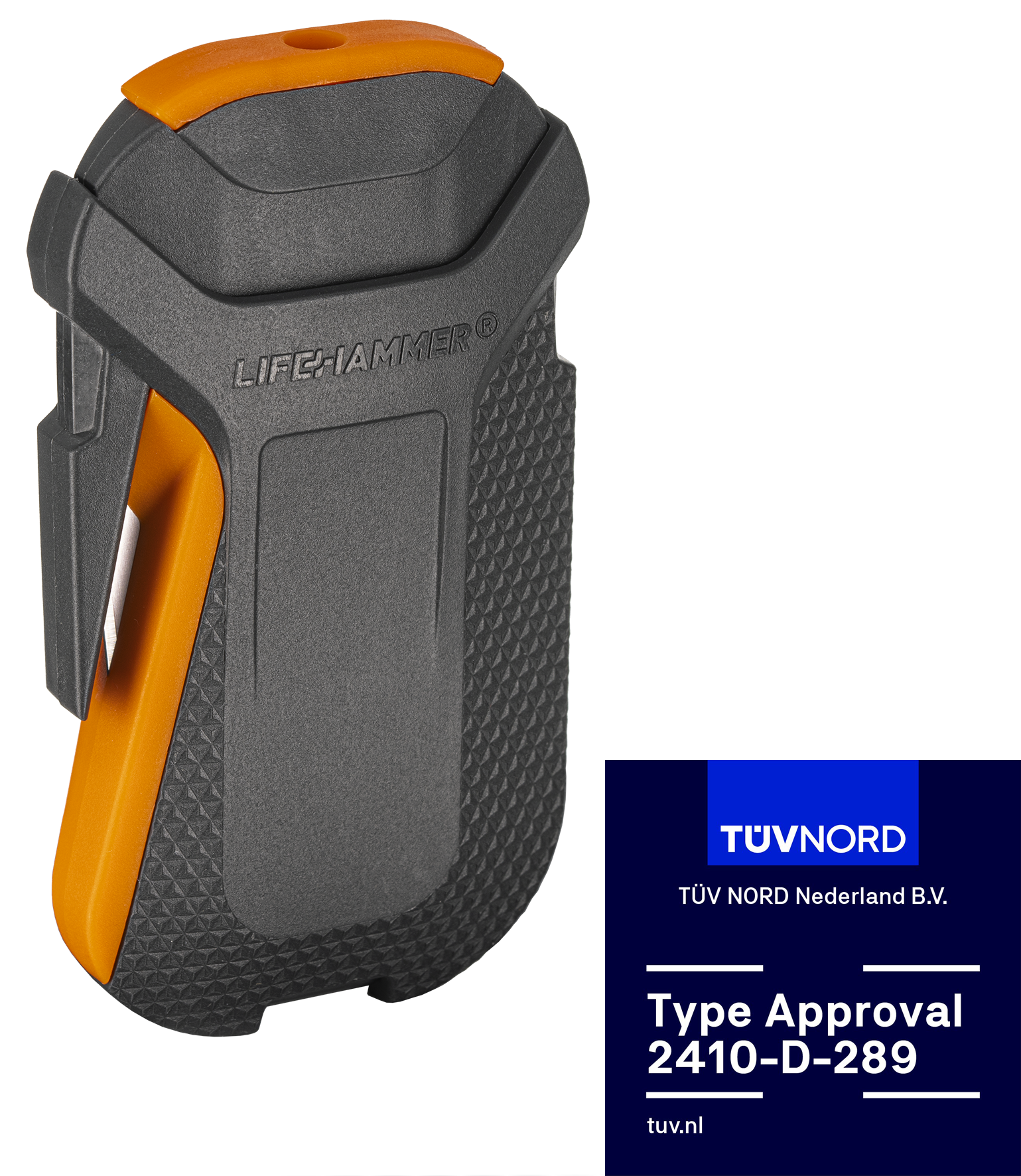
- Our Safety Hammer SMART uses a ceramic pin as its striking mechanism and can be mounted within reach using 3M VHB double-sided adhesive tape, making it a practical addition to any vehicle without requiring tools.
- Our Safety Hammer Evolution features a ceramic hammerhead and is assembled using the included hex key, offering a secure and permanent mounting solution for drivers who want their safety equipment firmly in place.
- All Lifehammer® safety hammers are TÜV certified and trusted by first responders and fleet operators across Europe. They cut seatbelts and break tempered side windows reliably, which matters most in the moments following a loss of control.
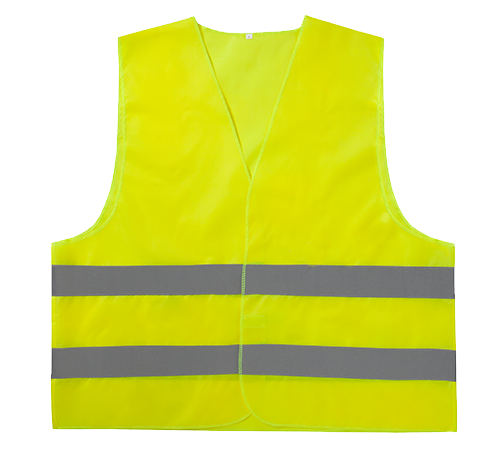
- Our Safety Vest Ultra stores flat under any floor mat and is immediately ready to use, keeping you visible if you need to exit your vehicle on a motorway or in poor weather conditions.
If you have questions about which products suit your car or your driving habits, our Q&A section covers the most common topics in straightforward detail. And if you are ready to equip your car, you can find our full range on Amazon.