 English
 Nederlands
 Deutsch







Most driving advice is written for people who travel with someone else nearby. But if the daily commute means getting behind the wheel alone, that changes the calculus in ways that are easy to overlook until something actually goes wrong. A flat tyre on a quiet road at 6am, a dead battery in an underground car park, or a minor collision on a stretch of motorway with no one else around: these situations are manageable, but only if there is a plan already in place. Building a practical car emergency plan does not require a lot of effort or expense. It requires thinking ahead once, so that when something happens, the response is calm and automatic rather than improvised under pressure.
This guide is written specifically for solo commuters, people who drive the same routes regularly, often at the same times, and who are more likely than most to face an unexpected situation without immediate help at hand. The goal is a straightforward, realistic framework that fits into an ordinary routine without overcomplicating it.
What solo commuters face that other drivers don’t
Driving alone creates a specific set of circumstances that group travel naturally softens. When something goes wrong with another person in the car, there is an immediate division of tasks: one person handles the vehicle, another makes calls, another keeps watch. Solo commuters absorb all of those responsibilities at once, often while managing stress, unfamiliar surroundings, or low-visibility conditions.
There is also the question of time of day. Many commuters drive early in the morning or late at night, when traffic is lighter but support is also thinner. Roadside assistance response times vary. Mobile signal can be unreliable on certain routes. And in the event of a more serious incident (a vehicle that has come to rest in an awkward position, or a door that will not open), there may be no bystanders nearby to assist. Solo commuter safety, in other words, is not just about having the right tools. It is about having thought through the sequence of events before they happen.
The core components of a solo commuter emergency plan
A useful car emergency plan has three layers: communication, visibility, and self-rescue capability. Each one addresses a different phase of what can go wrong, and together they cover the vast majority of situations a solo driver is likely to encounter.
Communication
This means having a charged phone, a car charger that actually works, and at least one saved contact who knows the commute route. It also means having roadside assistance details stored somewhere accessible, not buried in a glove box folder that takes five minutes to locate under stress.
Visibility
If a vehicle breaks down or is involved in a collision, being seen is the first priority. A high-visibility safety vest and a warning triangle belong in every car, and they should be stored where they can be reached without opening the boot from outside, particularly important if the car has come to rest at the side of a busy road.
Self-rescue capability
This is the layer that solo commuters most often overlook. In a situation where a door is jammed or a seatbelt is locked, the ability to exit the vehicle independently matters enormously. A car escape tool, one that can cut through a seatbelt and break a tempered side window, should be within arm’s reach of the driver’s seat, not stored in the boot or the glove compartment.
Choosing the right tools to keep within reach
The principle here is simple: a tool that cannot be reached in an emergency is not a useful tool. Road safety preparation starts with placement, not just purchase.
For solo commuters, the priority list for a practical car emergency kit looks like this:
- Car escape tool: A window-breaking and seatbelt-cutting device mounted within reach of the driver: on the door, the central console, or the dashboard. It should be accessible with one hand, even if the other arm is restricted.
- Phone charger: A reliable in-car charger or a compact power bank kept in the car permanently. A dead phone is one of the most common and most preventable problems.
- High-visibility vest: Stored in the cabin, not the boot. Many European countries require one by law, and the requirement exists for good reason.
- First aid kit: A compact, vehicle-appropriate kit with the basics: bandages, antiseptic wipes, a foil blanket. It does not need to be comprehensive, just present.
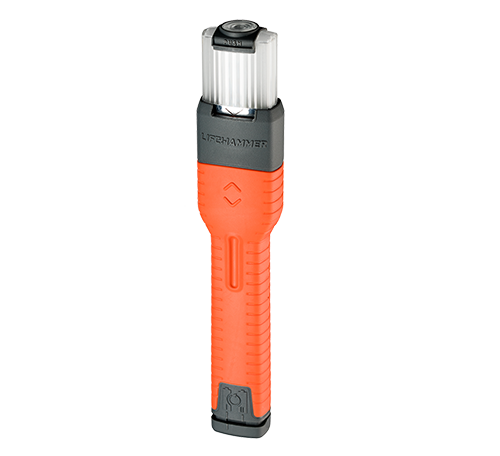
- Torch: A small, reliable light source for use in low-visibility conditions, whether that is a dark car park or a roadside breakdown at night.
- Roadside assistance card or app: Contact details for breakdown cover, stored in the phone and written down somewhere physical as a backup.
The aim is not to turn the car into a storage unit. It is to have a small, considered set of items that address the most likely problems, and to know exactly where each one is.
How to set up a simple check-in system
One of the most underused driving alone safety tips is the check-in system, a low-effort habit that provides a meaningful safety net without requiring anyone to track or monitor a journey in real time.
The idea is straightforward: before leaving on a longer or unusual commute, tell someone the expected route and arrival time. This does not need to be a formal process. A quick message to a partner, flatmate, or colleague saying “heading out now, should be there by 7:30” creates a reference point. If nothing has been heard by a reasonable time after that, the other person knows to follow up. For regular commuters on familiar routes, this habit is most useful on days when conditions are unusual: bad weather, an unfamiliar diversion, a very early or very late departure.
Some drivers use shared location features on their phones for this purpose, which works well for ongoing peace of mind without requiring active communication. The important thing is that someone, somewhere, has a general sense of the plan, and would notice if something seemed off.
Common gaps that leave solo drivers unprepared
Even drivers who consider themselves well-prepared often have one or two gaps that only become obvious in hindsight. The most common ones are worth naming directly.
Tools stored out of reach. A car escape tool in the boot, a torch in the glovebox, a vest that requires opening the car from outside: these are items that exist in the car but cannot be accessed in the situations where they are needed most. Placement matters as much as ownership.
Expired or incomplete kits. First aid supplies have use-by dates. Batteries in torches drain over time. A kit that was put together two years ago and never checked may not be in working order when it is needed. A quick annual review, perhaps at the start of each year or before a long trip, keeps everything current.
No plan for low-signal areas. Regular commuters often know which parts of their route have poor mobile coverage. Having a rough plan for those stretches, whether that means downloading an offline map, noting the nearest town or services, or simply being aware, removes one variable from an already stressful situation.
Assuming roadside assistance is enough. Breakdown cover is valuable, but it addresses mechanical problems, not personal safety in the immediate aftermath of an incident. The minutes before help arrives are the ones that matter most, and those depend entirely on what is already in the car and what the driver already knows to do.
How Lifehammer® supports you with solo commuter safety
At Lifehammer®, we have been developing vehicle safety tools since 1983, and solo commuter preparedness is exactly the kind of situation our products are designed for. Whether you are reviewing your current car setup or building a practical kit from scratch, we focus on tools that are reliable, compact, and genuinely useful when it counts.
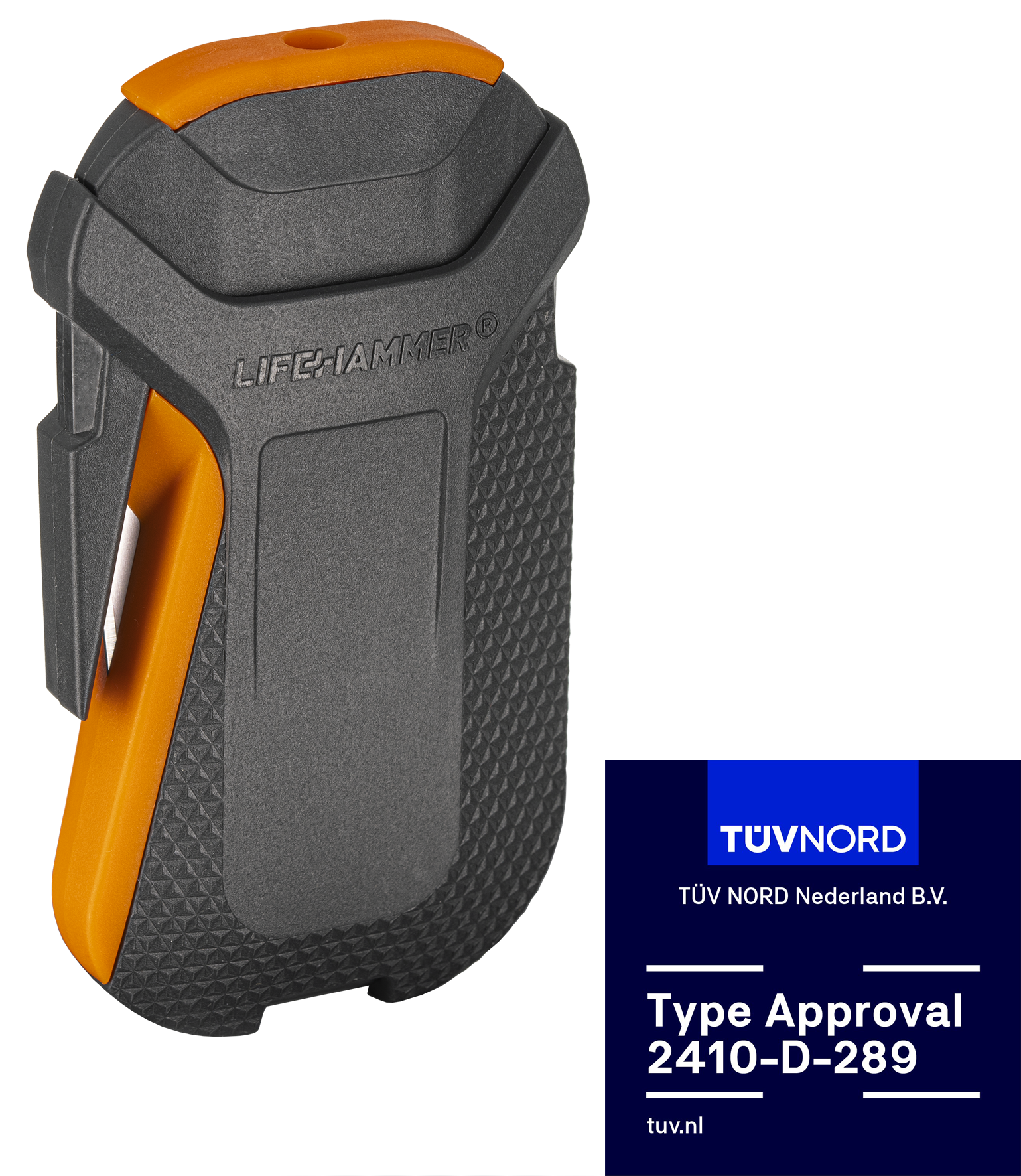
- Our safety hammer range includes four models. The Classic and Plus use a hardened carbon steel hammerhead; the Safety Hammer Evolution and Safety Hammer SMART use an automatic ceramic hammerhead. All four cut seatbelts and break tempered side windows, the type of glass used in car doors and rear windows.
- All Lifehammer® safety hammers are TÜV certified and trusted by first responders, fleet operators, and professional drivers across Europe. They are designed to be used with one hand, under stress, by adults and children alike.
- The Safety Vest Ultra comes in an ultra-flat vacuum pack that stores discreetly under any floor mat and decompresses immediately on opening, making it easy to keep in the cabin rather than the boot, exactly where it needs to be for solo drivers.
- Mounting options vary by model. The SMART can be secured using 3M VHB double-sided adhesive tape for quick, tool-free placement within arm’s reach of the driver’s seat. Avoid positioning near airbag areas.
If you have questions about which products suit your vehicle or your commute, our Q&A section covers the most common topics in straightforward detail. Lifehammer® products are also available on Amazon if you prefer to order there.