 English
 Nederlands
 Deutsch




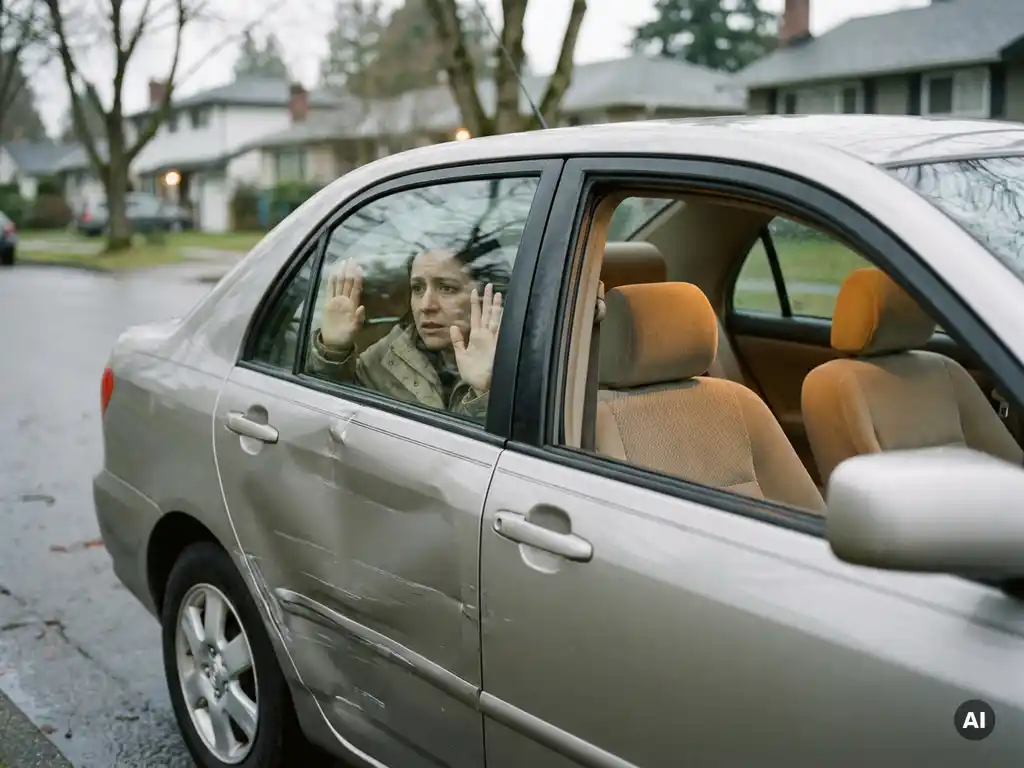
A car door that won’t open after an accident is one of the most disorienting situations a driver can face. The impact may have bent the frame, jammed the latch, or triggered the central locking system, and in that moment, it is easy to panic. This guide walks you through exactly what to do, step by step, so that if you ever find yourself in that situation, you already know how to respond.
Work through these steps in order. Each one builds on the last, and knowing what comes next helps you stay focused when it matters most.
Stay calm and assess your situation first
Before you attempt anything physical, take two or three slow breaths. Your ability to think clearly is your most important asset right now. Panic causes people to waste energy, miss options, and make poor decisions under pressure.
Look around and take stock of what you are dealing with:
- Is the vehicle stable, or is it at risk of rolling or sinking?
- Is there smoke, a burning smell, or water entering the cabin?
- Are you injured in a way that limits your movement?
- Are there other passengers who need your attention?
If the vehicle is stable and there is no immediate fire or flood risk, you have time to work methodically. If water is rising or smoke is present, move faster through the steps below. Knowing which situation you are in shapes every decision that follows.
Try the door using the right technique
A car door stuck after a crash is not always permanently jammed. The latch mechanism or the frame may simply be under pressure from the impact. Before assuming the door is completely blocked, try these actions in order:
- Pull the interior handle firmly and hold it in the open position; do not pump it repeatedly.
- While holding the handle, push the door outward with your shoulder using steady, even pressure rather than a sharp shove.
- If the door does not move, try pushing it slightly inward first to release pressure on the frame, then push outward again while holding the handle.
- If the vehicle has electronic locks, try manually toggling the lock switch before attempting the handle again.
Many doors that appear completely stuck will open with the right combination of handle tension and outward pressure. If after several attempts the door does not budge, do not exhaust yourself forcing it. Move on to the next step.
Break the window if the door cannot be opened
If the door remains stuck, breaking a window is often the fastest and safest way out. This is where preparation makes a real difference, and it is also where many people get stuck because they do not know which windows can actually be broken.
One important distinction: tempered glass (the type used in side and rear windows) can be broken with a focused strike to a corner. Laminated glass (typically used in windscreens) cannot be broken using a standard safety hammer. Always target a side window, not the windscreen.
To break a tempered side window:
- Move your face and body away from the glass before striking.
- Aim for a corner of the window, not the centre: the edges are significantly weaker than the middle.
- Use a pointed, hardened tool to deliver a sharp, focused strike. A safety hammer is designed specifically for this purpose.
- Once the glass shatters, use a sleeve or cloth to clear the remaining fragments from the frame before climbing through.
If you do not have a dedicated tool, a metal headrest post can work in some vehicles, but results vary. A purpose-built car safety hammer delivers a reliable, controlled strike every time, which is why it is the recommended tool for emergency car escape.
Cut the seatbelt if it won’t release
After an accident, the seatbelt pretensioner may have locked the belt so tightly that the release button no longer functions. In some cases, the buckle itself becomes deformed. Do not waste time repeatedly pressing a button that will not respond.
If your seatbelt will not release:
- Pull the belt away from your body slightly to create a small gap between the webbing and your chest.
- Position a seatbelt cutter against the webbing; most safety hammers include an integrated blade specifically for this.
- Pull the cutter firmly through the belt in a single, confident motion. The recessed blade design on most safety tools prevents accidental cuts.
- Once the belt is cut, brace yourself before moving: you may have been relying on it for support without realising.
With the seatbelt free and the window open, you now have a clear exit. Help any passengers cut their belts before you exit if it is safe to do so.
Signal for help if you cannot escape
If you are injured, trapped, or unable to break the window, shifting your focus to attracting attention is the right move. Rescuers cannot help you if they do not know you are there.
Use whatever you have available:
- Sound the horn continuously if it still works.
- Flash the hazard lights if the electrics are functioning.
- Use your phone to call emergency services and describe your exact location as precisely as possible.
- Bang on the window or roof with something hard to create noise.
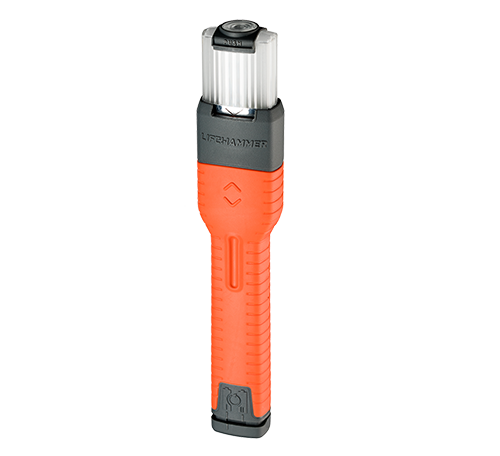
- If you have a torch or a tool with a light, use it to signal through the glass.
Emergency responders are trained to extract people from vehicles, and they carry the tools to do it. Your job in this phase is simply to make yourself as visible and audible as possible while you wait.
Keep the right tools within reach before it matters
The steps above only work if you have the right tools available at the moment you need them. A safety hammer stored in the boot is not useful to a driver who cannot reach it. Placement is everything.
When thinking about how to escape a car after an accident, the most important preparation you can do is decide where your tool will live before an emergency occurs:
- Mount it within arm’s reach of the driver’s seat: on the door pocket, the centre console, or fixed to the dash area (away from airbag zones).
- Make sure every regular driver knows where it is and how to use it.
- If you carry passengers frequently, consider whether a tool is accessible from the back seat as well.
- Check periodically that the tool has not been moved, covered, or buried under other items.
A car escape tool that you can reach in the dark, under stress, with one hand is far more useful than the best tool in the world sitting somewhere you cannot get to it. Think through the placement now, not later.
How Lifehammer® supports you with emergency car escape
At Lifehammer® we have been developing vehicle safety tools since 1983, and emergency car escape is exactly the situation our products are built for. We focus on tools that are reliable, accessible, and designed to perform under real pressure, not just in a test environment.
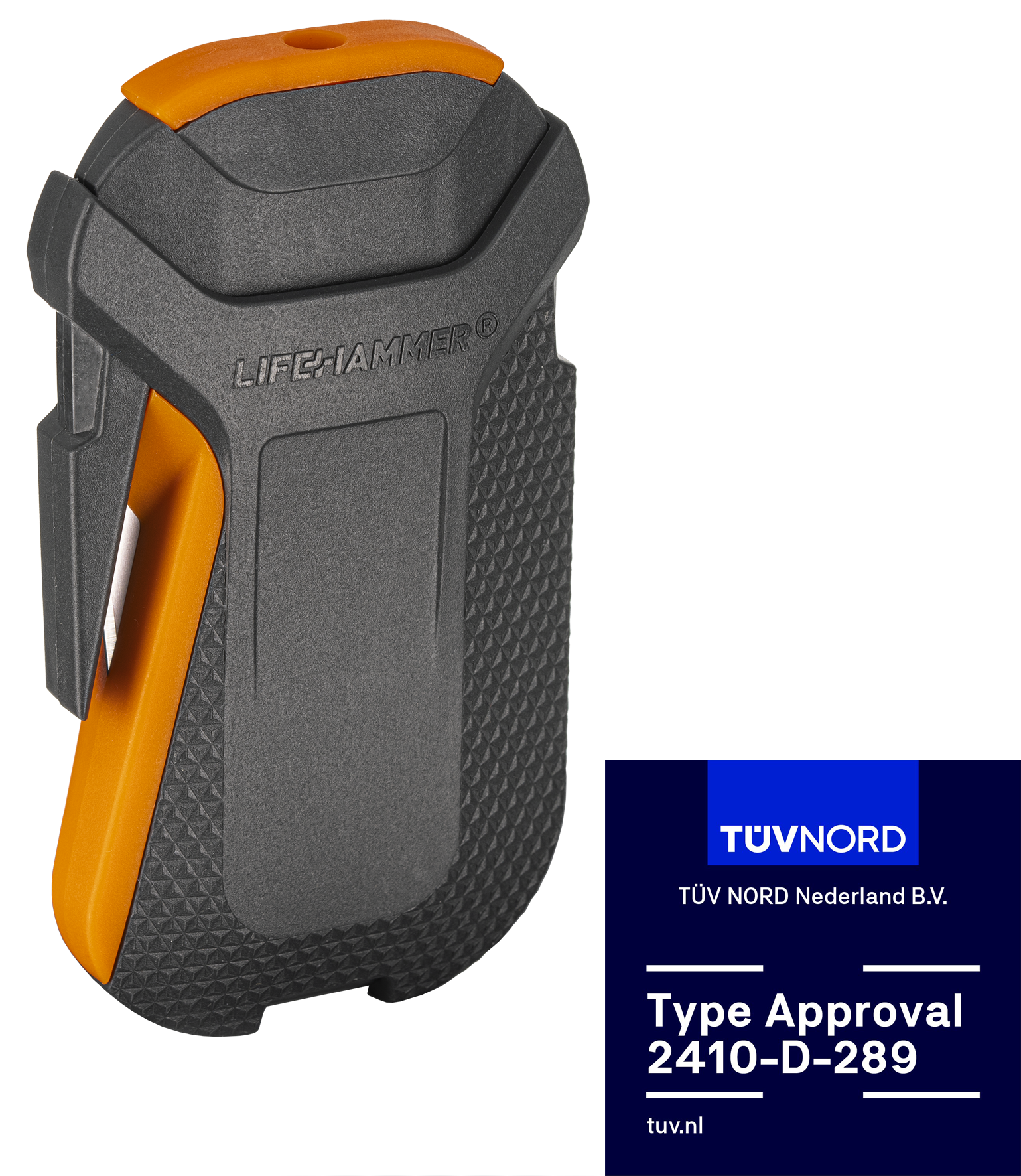
- Our safety hammer range includes four models. The Classic and Plus use a manual hardened carbon steel hammerhead. The Safety Hammer Evolution and the Safety Hammer SMART use an automatic ceramic striking mechanism. All four models cut seatbelts and break tempered side windows.
- All Lifehammer® safety hammers are TÜV certified and trusted by first responders and fleet operators across Europe, the same professionals who depend on tools that cannot afford to fail.
- The Safety Hammer SMART can be secured with 3M VHB double-sided adhesive tape, making it straightforward to position within arm’s reach of the driver without any drilling or screws. Keep it away from airbag zones when choosing your mounting location.
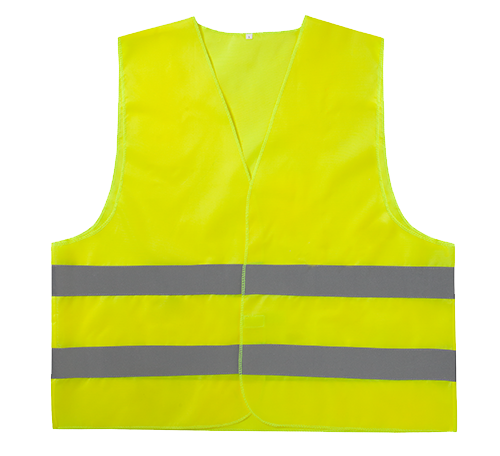
- Our Safety Vest Ultra comes in an ultra-flat vacuum pack that stores discreetly under a floor mat and decompresses immediately on opening, useful if you need to make yourself visible after exiting a vehicle on a busy road.
If you have questions about which tool is right for your vehicle or how to mount it correctly, our Q&A section covers the most common topics in straightforward detail. You can also find our products on Amazon if you prefer to order there.