 English
 Nederlands
 Deutsch



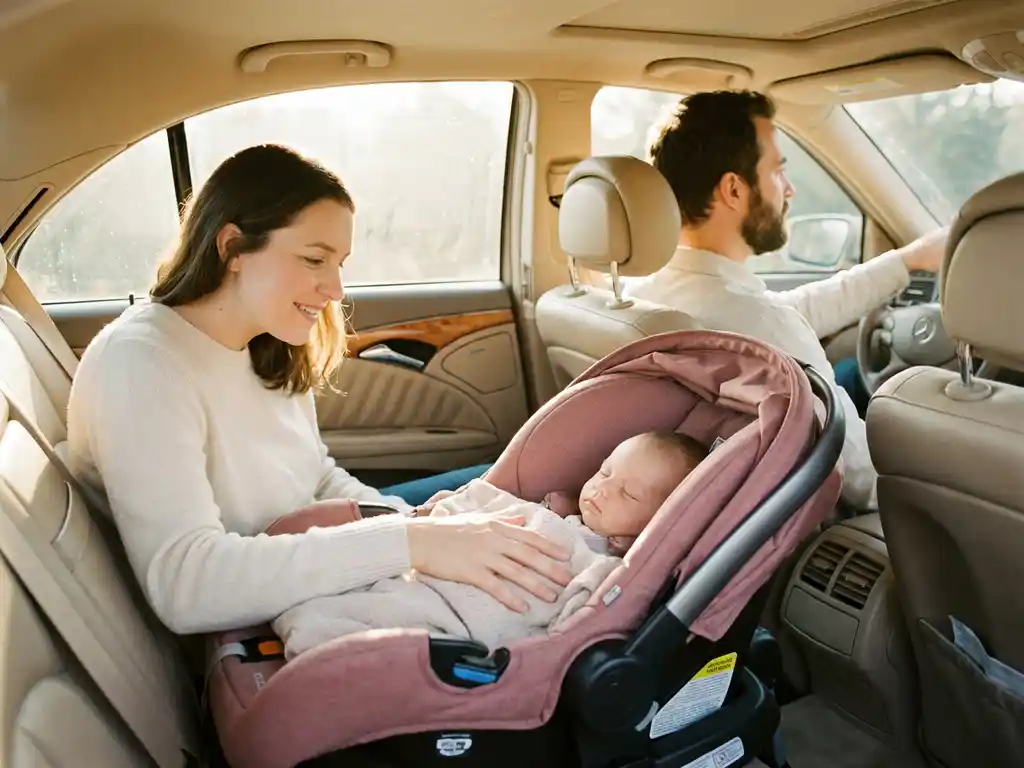
A road trip with a baby under one year old can be one of the most rewarding family experiences, and with the right preparation, it can also be a genuinely safe one. Infants are among the most vulnerable passengers in any vehicle, and the decisions parents make before and during a journey have a direct impact on their child’s well-being. Understanding infant travel safety is not about anticipating the worst, but about being properly equipped for whatever the road brings.
Whether you are planning a short drive across the country or a longer journey to visit family, the principles of safe road trips with babies remain consistent: the right equipment, thoughtful planning, and calm confidence in your preparation. This guide covers everything parents need to know to make a car journey with an infant both safe and manageable.
Age-specific risks every parent should know before driving
Babies under twelve months have specific physical vulnerabilities that make car safety a different consideration compared to older children. Their neck muscles are not yet strong enough to support their heads during sudden movements, their airways are narrower and more easily compromised, and they cannot communicate discomfort or distress in ways adults immediately recognise.
One of the most important risks to understand is positional asphyxia. When an infant’s head falls forward, even slightly, their airway can become restricted. This is particularly relevant during longer journeys when babies fall asleep in their car seat. Keeping the seat reclined at the correct angle is not just a comfort measure, it is a safety requirement.
Prolonged periods in a car seat can also place strain on a young baby’s developing spine. Paediatric guidance generally recommends limiting continuous time in an infant car seat to around two hours, with regular breaks for feeding, movement, and rest. Planning stops around these intervals is one of the most practical steps parents can take for infant travel safety.
Choosing and fitting the right rear-facing car seat
For babies under one year old, a rear-facing car seat is the only appropriate choice. In a rear-facing position, the forces of a frontal collision, which is the most common type of serious road accident, are distributed across the baby’s back, head, and neck rather than concentrated on a single point. This dramatically reduces the risk of serious injury.
What to look for in an infant car seat
When selecting a seat, look for one that meets current European safety standards, specifically the R129 (i-Size) regulation, which provides improved side-impact protection and simplifies compatibility checks with your vehicle. Seats certified to this standard have been tested to a higher benchmark than older ECE R44 models.
Correct installation matters as much as the seat itself. A seat that is installed incorrectly, even slightly, offers significantly reduced protection. If your vehicle has ISOFIX anchor points, using a seat with an ISOFIX base provides a more secure and consistent fit. Always check that the seat does not move more than a few centimetres when tested at the belt path, and follow the manufacturer’s recline angle guidance carefully.
Common fitting mistakes to avoid
Many parents unknowingly make small errors that reduce the effectiveness of the seat. Leaving a thick winter coat on a baby while strapping them in is one of the most common, as the padding compresses in a collision and creates slack in the harness. Dress your baby in thinner layers and use a blanket over the harness instead. Also check that the harness straps sit at or just below shoulder level and that there is no more than two fingers of space between the harness and your baby’s chest.
Planning your route around your baby’s needs
Thoughtful route planning is one of the most practical forms of baby car safety preparation. A journey that works for adults may be genuinely difficult for an infant, and adjusting your approach before you leave makes a significant difference to both safety and comfort.
Build in regular stops every one to two hours, ideally at locations where you can safely remove your baby from the seat, feed them, and allow them to move freely. Service stations, rest areas, and quiet car parks work well for this. Avoid stopping on hard shoulders or roadsides unless absolutely necessary.
Timing your journey around your baby’s sleep schedule is a strategy many experienced parents recommend. A well-rested baby is easier to manage, and a journey that coincides with a natural nap window can reduce stress for everyone. That said, never adjust your own rest to accommodate a baby’s schedule at the expense of driver alertness. A tired driver is one of the most significant risks on any road trip.
Pack a dedicated bag that stays accessible during the journey, containing nappies, a change of clothes, formula or expressed milk in an insulated bag, a dummy if used, and any comfort items. Having these within reach means stops are efficient and calm rather than disorganised.
Keeping your baby safe and comfortable in the car
Comfort and safety are closely connected when travelling with an infant. A baby who is too hot, too cold, or overstimulated is more likely to become distressed, which can be distracting for the driver and stressful for everyone in the vehicle.
Temperature regulation is particularly important. Babies cannot regulate their body temperature as effectively as adults, and a car can heat up quickly even on mild days. Use a sunshade on rear side windows to block direct sunlight, and monitor the temperature in the back of the vehicle regularly. Never leave a baby unattended in a parked car, even for a short time.
Managing the journey itself
Soft toys, simple sensory objects, and calm music can help keep a baby settled during the journey without overstimulating them. Avoid hanging objects from the rear-view mirror or placing unsecured items on the back shelf, as these become projectiles in the event of a sudden stop.
If your baby becomes distressed while driving, find a safe place to pull over before attempting to comfort them. Reaching into the back seat while driving is dangerous, and trying to manage an upset infant without stopping significantly increases risk. Pulling over calmly and taking a few minutes is always the right decision.
Emergency preparedness for family car travel
Preparedness is the foundation of responsible family travel. Most journeys go smoothly, but having the right tools and knowledge on hand means that if something unexpected does happen, the response is calm and effective rather than reactive.
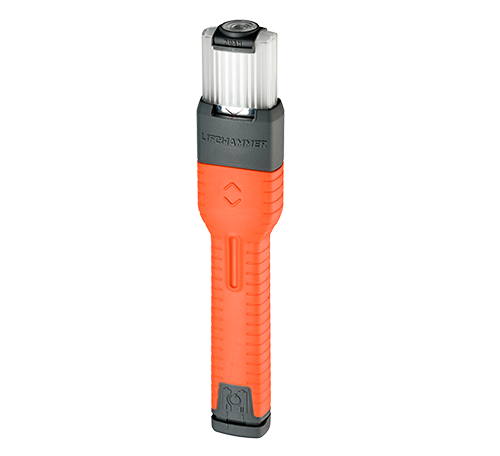
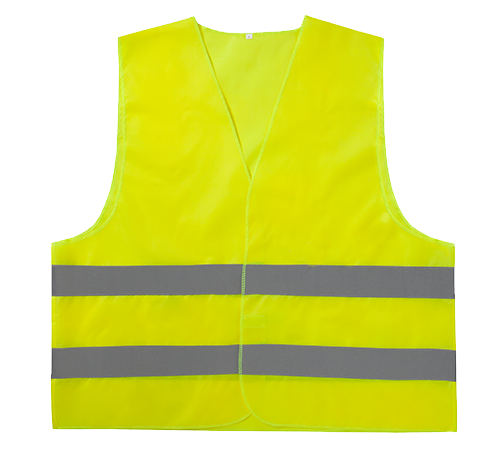
A basic emergency kit for family car travel should include a first aid kit suited to infants, a fully charged mobile phone or backup power bank, a reflective warning triangle, and a high-visibility vest. Keep these items in an accessible location, not buried under luggage in the boot.
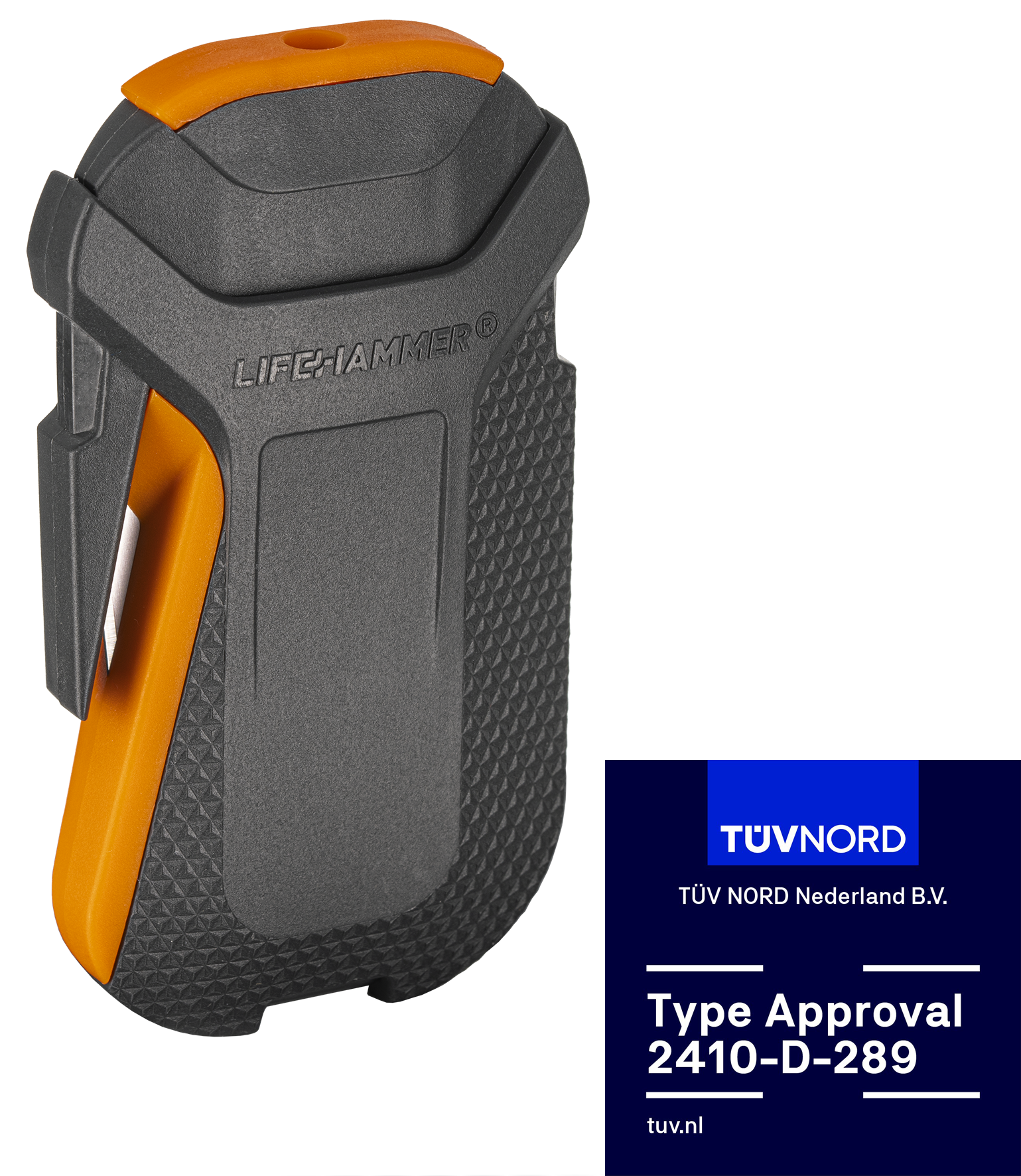
One often-overlooked element of vehicle preparedness is having a tool capable of breaking tempered side window glass and cutting a jammed seatbelt. In the unlikely event of an accident where doors cannot be opened or a seatbelt becomes stuck, these are the two actions that allow rapid exit from a vehicle. A quality car escape tool stored within reach of the driver, not locked in the glove compartment, is a straightforward addition to any family car.
Before any longer journey, check your tyre pressure, fluid levels, and that all lights are functioning. These basic checks take only a few minutes and reduce the likelihood of a breakdown, which is particularly inconvenient and potentially stressful when travelling with an infant.
How Lifehammer® supports safe family car travel
We develop TÜV-certified vehicle safety products that work reliably when they are needed most. Since 1983, our focus has been on practical, well-engineered tools that give families genuine confidence on the road. For parents travelling with young children, having the right equipment in the car is a straightforward way to be better prepared.
- Trusted escape tools: The Lifehammer® Safety Hammer SMART features a ceramic striking pin for breaking tempered side window glass and an integrated seatbelt cutter. It can be mounted within reach using 3M VHB adhesive tape, no screws required.
- TÜV-certified quality: All our safety hammers are TÜV-certified to German standards and trusted by first responders and professional fleet operators across Europe.
- Compact visibility: Our Safety Vest Ultra folds down to a compact size and can be stored discreetly under the seat, ready to use if you need to exit the vehicle in a low-visibility situation.
If you have questions about which product is right for your vehicle or family setup, you will find detailed guidance and answers in our questions and answers section.