 English
 Nederlands
 Deutsch





A small number of well-chosen driving accessories genuinely make a difference for older drivers. The most useful ones address specific physical changes that come with age, such as reduced neck mobility, slower reaction times, and greater difficulty getting in and out of the car. They are not about admitting decline. They are about staying independent, comfortable, and prepared for longer.
The right accessories vary depending on the individual, but most older drivers benefit from tools that reduce physical strain, improve visibility, and keep safety equipment within easy reach. The sections below work through the most practical questions, from which challenges are actually worth addressing to when standard accessories stop being enough.
Which driving challenges do accessories actually address?
Driving accessories for older drivers are most useful when they target specific physical changes rather than general ageing. The most common challenges include reduced flexibility in the neck and shoulders, difficulty judging distances and gaps, slower reaction times, reduced grip strength, and the physical effort of getting in and out of a vehicle. Accessories address each of these in concrete, practical ways.
Neck and shoulder stiffness makes it harder to check blind spots and reverse safely. Wide-angle or panoramic mirrors directly compensate for this by expanding the driver’s field of view without requiring the same range of movement. Grip strength declines gradually, which makes steering wheel covers with a textured or padded surface a straightforward improvement for everyday comfort and control.
Getting in and out of the car is one of the most physically demanding parts of driving for many older people. Swivel seat cushions and grab handles that fit into the door latch are simple, inexpensive tools that significantly reduce strain on knees and hips. These are not specialist medical devices. They are practical car accessories that any driver can use.
What are the most useful car accessories for older drivers?
The most useful car accessories for elderly drivers are those that solve a real, everyday problem without adding complexity. Blind spot mirrors, seat assist handles, lumbar support cushions, and easy-reach seatbelt extenders consistently rank among the highest-value additions for older drivers. Each one addresses a specific friction point rather than being a generic comfort upgrade.
- Blind spot mirrors: Small wide-angle mirrors that clip onto existing wing mirrors, giving a broader view of adjacent lanes without turning the head as far.
- Swivel seat cushions: Allow the driver to rotate their legs out of the vehicle before standing, reducing strain on hips, knees, and lower back.
- Door frame grab handles: Hook into the door latch and provide a stable grip when lowering into or rising from the seat.
- Lumbar support cushions: Reduce lower back fatigue on longer journeys and help maintain a more comfortable driving posture.
- Seatbelt extenders and guides: Make it easier to reach and fasten the seatbelt without twisting, particularly useful for drivers with shoulder or rotator cuff issues.
- Steering wheel covers with grip texture: Improve hold without requiring significant grip strength, especially in cold or wet conditions.
The best car gadgets for seniors are not necessarily the most technologically advanced. Often they are the simplest ones, designed to remove a daily inconvenience that builds up over time into a genuine barrier to driving comfortably.
What safety tools should older drivers keep within reach?
Older drivers should keep a seatbelt cutter and window breaker within arm’s reach, ideally mounted near the driver’s seat. In an emergency, fine motor skills and reaction speed are reduced under stress regardless of age, but older drivers are statistically more likely to experience health-related incidents behind the wheel. Having safety tools positioned within easy reach means they can be used quickly and without searching.
A compact safety hammer that combines a seatbelt cutter with a tool for breaking tempered side windows is the most important item to have accessible. These tools are designed for single-handed use and do not require significant strength. The key is placement. A tool stored in the boot or glove compartment is not useful in an emergency. It needs to be mounted close to the driver’s position.
Beyond the safety hammer, a few other items are worth keeping accessible rather than buried in the boot:
- A high-visibility safety vest, stored where the driver can reach it before exiting a vehicle on a roadside
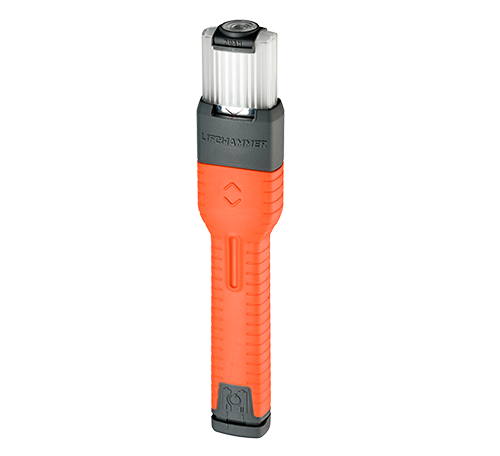
- A torch or compact LED light for low-light situations
- A fully charged mobile phone holder mounted at eye level, reducing the need to look down
- A first aid kit positioned in a consistent, known location
Accessibility is the common thread. Safety tools for older drivers work best when they require no searching, no fumbling, and no prior planning in the moment they are needed.
Do driving aids for older drivers actually improve safety outcomes?
Yes, driving aids for older drivers do improve safety outcomes when they are matched to the specific challenge the driver faces. Research and road safety organisations consistently find that targeted interventions, such as mirrors that compensate for reduced neck mobility or hand controls that replace pedal use, allow older drivers to remain safe on the road for longer. The key word is targeted. Generic gadgets with no clear purpose add clutter without adding safety.
Adaptive equipment tends to show the clearest benefit because it directly compensates for a measurable limitation. Standard accessories such as improved mirrors or better lighting also contribute, but their benefit depends on how much of a difference they make for that individual driver’s specific situation.
Older drivers are also often more cautious and experienced than younger drivers, which means that small improvements to comfort and visibility can have a proportionally larger effect on their overall driving quality. Fatigue and discomfort lead to distraction. Accessories that reduce physical strain keep attention where it belongs.
When should an older driver consider adaptive equipment versus standard accessories?
An older driver should consider adaptive equipment rather than standard accessories when a physical limitation is consistently affecting their ability to control the vehicle safely. Standard car accessories for elderly drivers, such as cushions, mirrors, and grip covers, work well for comfort and convenience. Adaptive equipment, such as hand controls, pedal extensions, or swivel seats fitted to the vehicle itself, is appropriate when the limitation is structural and ongoing.
A useful way to think about the distinction:
- Standard accessories reduce discomfort, improve convenience, and support existing capability. They are appropriate when the driver can still perform all core driving tasks but finds some of them more difficult than before.
- Adaptive equipment replaces or modifies a core vehicle function to compensate for a specific physical condition. This includes hand controls instead of foot pedals, steering knobs for one-handed driving, or left-foot accelerators.
The transition point is not always obvious, which is why a formal driving assessment with an occupational therapist or specialist driving instructor is worth considering. Many older drivers delay this because it feels like a step toward giving up driving, but the opposite is usually true. An assessment often identifies simple adaptations that extend safe driving by years.
If a driver notices they are regularly avoiding certain manoeuvres, taking longer routes to avoid complex junctions, or feeling anxious about situations that used to be routine, those are signs that standard accessories alone may not be enough.
How Lifehammer® supports older drivers
At Lifehammer® we have been developing vehicle safety tools since 1983, and we understand that for older drivers, having reliable, accessible safety equipment is not about fear. It is about staying prepared and in control. Our products are designed to be simple to use under stress, compact enough to keep within reach, and built to a standard that actually holds up when needed.
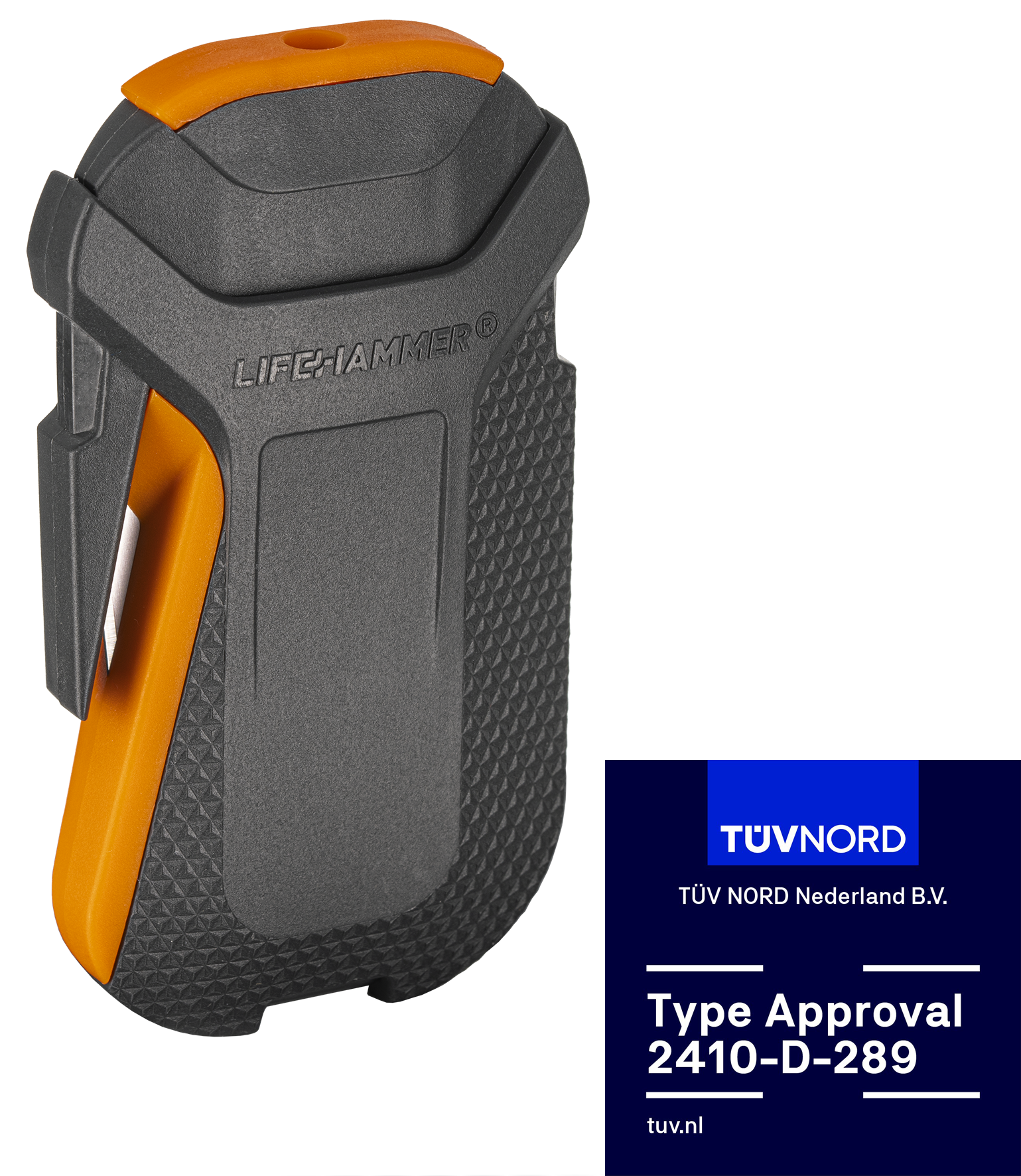
- The Safety Hammer SMART uses a ceramic pin as its striking mechanism and can be secured using 3M VHB double-sided adhesive tape, allowing you to position it within reach of the driver’s seat without drilling or tools. It cuts seatbelts and breaks tempered side windows.
- The Safety Hammer Evolution uses a ceramic hammerhead and is assembled using the hex key provided. It is a compact, reliable tool trusted by first responders and fleet operators across Europe.
- All Lifehammer® safety hammers are TÜV certified to German safety standards, so you are not relying on an untested product when it matters most.
- Our Safety Vest Ultra comes in an ultra-flat vacuum pack that stores under any floor mat and decompresses immediately on opening. It is one-size-fits-all and easy to reach when you need to be visible at the roadside.
If you have questions about which product suits your car or your situation, our Q&A section covers the most common topics in clear, straightforward detail.