 English
 Nederlands
 Deutsch



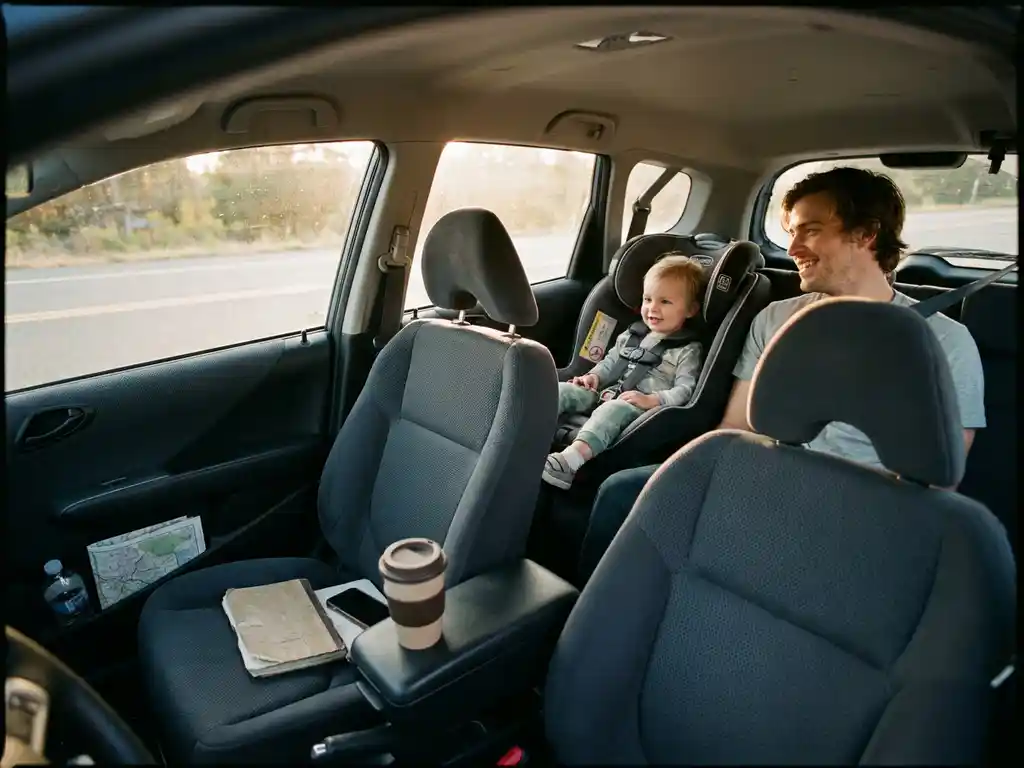
The best way to store safety gear in a small car is to prioritise accessibility over storage volume. Keep the items you would need in an emergency within arm’s reach, and use compact, purpose-designed products that fit neatly into the spaces a small car already has. Small cars present a genuine storage challenge, but with a little planning, you can carry everything that matters without cluttering your interior. The sections below cover where to put specific items, what to carry, and how to keep everything organised and secure.
Where should you keep safety gear in a small car?
In a small car, safety gear should be distributed across two zones: items for immediate emergencies within arm’s reach of the driver, and broader emergency kit items stored in the boot. The door pocket, centre console, and glovebox are the best locations for tools you might need quickly. The boot, even a compact one, works well for a small emergency bag or vest.
The key principle is to separate your gear by urgency. A window-breaking tool or seatbelt cutter needs to be reachable from the driver’s seat without unbuckling or stretching. A warning triangle, reflective vest, or first aid kit can live in the boot because you would only need them once the car has stopped and you have time to retrieve them.
If your small car has a centre console with a lid, this is one of the most practical spots for compact safety tools. It sits between the front seats, accessible to both the driver and the front passenger, and keeps items out of sight but within easy reach. Door pockets are useful for flat items like folded vests or a compact torch. The glovebox tends to fill up quickly with documents, so treat it as a secondary option rather than a primary storage location.
What safety gear should every small car carry?
Every small car should carry a window-breaking and seatbelt-cutting tool, a reflective warning vest, a warning triangle, a basic first aid kit, and a torch. These five categories cover the most common roadside and in-vehicle emergencies and are required or strongly recommended across most European countries.
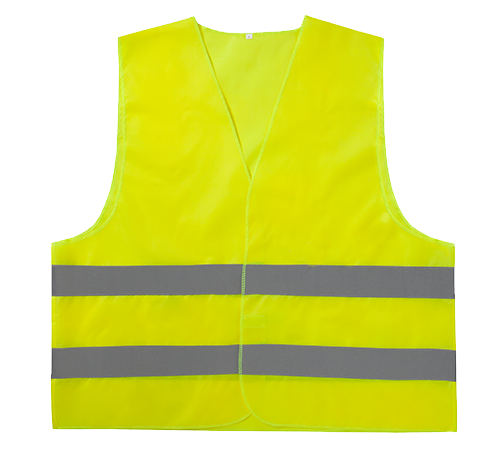
In several European countries, carrying a warning triangle and a reflective vest is a legal requirement, not just good practice. If you drive across borders, the requirements can vary, so it is worth checking the rules for each country on your route before you travel.
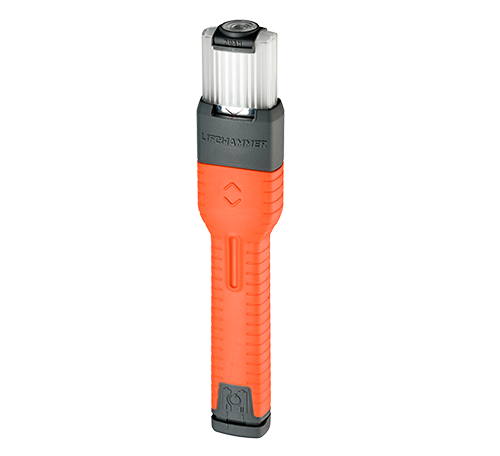
Beyond the legal minimums, a compact torch is one of the most overlooked items. It is useful for roadside breakdowns at night, checking under the bonnet, or simply navigating a dark car park. A small first aid kit does not need to be comprehensive. A basic kit covering cuts, burns, and bandaging is enough for most situations and takes up very little space in a small boot.
For a small car specifically, compact versions of each item matter. A folded reflective vest that packs flat, a slim first aid pouch rather than a rigid box, and a safety hammer that mounts directly to the door frame or console all help you carry what you need without sacrificing the limited space you have.
How do you organise a car emergency kit in a small boot?
Organise a small car emergency kit by using a single compact bag or pouch that groups all boot-stored items together. This prevents items from rolling around, makes the kit easy to move when you need the full boot space, and means you can grab everything at once in a roadside situation.
A soft-sided bag works better than a rigid box in a small boot because it can be compressed or repositioned around other luggage. Keep the bag in a corner of the boot, ideally secured against the side wall so it does not shift during driving. Some drivers use a bungee cord or a small boot organiser with straps to hold it in place.
Inside the bag, group items logically. Keep the warning triangle and reflective vest together since you would use both at the same time. Store the first aid kit separately so it is easy to find quickly. A torch can clip to the outside of the bag or sit in a side pocket for fast access.
Avoid overpacking. A small car emergency kit does not need to cover every possible scenario. Focus on the situations most likely to affect a driver on a typical journey: a breakdown, a minor accident, or a flat tyre. Everything else adds weight and takes up space you probably need.
Should a safety hammer be stored in the glovebox or within arm’s reach?
A safety hammer should always be stored within arm’s reach of the driver, not in the glovebox. In a genuine emergency, such as a vehicle entering water or a door becoming jammed, you may not be able to lean across or unbuckle to reach the glovebox. The tool needs to be accessible from the seated, belted driving position.
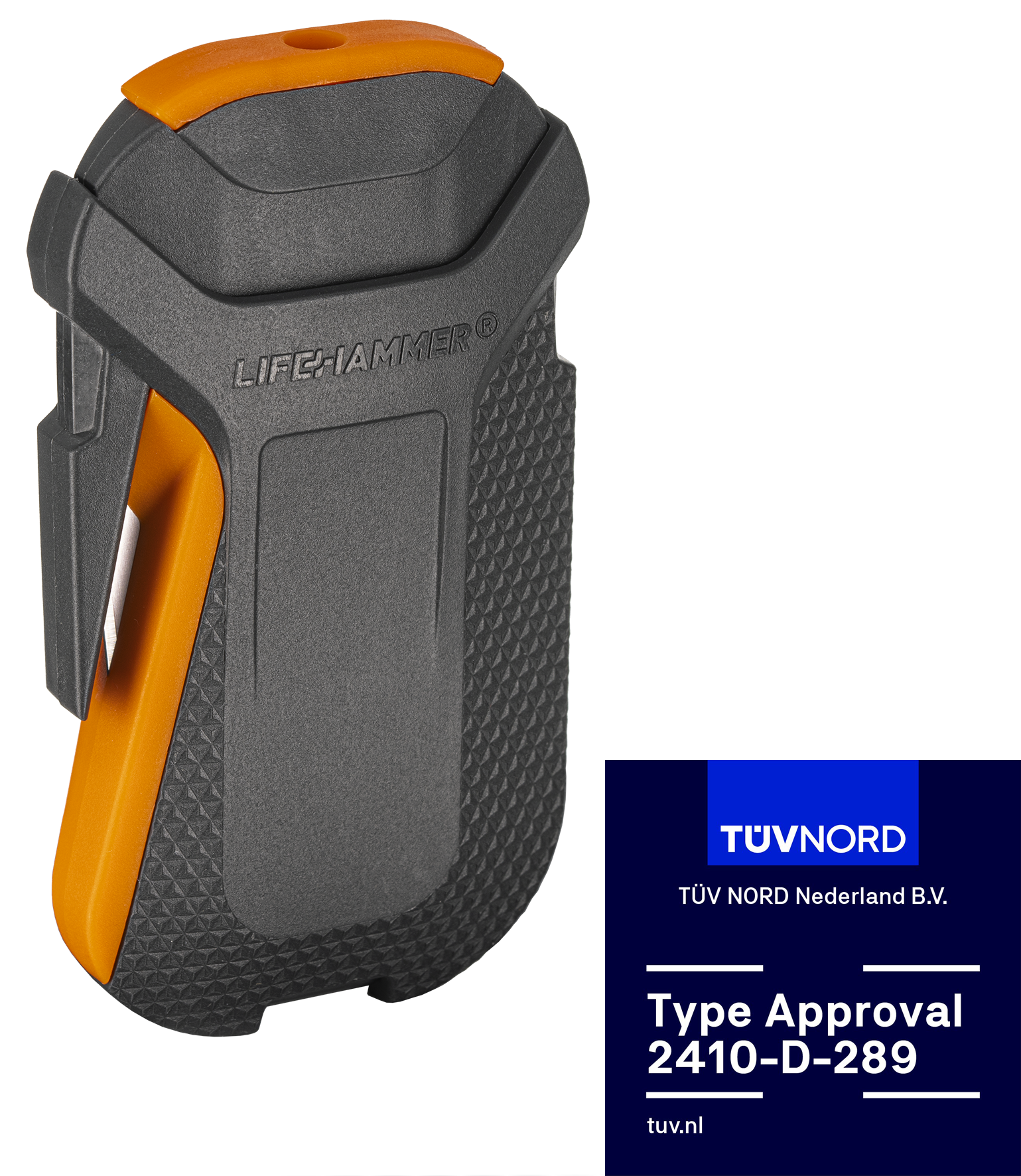
The most effective mounting positions are the driver’s side door frame, the centre console, or the area just below the dashboard on the driver’s side. Many safety hammers come with mounting systems designed for exactly these locations. A clamp-style mount fixed to the door or console keeps the tool visible, accessible, and secure without rattling or moving during normal driving.
In a small car, the centre console is often the best option because it is reachable by both the driver and the front passenger. If your car has a narrow console or no lid, a door-mounted position is a practical alternative. What matters most is that the tool is within arm’s reach without requiring you to move significantly from your seated position.
Avoid storing a safety hammer in a bag, under a seat, or in the boot. These locations significantly reduce the chance of being able to use it when it is actually needed.
What’s the best way to secure loose safety items while driving?
The best way to secure loose safety items while driving is to mount fixed tools using their intended brackets, and to contain loose items in a closed bag or organiser rather than leaving them free in the boot or on seats. Unsecured objects become projectiles in sudden braking or a collision.
For tools with mounting systems, use them as intended. A safety hammer with a clamp mount should be properly fixed to the door frame or console rather than left in a cup holder or door pocket. Mounting systems are designed to hold the tool firmly while making it quick to remove when needed.
For items stored in the boot, a boot organiser with compartments and straps is one of the simplest solutions. These are available in sizes suited to small cars and prevent items from sliding across the boot floor. A single closed bag, as mentioned above, also works well and is easier to manage than multiple loose items.
On the passenger seat or rear seats, avoid placing any safety items loose. If you need to carry a bag there temporarily, place it in the footwell rather than on the seat, where it could slide forward under braking. For a small car used regularly for longer journeys, taking ten minutes to properly mount and organise your safety kit is time well spent.
How Lifehammer® helps you store safety gear in a small car
At Lifehammer® we have been developing vehicle safety tools since 1983, and compact, practical storage is exactly the kind of challenge our products are designed around. We understand that small cars have limited space, which is why our tools are built to be slim, mountable, and genuinely useful without taking up room you cannot spare.
- The Safety Hammer SMART uses a ceramic pin as its striking mechanism and can be mounted using 3M VHB double-sided adhesive tape, making it easy to position within arm’s reach on a door frame or console without drilling or tools. Note: avoid airbag areas when positioning.
- The Safety Hammer Evolution uses a ceramic hammerhead and is assembled using the hex key provided, offering a secure, fixed mounting position that suits small car interiors where space around the driver’s seat is limited.
- Our Classic and Plus models use a hardened carbon steel hammerhead and come with clamp-style mounting systems, giving you a firm, stable fit on a door frame or centre console without adding bulk.
- All Lifehammer® safety hammers are TÜV certified and trusted by first responders and fleet operators across Europe. They are designed to break tempered side windows and cut seatbelts reliably.
- Our Safety Vest Ultra comes in an ultra-flat vacuum pack that stores discreetly under a floor mat and decompresses immediately on opening — a practical solution for small boots where rigid boxes are not an option.
If you have questions about which mounting system suits your car or which model fits your storage setup, our Q&A section covers the most common topics in clear, straightforward detail.