 English
 Nederlands
 Deutsch



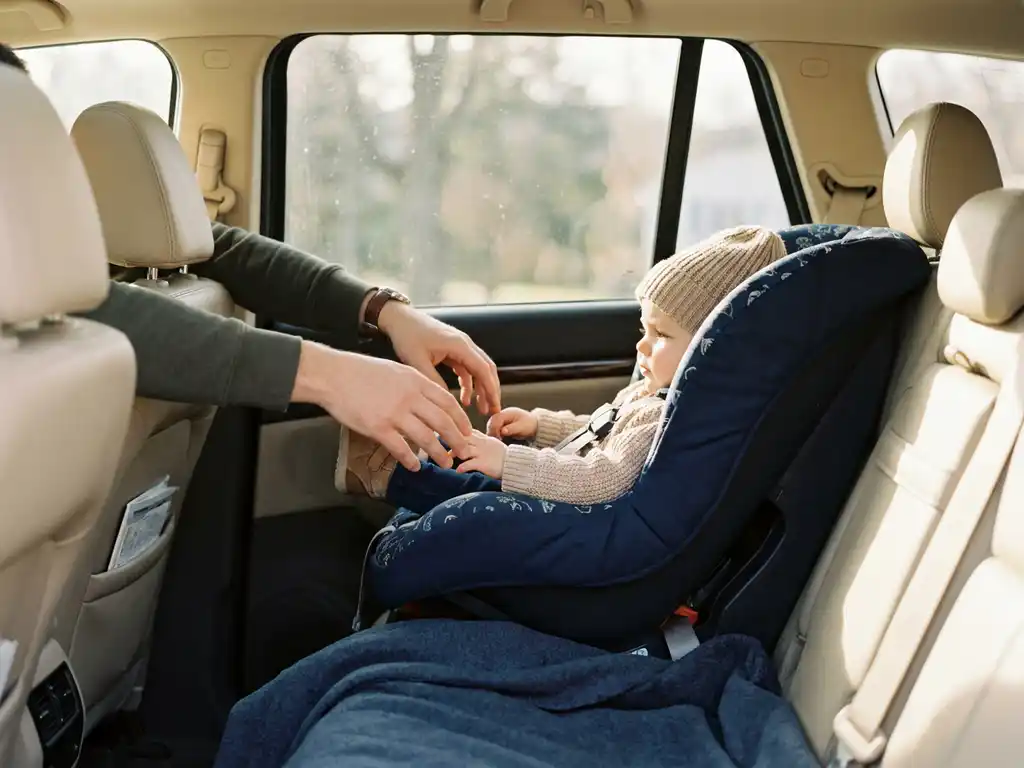
In a car seat emergency, you can remove a child by first cutting the harness straps if the buckle will not release, then carefully lifting the child out of the seat. Speed matters, but so does technique. A calm, methodical approach reduces the risk of worsening any injury your child may have sustained. The sections below walk through each step of a child car seat emergency, from the moment of impact to the tools worth keeping within reach.
Can you cut a child’s car seat harness in an emergency?
Yes, you can and should cut a child’s car seat harness if the buckle will not release and the situation requires immediate evacuation. Harness straps are made from nylon webbing, which a sharp seatbelt cutter can slice through cleanly. Cutting the harness destroys it, but in a genuine emergency, the seat is replaceable and your child is not.
The harness straps run over the shoulders and across the chest. If you are cutting, aim for the shoulder straps above the chest clip rather than near the child’s body. Work quickly but with control. A dedicated seatbelt cutter, designed for exactly this purpose, gives you a clean cut with minimal force. Standard scissors or a pocket knife will struggle with the thick webbing, particularly under stress.
Once the straps are cut, the chest clip can be moved aside and the child lifted straight up and out of the seat. Do not pull sideways or twist the child during removal.
What should you do first before removing a child from a crashed car?
Before removing a child from a crashed car, assess whether the vehicle is in immediate danger. If there is no fire, smoke, or risk of the car moving, it is generally safer to keep the child still and wait for emergency services. Moving a child immediately after a crash carries the risk of worsening a spinal or neck injury that may not be visible.
If you do need to act before help arrives, follow this order:
- Turn off the engine if it is still running.
- Check whether the child is conscious and responsive.
- Attempt to release the harness buckle normally before cutting.
- If removal is necessary, support the child’s head and neck throughout.
- Move the child to a safe distance from the vehicle and keep them still.
The instinct to act immediately is understandable, but a few seconds of assessment can prevent a secondary injury. Only remove a child from a car seat in an accident if staying in the vehicle poses a greater risk than moving them.
How do you release a jammed car seat buckle after a crash?
A jammed car seat buckle after a crash is often caused by the force of impact compressing the buckle mechanism or warping the plastic housing. To release it, press the button firmly and hold it down while simultaneously pulling the harness webbing upward to reduce tension on the buckle. Relieving strap tension is the most common fix for a stuck release.
If the buckle still will not open, try these steps:
- Press the button from a direct angle rather than at a diagonal.
- Use the heel of your palm rather than a fingertip for more force.
- Wiggle the buckle housing gently while pressing to free any debris or deformation.
- If nothing works, cut the harness straps as described above.
It is worth noting that car seat manufacturers recommend replacing a car seat after any significant crash, even if it looks undamaged. A buckle that jammed once under impact may not function reliably in a future emergency. This is one reason keeping a seatbelt cutter accessible in your car is a practical decision, not an overreaction.
What if the car door won’t open and a child is inside?
If a car door will not open after a crash and a child is inside, your next option is to break the side window. Tempered glass, which is used for side and rear windows on most vehicles, is designed to shatter into small, blunt pieces rather than sharp shards, making it relatively safe to break in an emergency. A safety hammer or window breaker gives you the striking force needed to break tempered glass cleanly.
Strike the corner of the window rather than the centre. The edges of tempered glass are structurally weaker, and a focused strike there requires significantly less force than hitting the middle. Once the glass breaks, use a sleeve or cloth to clear the remaining fragments from the frame before reaching in or helping a child through.
One important distinction: laminated glass, which is used for windscreens and increasingly for some side windows in newer vehicles, cannot be broken using a standard safety hammer. If the window you are attempting to break is a windscreen, a different approach is needed. Check your vehicle’s manual to understand which windows are tempered and which are laminated before an emergency arises.
If the child can unbuckle themselves and is old enough to understand instructions, guide them verbally through the steps while you work on the window from outside.
Should you remove a child from their car seat after a minor accident?
After a minor accident with no visible injuries, no fire, and no risk of the vehicle moving, you do not need to remove a child from their car seat immediately. Keep the child calm and still, check them visually for any signs of distress or injury, and wait for emergency services if there is any doubt. Unnecessary movement after even a low-speed collision can aggravate an injury that is not immediately obvious.
If the child is distressed but appears uninjured, speak to them calmly and reassure them before attempting to remove them from the seat. Children often respond to the tone of a parent’s voice more than the words themselves. Staying calm yourself is one of the most useful things you can do in the immediate aftermath.
After any crash, even a minor one, have both the child and the car seat inspected. Many car seat manufacturers state that their seats should be replaced following a moderate to severe crash, and some recommend replacement after any collision. A seat that has absorbed impact forces may no longer provide the same level of protection.
What tools should you keep in your car for a child emergency?
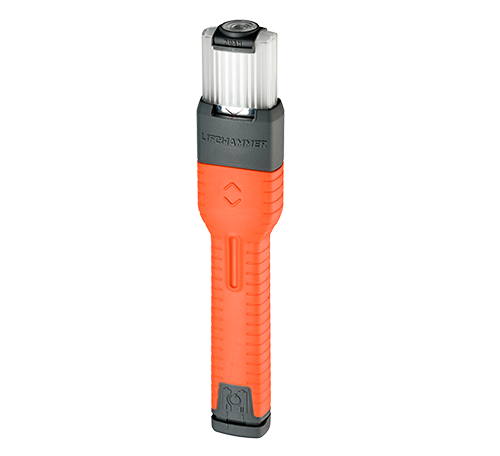
For a car emergency involving a child, the most useful tools are a seatbelt cutter, a window breaker for tempered glass, and a reliable light source. These three items cover the most common scenarios where you may need to act quickly: a stuck buckle, a door or window that will not open, and reduced visibility at night or in a tunnel.
Keep these tools where you can reach them from the driver’s seat without unbuckling. A tool stored in the boot is not useful if you are trapped in the front. Many safety hammers combine a window breaker and seatbelt cutter in a single compact unit, which makes storage straightforward and ensures both functions are always together.
Other practical items to consider for family driving:
- A small first aid kit within reach of the driver or front passenger.
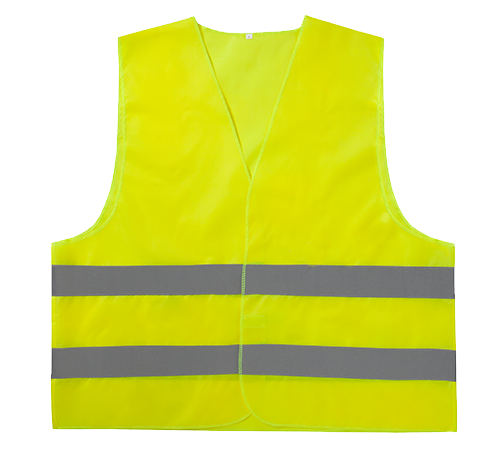
- A high-visibility safety vest, required by law in several European countries when you exit a broken-down vehicle.
- A charged mobile phone or car charger to call emergency services.
- A written note of your emergency contacts, in case your phone is inaccessible after a crash.
The goal is not to prepare for every possible scenario but to cover the most likely ones with tools that are simple, reliable, and immediately accessible. A child car seat emergency is rare, but the few seconds spent reaching for the right tool can make a meaningful difference.
How Lifehammer® supports you in a child car seat emergency
At Lifehammer® we have been developing vehicle safety tools since 1983, and helping families prepare for car emergencies is exactly what our products are built for. Whether you drive with young children regularly or are simply thinking ahead, we focus on tools that are reliable, compact, and designed to work under pressure.
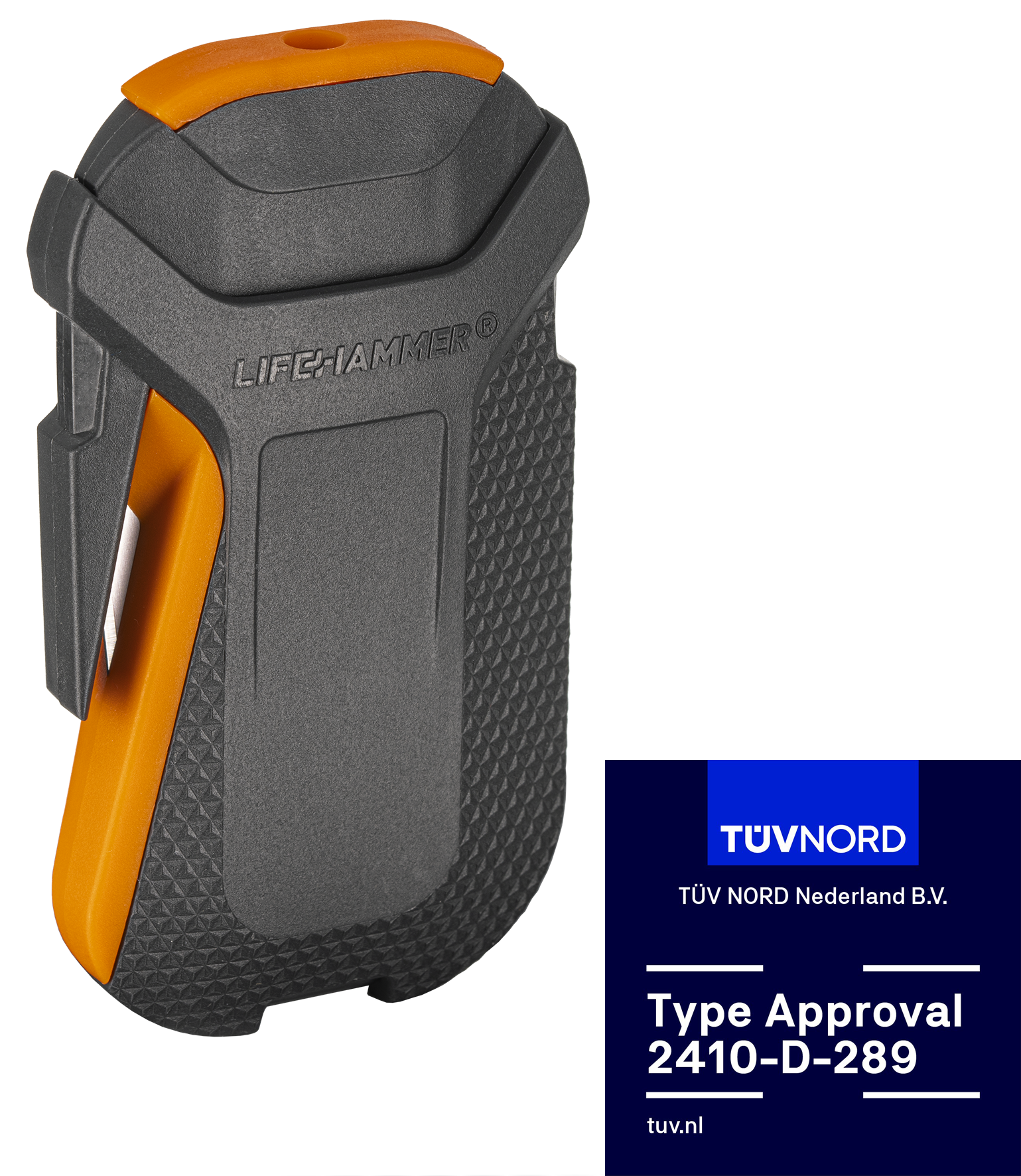
- Our Safety Hammer SMART uses an automatic ceramic pin to break tempered side and rear windows, and includes an integrated seatbelt cutter. It attaches using 3M VHB double-sided adhesive tape, so it can be positioned within reach of the driver without screws or tools. Avoid placing it near airbag areas.
- Our Classic and Plus models use a hardened carbon steel hammerhead and are TÜV certified according to German standards. All Lifehammer® safety hammers cut seatbelts and break tempered glass, making them directly relevant in a car seat buckle emergency.
- Our products are trusted by first responders, firefighters, and law enforcement across Europe, which reflects the standard of reliability we build into every tool.
- The Safety Vest Ultra comes in an ultra-flat vacuum pack that fits under any floor mat and decompresses immediately on opening, making it a practical addition to any family car kit.
If you have questions about which product suits your vehicle or how to position it for quick access, our Q&A section covers the most common topics in straightforward detail. Learn more and find the right setup for your car.