 English
 Nederlands
 Deutsch




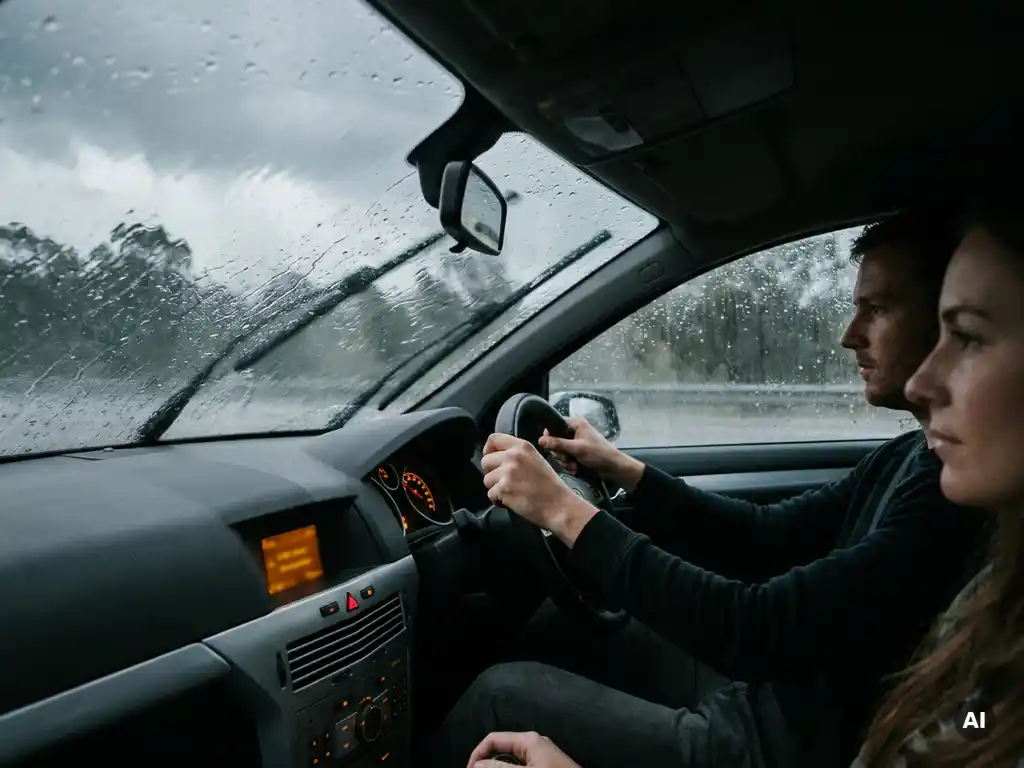
Most drivers have experienced it at least once: the sky turns dark in minutes, rain hammers the windscreen, and suddenly the road feels completely different. Sudden rain and hail are among the most disorienting conditions you can face behind the wheel, partly because they arrive without much warning and partly because they demand an immediate response. This article walks you through what actually happens to your car and your perception when the weather turns, and what you can do about it step by step.
Understanding how to react to sudden rain while driving is less about memorising rules and more about building a clear mental picture of what changes around you. Once you understand the mechanics, the right responses follow naturally.
Why sudden rain and hail catch drivers off guard
The surprise factor is the first thing to understand. Sudden downpours and hailstorms develop faster than most people expect, and the transition from a dry road to a wet road happens within seconds. Your brain, which was calibrated to the previous conditions, takes a moment to catch up.
There is also a visibility problem that works in both directions. Rain reduces how far ahead you can see, but it also reduces how visible your car is to other drivers. Hail adds a layer of noise that can be genuinely disorienting, making it harder to hear other vehicles, horns, or emergency sirens. Drivers often underestimate how much these combined factors shrink the margin for error.
For example, a driver travelling at motorway speed in dry conditions might have a comfortable stopping distance of around 75 metres. That same driver, on a wet road, needs significantly more space to stop safely. The road does not announce this change. You have to recognise it yourself.
How rain and hail affect your car’s performance
Driving safety in bad weather starts with understanding what physically changes between your tyres and the road surface.
Reduced traction and aquaplaning
Water on the road reduces the friction between your tyres and the tarmac. At higher speeds, a thin film of water can build up faster than the tyre tread can channel it away, causing the tyre to ride on water rather than grip the road. This is aquaplaning, and when it happens, steering and braking become temporarily ineffective. You will often feel it as a sudden lightness in the steering wheel.
The correct response is to ease off the accelerator gently, avoid sudden braking, and hold the steering wheel straight until the tyres regain contact. Jerking the wheel or braking hard during aquaplaning can cause the car to spin.
Hail and reduced visibility
Hail while driving presents a different set of challenges. Hailstones bouncing off the road and bonnet create visual noise that makes it harder to read the road ahead. They also reduce tyre grip, particularly on surfaces that have not been recently resurfaced. Large hailstones can crack or chip a windscreen, which is worth knowing because even a small crack in your line of sight can distort your view significantly.
Braking distance and reaction time
Both rain and hail increase the distance your car needs to stop. Wet brakes, reduced tyre friction, and lower visibility all compound each other. If you are following another vehicle closely in dry conditions, that gap becomes dangerously small the moment rain begins.
What to do in the first moments of a downpour
The first thirty seconds of a sudden downpour are when most driving errors happen. The instinct is often to speed up to get through the rain, or to brake sharply in surprise. Both responses make the situation worse.
Instead, the practical sequence looks like this:
- Ease off the accelerator smoothly rather than braking suddenly. Reducing speed gradually keeps the car stable.
- Switch on your headlights immediately, even during the day. This is not about seeing the road better. It is about making your car visible to others in conditions where visibility drops sharply.
- Activate your windscreen wipers at the appropriate speed and check that they are actually clearing the screen. Worn wiper blades smear water rather than clear it.
- Increase your following distance. Double the gap between you and the vehicle ahead. On a motorway, this means thinking in terms of four or more seconds rather than two.
- Avoid sudden lane changes. Road markings become harder to read when wet, and other drivers may be reacting unpredictably.
These steps take only a few seconds to complete, but they meaningfully reduce your exposure to the most common wet-weather risks.
When to pull over — and how to do it safely
Building on the steps above, there are moments when the right decision is to stop driving altogether. Knowing when to pull over is a skill in itself, because many drivers push through conditions that genuinely warrant a pause.
Consider stopping if visibility drops to the point where you can no longer clearly see the vehicle ahead, if hail is heavy enough to make the noise inside the car disorienting, or if you feel the car losing grip repeatedly. Continuing to drive in these conditions is not a sign of composure. It is a risk that is rarely worth taking.
When you do pull over, the method matters:
- Signal well in advance and move to the left slowly, avoiding sudden braking.
- Pull as far off the road as possible, ideally into a service area, car park, or wide layby rather than a narrow shoulder.
- Keep your hazard lights on so other drivers can see you are stationary.
- Stay inside the vehicle with your seatbelt fastened. Standing outside on a wet road puts you at serious risk from passing traffic.
- Wait for conditions to improve before rejoining the road. A few minutes of patience is a reasonable trade for a safer journey.
One common misconception is that pulling over under a bridge or overpass is a safe option. It can reduce rain exposure briefly, but it also puts a stationary vehicle in a narrow, high-traffic area where other drivers may be distracted. A proper layby or service area is always a better choice.
Build a wet-weather driving habit that sticks
Reactive driving, responding to conditions as they appear, is less reliable than building habits that activate automatically. The goal is to reach a point where your wet-weather responses feel as natural as checking your mirrors before changing lanes.
A few habits worth building into your regular driving routine:
- Check your tyres regularly. Tyre tread depth directly affects how well your car manages water on the road. Worn tyres aquaplane more easily and take longer to stop. The legal minimum in most European countries is 1.6mm, but many tyre specialists recommend replacing tyres at 3mm for wet-weather driving.
- Test your wiper blades before winter and summer. Wiper blades degrade faster than most drivers notice. A quick test on a wet morning will tell you whether they are clearing cleanly or smearing.
- Know your car’s traction control settings. Many modern cars have selectable driving modes. Understanding how your car behaves in wet conditions, and whether traction control is on by default, takes only a few minutes to check in the handbook.
- Adjust your speed before the rain arrives. If you can see dark clouds ahead or rain on the road in the distance, reduce your speed before you enter the wet section. This is far easier than reacting after the conditions have already changed.
Car safety in rain is ultimately more of a habit problem than a knowledge problem. Most drivers understand that wet roads are more dangerous. The gap is between knowing that and adjusting behaviour consistently, every time, regardless of how familiar the route feels.
How Lifehammer® supports you on the road
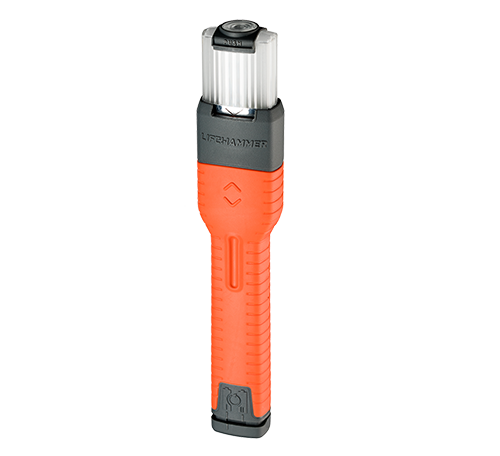
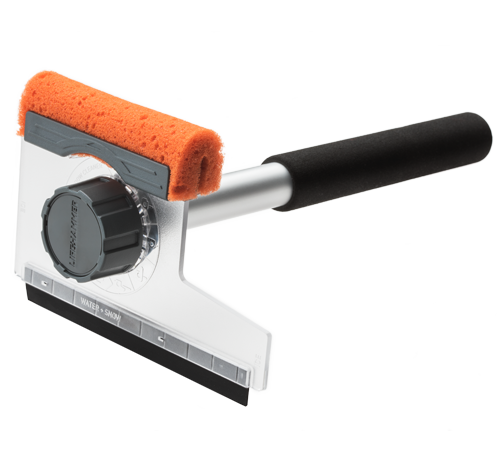
At Lifehammer® we have been developing vehicle safety tools since 1983, and wet-weather driving is exactly the kind of situation where being prepared in advance makes a real difference. Whether you are building out a complete car safety kit or simply making sure you have the right tools within reach, we focus on products that are reliable, compact, and genuinely useful when it counts.
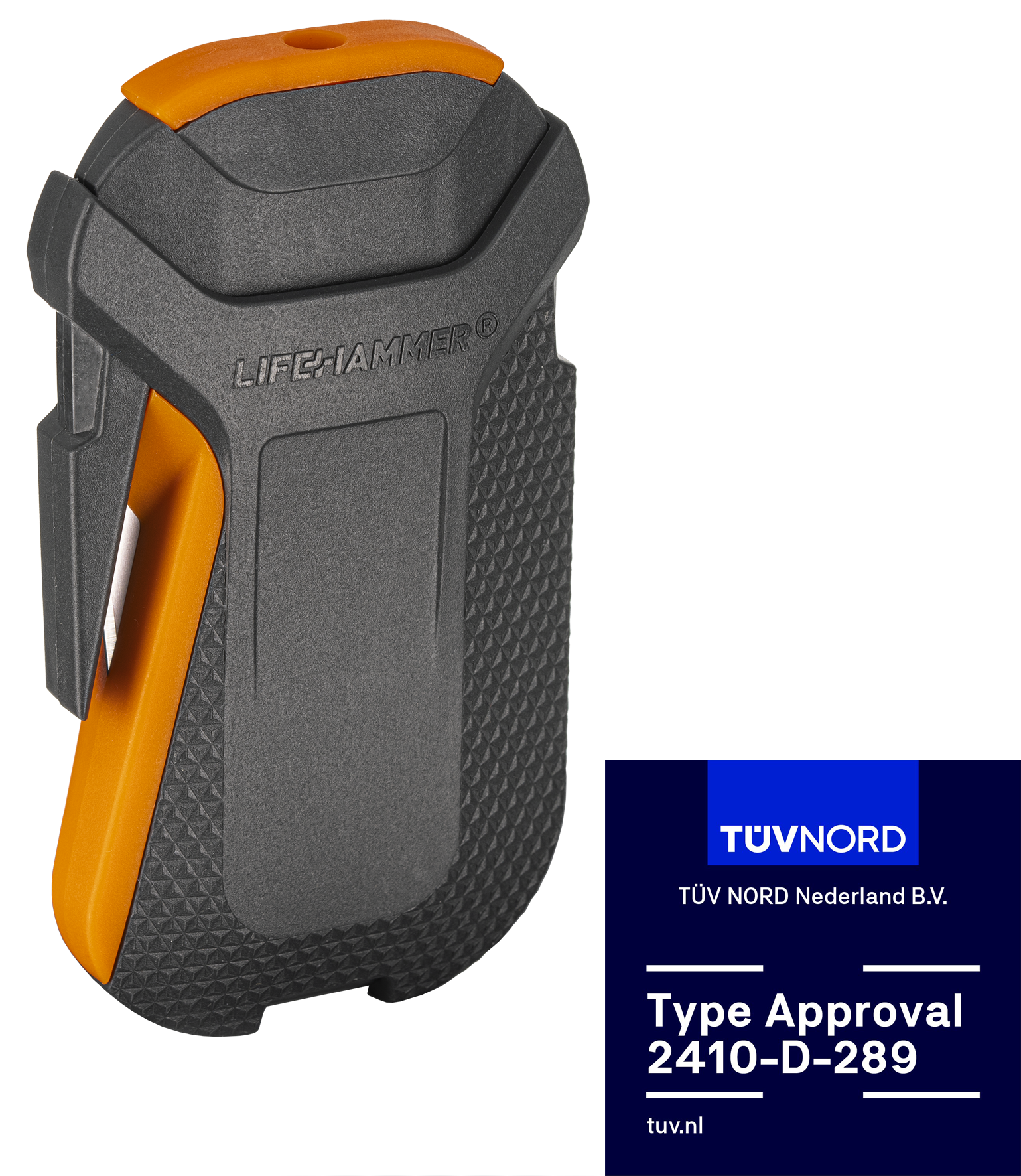
- Our safety hammer range includes four models. The Classic and Plus use a hardened carbon steel hammerhead; the Safety Hammer Evolution and Smart use a ceramic striking mechanism. All four cut seatbelts and break tempered side windows.
- All Lifehammer® safety hammers are TÜV certified and trusted by first responders and fleet operators across Europe.
- The Safety Hammer SMART can be secured using 3M VHB double-sided adhesive tape, making it easy to position within arm’s reach of the driver without tools. Avoid airbag areas when choosing your mounting position.
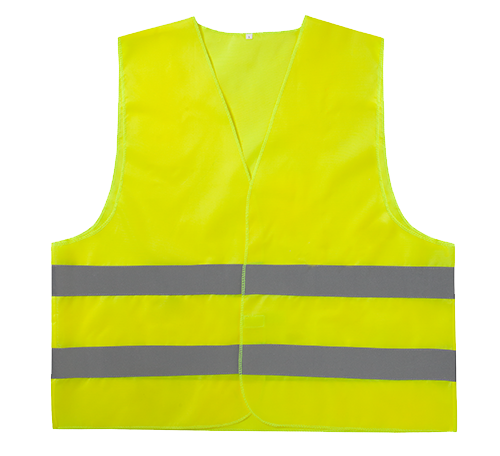
- Our Safety Vest Ultra comes in an ultra-flat vacuum pack that stores discreetly under any floor mat and decompresses immediately on opening. It is one-size-fits-all and suitable for drivers and passengers alike, making it a practical addition for any driver who may need to exit a vehicle on a busy road.
If you have questions about which products are right for your car or your journey, our Q&A section covers the most common topics in straightforward detail. You can also find Lifehammer® products on Amazon if you prefer to order there.