 English
 Nederlands
 Deutsch



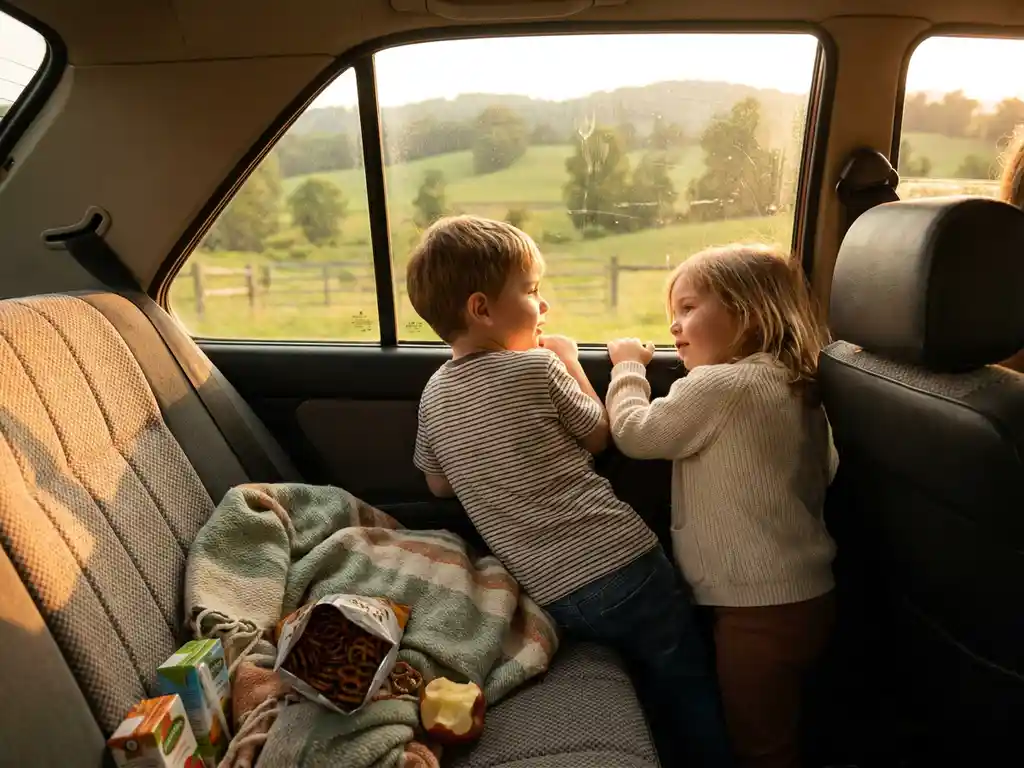
Planning a long drive with children takes more than just knowing the route. Between keeping everyone comfortable, managing energy levels, and making sure the car is properly set up, there is a lot to think about before you pull out of the driveway. These questions come up for parents every time a longer journey is on the horizon, and the answers below address each one directly so you can prepare with confidence.
What should I pack in the car for a long drive with kids?
For a long drive with kids, pack snacks, drinks, entertainment, comfort items, a first aid kit, a change of clothes for each child, wet wipes, a sick bag, and any medication they regularly take. Keep frequently needed items within easy reach rather than buried in the boot, so you do not stop unnecessarily.
A well-organised car makes the journey smoother for everyone. Use a small bag or organiser on the back of a front seat to hold the things children will ask for most often: snacks, headphones, a book, or a small toy. Avoid packing anything breakable or with sharp edges in that zone.
For the boot, think in layers. Items you will need at rest stops go on top. Luggage and bulkier items sit underneath. Keeping a dedicated bag for journey essentials separate from holiday luggage saves time and frustration every time you stop.
- Water bottles for each child (reusable, spill-resistant)
- Snacks that are not too messy: crackers, fruit pouches, cereal bars
- Headphones and a charged device or portable player
- A small pillow or travel blanket for naps
- Wet wipes and a roll of kitchen paper
- A sick bag per child, stored where they can reach it
- Sunshades for windows if the journey goes through direct sun
- A first aid kit stored accessibly, not buried at the bottom
How do I keep kids entertained on a long car journey?
The most effective way to keep kids entertained on a long car journey is to combine screen time with non-screen activities and build in genuine variety. Relying on a single tablet or one audiobook for the whole trip tends to wear thin. A rotating mix of activities keeps energy and mood more stable across longer stretches.
Audiobooks and podcasts designed for children work particularly well because they do not require looking at a screen, which matters for children prone to carsickness. Many families find that a new audiobook or story series, saved specifically for car journeys, becomes something children actually look forward to.
Classic travel games still hold up well. I Spy, the alphabet game using road signs, or spotting specific car colours give children something active to do without needing any equipment. For older children, a simple travel journal or sketchpad can occupy a surprising amount of time.
Downloaded content on a tablet or device is a reliable fallback, particularly for younger children during the second half of a long drive when novelty has worn off. Noise-cancelling or volume-limited headphones keep the car quieter and give children their own experience without disturbing others.
How often should I stop on a long drive with children?
On a long drive with children, plan to stop every one and a half to two hours. This gives children time to move, use the toilet, and reset before restlessness builds. Younger children, particularly those under five, may need more frequent breaks than older ones.
The instinct to push through and minimise stops to save time often backfires. A short fifteen to twenty minute break where children can run around a service area or stretch their legs typically results in a calmer, quieter car for the next leg of the journey. Trying to hold out longer usually leads to more complaints, more requests, and a harder atmosphere inside the vehicle.
Plan your stops around natural landmarks or points of interest where possible. A picnic area, a play park near a service station, or even just a layby with space to walk around makes the stop feel like part of the trip rather than an interruption. Children respond well to stops that feel purposeful rather than purely functional.
If you are travelling with a baby or toddler, build your schedule around their feeding and sleep patterns rather than the clock. Driving during a usual nap time is one of the most effective ways to cover distance without distress.
What’s the safest way to seat children in the car?
The safest way to seat children in a car is in an age and weight appropriate car seat, correctly installed, in the rear of the vehicle. Rear-facing seats offer the greatest protection for infants and toddlers. Children should remain in a booster or high-back booster until the adult seatbelt fits them correctly, which typically happens around 135 to 150 centimetres in height.
Correct installation matters as much as choosing the right seat. A car seat that is not properly secured can fail in a collision even if it carries strong safety ratings. If you are unsure whether your seat is installed correctly, many retailers and road safety organisations offer free fitting checks.
Where in the car should children sit?
The rear seats are safer for children than the front, and the centre rear seat is statistically the most protected position in many vehicle types because it is furthest from side impact zones. However, this only applies if a proper car seat can be correctly fitted there, which is not always possible in every vehicle.
Never place a rear-facing child seat in a front seat where an active airbag is present. A deploying airbag can cause serious injury to a child in a rear-facing position. Always deactivate the passenger airbag if a rear-facing seat must be used in the front.
How do I stop kids from getting carsick on long journeys?
To reduce carsickness on long journeys, seat children where they can see the horizon, avoid screens and books during motion, keep the car well-ventilated, and offer light snacks rather than heavy meals before travel. Motion sickness in children is common and manageable with the right preparation.
Carsickness happens when the inner ear detects movement that the eyes do not register, creating a sensory conflict. Children are more susceptible than adults because their vestibular systems are still developing. Understanding this helps explain why certain strategies work.
Looking at a fixed point on the horizon, such as the road ahead or a distant landmark, reduces the sensory mismatch. This is why children in the middle rear seat, who can see straight ahead through the windscreen, often feel better than those seated by the windows looking sideways.
Screens and books are among the most common triggers because they ask the eyes to focus on something stationary while the body is moving. Audiobooks and music are better alternatives during stretches where a child feels unsettled.
- Keep a window slightly open for fresh air circulation
- Offer plain crackers or ginger-based snacks to help settle nausea
- Take breaks before nausea becomes severe, not after
- For children with significant motion sickness, speak to a pharmacist or GP about suitable medication before travelling
Timing also helps. If your child tends to feel sick during longer drives, scheduling travel during early morning or evening when light is softer and children are naturally calmer can reduce the likelihood of symptoms developing.
How Lifehammer® supports road trip safety for families
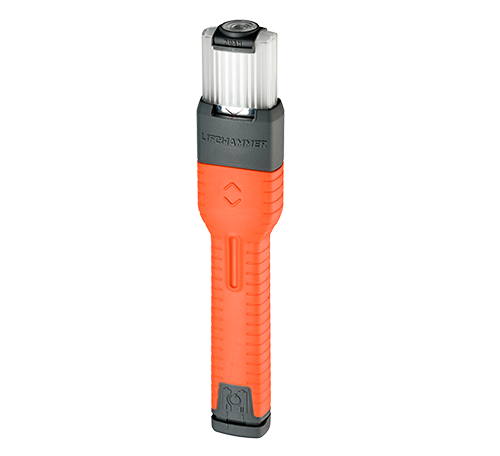
A well-prepared car is about more than snacks and entertainment. Part of genuine road trip readiness is knowing that if something unexpected happens, you have the right tools within reach. Lifehammer® designs its products specifically for this kind of preparedness, and families are among the people who benefit most from having them on board.
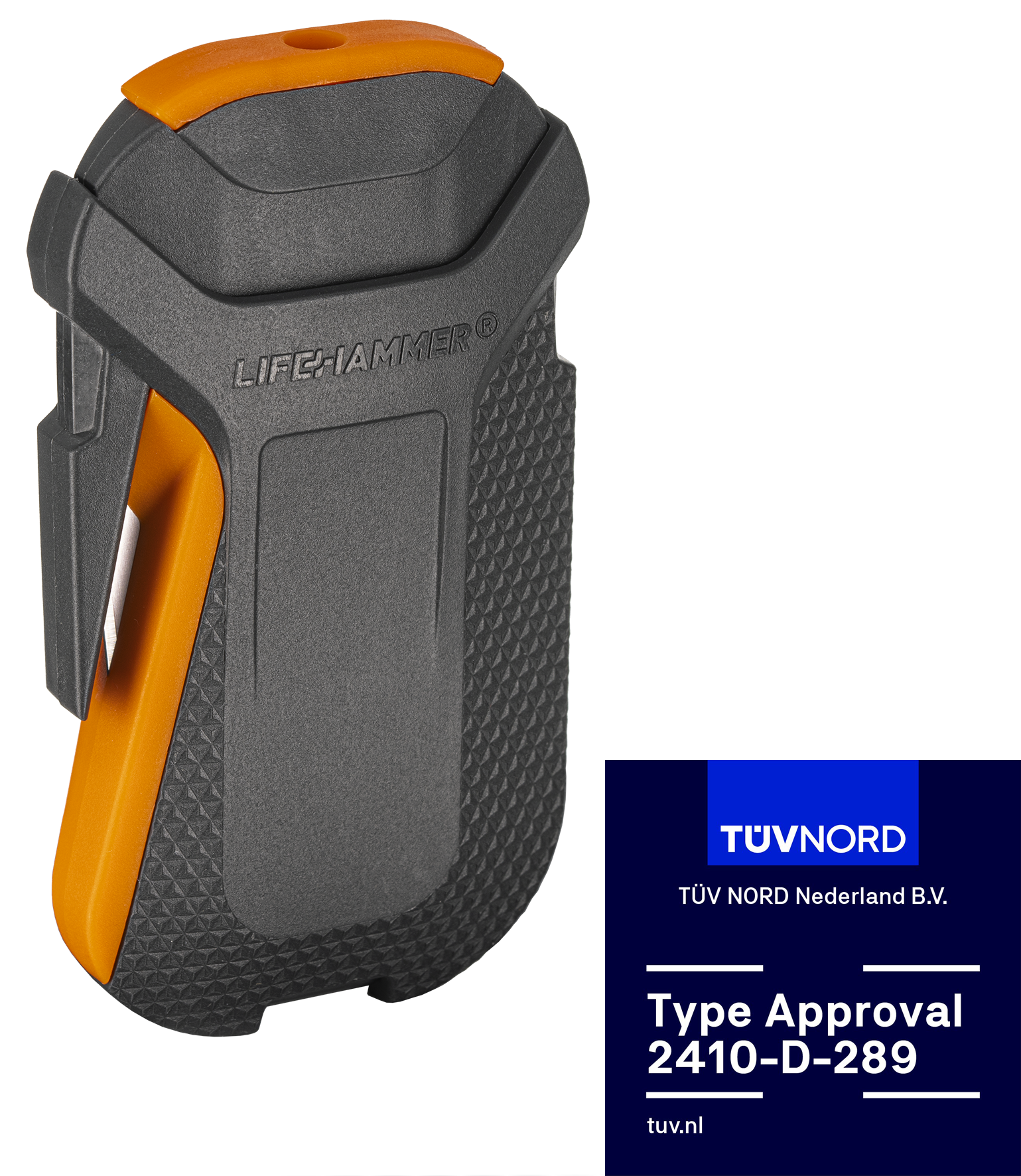
- Lifehammer® offers four safety hammers. The Classic and Plus models use a manual hardened carbon steel hammerhead. The Evolution and Smart models use an automatic ceramic hammerhead. All four include a seatbelt cutter and are designed to break tempered side windows.
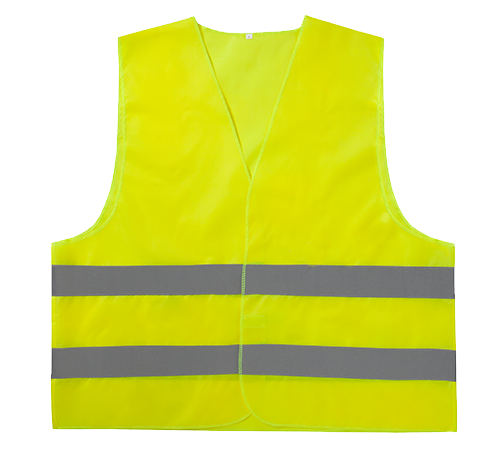
- The Safety Vest Ultra is vacuum-packed flat and stores under any floor mat, ready to deploy immediately for drivers and passengers including those in the rear.
- All Lifehammer® products are TÜV certified and trusted by first responders and professional fleet operators.
Lifehammer® believes that being prepared is the most responsible thing you can do before a long drive with people you care about. If you want to understand more about how Lifehammer® products work and which fits your vehicle best, you can find answers to common questions on our website.