 English
 Nederlands
 Deutsch






Choosing the right route for a road trip comes down to matching your priorities to your journey. If time is tight, the fastest route wins. If the experience is the point, a scenic or thematic route will serve you better. In 2026, a combination of planning apps, offline maps, and a solid pre-departure checklist gives you more control over that decision than ever before. The questions below walk through everything you need to get it right.
What factors should you consider when planning a road trip route?
The right road trip route depends on four main factors: your available time, the type of experience you want, the needs of everyone travelling with you, and the practical demands of your vehicle. Getting clear on these before you open any map app will save you from planning a route that looks good on screen but frustrates you on the road.
Start with time. A realistic travel time calculation includes not just driving hours but also fuel stops, meals, rest breaks, and any planned detours. Most people underestimate how long a day of driving actually takes when you factor in real-world traffic and the natural pace of travelling with others.
Next, think about who is in the car. Travelling with young children, elderly passengers, or pets changes how often you need to stop and what kind of stops are useful. A route that works perfectly for two adults might feel relentless with a four-year-old in the back seat.
Your vehicle matters too. Mountainous or rural routes can be spectacular but are harder on fuel economy and may not suit all cars. If you are driving an electric vehicle, charging infrastructure becomes a planning factor in its own right, particularly on less-travelled roads in 2026, where coverage can still be patchy.
Finally, consider what you actually want from the journey. Are you trying to arrive as quickly as possible, or is the drive itself part of the experience? That single question shapes almost every other planning decision you will make.
How do road trip planning apps compare in 2026?
In 2026, the most widely used road trip planning apps fall into three broad categories: turn-by-turn navigation apps, dedicated road trip route builders, and hybrid tools that combine both. Each serves a different planning need, and many experienced road trippers use more than one.
Navigation apps
Google Maps and Waze remain the dominant navigation tools for most drivers. Both offer real-time traffic data, fuel stop suggestions, and multi-stop routing. Google Maps has improved its road trip functionality significantly, allowing you to add multiple waypoints and reorder stops with ease. Waze continues to excel at community-reported hazards and live traffic alerts, making it particularly useful on busy motorways.
Dedicated road trip planners
Apps like Roadtrippers and Furkot are built specifically for multi-day journeys. They let you plan by theme, such as national parks, coastal roads, or historic sites, and calculate realistic driving windows between stops. These tools are especially useful when the journey itself is the destination, rather than a means of reaching one. They also tend to surface points of interest that standard navigation apps would not flag.
For EV drivers, apps such as A Better Routeplanner (ABRP) have become genuinely useful for 2026 road trips, calculating charging stops based on your specific vehicle model and real-time battery data. This kind of route-specific detail is difficult to replicate with general navigation tools.
The practical recommendation: use a dedicated planner to build your route and identify stops, then transfer it to a navigation app for turn-by-turn guidance on the day. Downloading offline maps before you leave is still worth doing, particularly for rural stretches where signal can drop unexpectedly.
What’s the difference between a scenic route and the fastest route?
The fastest route minimises travel time by prioritising motorways and major roads. A scenic route prioritises the quality of the drive, typically using smaller roads, coastal paths, mountain passes, or routes that pass through towns and landscapes worth seeing. The difference is not just speed, it is a fundamentally different relationship with the journey.
Fastest routes are the right choice when you have a fixed arrival time, limited driving days, or passengers who find long drives tiring. They are predictable, well-serviced with fuel and rest stops, and easier to navigate. The trade-off is that motorway driving for hours on end is mentally fatiguing in a way that varied, scenic roads often are not.
Scenic routes take longer, sometimes significantly so. A coastal road that adds two hours to your journey might also be the most memorable part of the trip. The practical downside is that services can be sparse, road quality varies, and some scenic routes are genuinely challenging to drive, particularly in poor weather or after dark.
A useful middle approach is the hybrid route: take the motorway for the stretches that offer nothing of interest, then deliberately divert onto smaller roads for the sections that reward slower travel. Most planning apps now support this kind of mixed routing, and it tends to produce a better balance between efficiency and experience.
How do you plan stops and rest breaks on a long road trip?
On a long road trip, you should plan a rest break roughly every two hours of driving, with each break lasting at least fifteen to twenty minutes. This is not just a comfort recommendation, it is a fatigue management strategy. Driver attention and reaction time decline meaningfully after sustained periods at the wheel, and short, regular breaks are more effective than one long stop mid-journey.
When planning your stops, build them around natural waypoints rather than forcing arbitrary pauses. A town with a good café, a viewpoint worth stretching your legs at, or a fuel station that lines up with your tank range all make for stops that feel purposeful rather than reluctant.
For overnight stops on multi-day trips, book accommodation before you leave rather than relying on finding something en route. In summer 2026, popular road trip corridors across Europe and North America are well-travelled, and last-minute accommodation in smaller towns can be genuinely difficult to find.
If you are travelling with children, plan stops more frequently than you think you need to. A ten-minute stop at a playground or an open field costs very little time but significantly improves the quality of the journey for everyone. Building buffer time into your daily driving total means these unplanned pauses do not create stress.
What should you check before setting off on a road trip?
Before setting off on a road trip, you should check your vehicle’s tyres, fluid levels, lights, and brakes, confirm your route and any offline maps are downloaded, and make sure your car carries the safety and emergency items required for the countries you are passing through. Running through this list the day before departure is better than the morning of, when time pressure leads to shortcuts.
A practical pre-departure checklist covers three areas:
- Vehicle condition: Tyre pressure and tread depth, engine oil and coolant levels, windscreen washer fluid, all exterior lights functioning, and brakes feeling responsive. If your car is due a service, do it before a long trip rather than after.
- Navigation and documents: Route downloaded for offline use, travel insurance confirmed, vehicle documents accessible, and emergency contact numbers saved. If you are crossing international borders, check what documentation is required for each country.
- In-car safety kit: A warning triangle, high-visibility vest, first aid kit, and a car escape tool are required or strongly recommended across most European countries. Check the specific requirements for each country on your route, as they vary.
It is worth spending five minutes walking around the car before you leave, not just checking it mechanically but making sure everything you need is actually in the car. A surprising number of road trips begin with something important left on the kitchen table.
How Lifehammer® supports you on a road trip
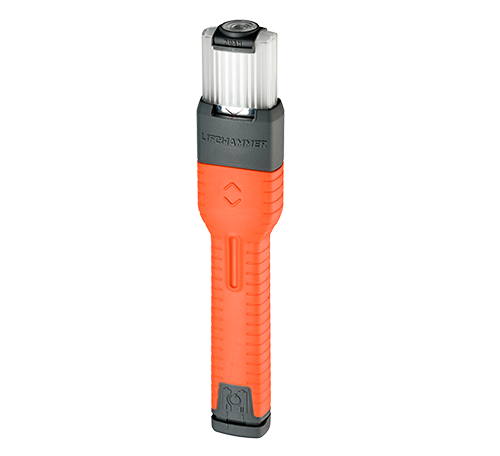
At Lifehammer® we have been developing vehicle safety tools since 1983, and road trip preparation is exactly the kind of situation our products are designed for. Whether you are running through a pre-departure checklist or building out a complete in-car kit from scratch, we focus on tools that are reliable, compact, and genuinely useful when it counts.
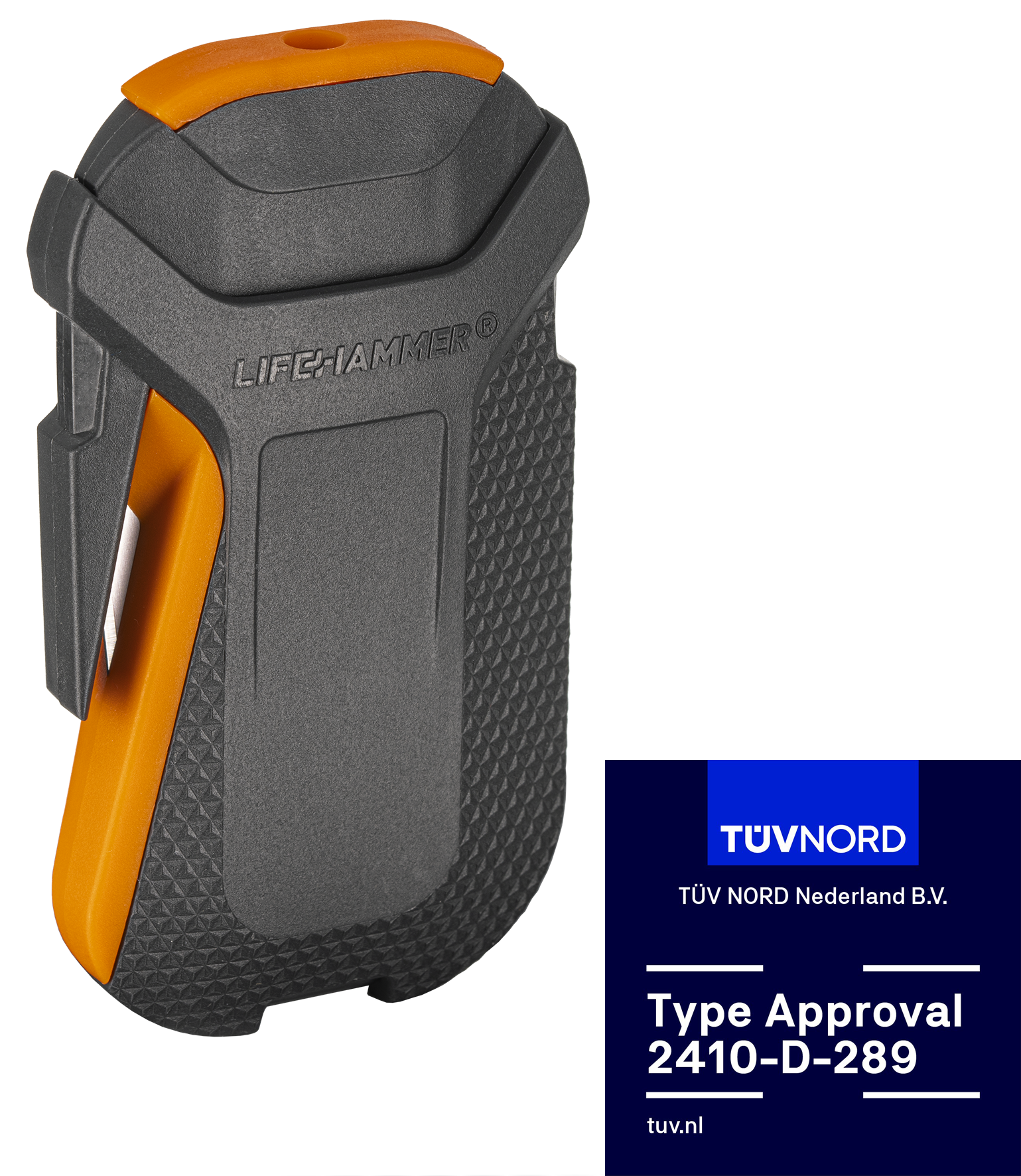
- Our safety hammer range includes four models. The Classic and Plus use a hardened carbon steel hammerhead; the Evolution and Smart use an automatic ceramic hammerhead. All four cut seatbelts and break tempered side windows.
- All Lifehammer® safety hammers are TÜV certified and trusted by first responders and fleet operators across Europe, making them a reliable addition to any road trip kit.
- Our Safety Vest Ultra comes in an ultra-flat vacuum pack that stores discreetly under any floor mat and decompresses immediately on opening. It is one-size-fits-all and suitable for drivers and passengers alike, making it a practical choice for international trips where a vest is legally required.
If you have questions about which products are right for your car or your journey, our Q&A section covers the most common topics in straightforward detail.