 English
 Nederlands
 Deutsch





Fog turns a familiar road into an unfamiliar one. Distances compress, landmarks disappear, and the usual visual cues you rely on simply are not there. Driving in fog at night compounds the challenge further, because your headlights reflect off the moisture in the air and can actually reduce how far ahead you can see. The good news is that fog is one of the most manageable driving conditions, provided you approach it with the right preparation and habits. This guide walks you through exactly what to do, from checking your car before you set off to knowing when stopping is the smartest move you can make.
Prepare your car before driving into fog
Before you even start the engine, a few minutes of preparation make a significant difference when driving in fog. Your car needs to be in the best possible condition to compensate for the reduced visibility you are about to face.
- Clean all your windows, mirrors, and lights thoroughly. Dirty glass scatters light in fog and reduces your effective range even further.
- Check that your fog lights are working, both front and rear, if your vehicle is fitted with them.
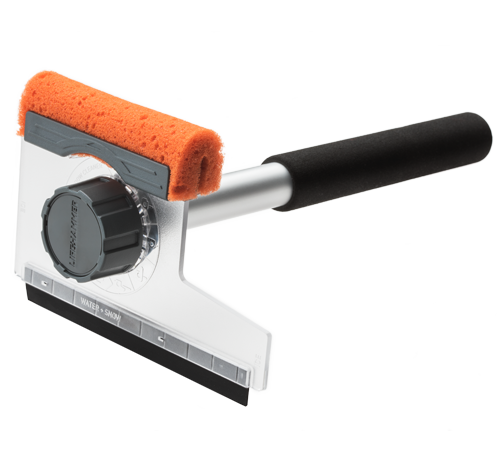
- Make sure your windscreen washer fluid is topped up and your wipers are in good condition. Fog deposits a fine film of moisture on the glass that builds up quickly.
- Turn on your heater and demister before you leave, so the interior glass is clear by the time you pull away.
After completing these checks, your car should be visible, clear on all sides, and ready to handle the damp conditions fog brings. If your windows are still fogging up inside once you are moving, switch your air circulation to fresh air intake rather than recirculation, which traps moisture inside the cabin.
Set your lights correctly for maximum visibility
Light settings are the single most important decision you make when driving in fog at night. Getting them wrong does not just reduce your own visibility, it actively makes things worse for other drivers around you.
- Switch on your dipped headlights. Full beam is counterproductive in fog because the light bounces back off the water droplets and creates a white wall in front of you.
- Activate your rear fog light. This is the bright red light at the back of your car, and it makes you dramatically more visible to the driver behind you.
- Use your front fog lights if your car has them. These are positioned lower on the bumper and project a wide, flat beam that cuts under the fog rather than into it.
- Turn off your rear fog light once visibility improves. Leaving it on in normal conditions dazzles other drivers and masks your brake lights.
A useful check: if you can see more than roughly 100 metres ahead, your rear fog light is probably not needed. If you cannot, it should be on. Adjust as conditions change throughout your journey, because fog is rarely uniform along a route.
Adjust your speed and following distance
Speed is where most drivers underestimate fog. The instinct is often to keep moving at a pace that feels manageable, but in fog your stopping distance can easily exceed how far ahead you can actually see. That gap between what you can see and what you need to stop is where accidents happen.
Reduce your speed meaningfully, not just slightly. If visibility drops to 50 metres, you need to be travelling at a speed that allows you to stop within that distance. For most cars on a wet road, that means considerably slower than the posted limit. The speed limit is a maximum for ideal conditions, not a target for poor ones.
- Increase your following distance to at least double what you would normally keep. In thick fog, triple it.
- Brake gently and early so the driver behind you has time to react. Sudden braking in fog is a serious hazard.
- Avoid the temptation to follow the tail lights of the car ahead too closely. It feels reassuring but gives you almost no time to react if they stop suddenly.
With your speed and distance adjusted, you have created a buffer that gives both you and other drivers time to respond. That buffer is your most important safety margin in fog.
Use your senses and car systems to stay oriented
When visual information is limited, you need to rely more deliberately on everything else available to you. Fog can be disorienting, particularly on open roads or motorways where lane markings become hard to follow.
Keep your eyes focused on the road markings closest to you rather than trying to peer into the fog ahead. The left-hand edge of the road or the lane markings directly in front of your car give you a reliable reference point. Avoid fixating on the lights of oncoming vehicles, as this can pull your attention toward the centre of the road.
- Turn off or reduce in-car distractions, including music, so you can hear what is happening around you. You may hear a hazard before you see it.
- Use your car’s lane-keeping or lane departure warning systems if fitted, but do not rely on them as a substitute for active attention.
- Open your window slightly at junctions or roundabouts to listen for approaching vehicles before you commit to moving.
After a few minutes of deliberate, focused driving in fog, your eyes and instincts adjust. The temptation to speed up when you feel settled is worth resisting. Conditions can change without warning, and a patch of clear road often ends abruptly.
Know when to pull over and stop safely
There are situations where continuing to drive is the wrong decision. Recognising that point and acting on it calmly is one of the most important skills in fog driving.
If visibility drops to the point where you genuinely cannot see far enough ahead to stop safely, pulling over is the right call. This is not a failure of nerve, it is sound judgement about risk. Fog can thicken rapidly, particularly in low-lying areas, near rivers, or in the early hours of the morning when temperatures drop.
- Signal early and move to the left, pulling as far off the road as safely possible, ideally into a lay-by, car park, or side road.
- Once stopped, turn off your headlights and fog lights. Leaving them on can mislead other drivers into following your lights off the road.
- Keep your hazard lights on so that you remain visible to other road users.
- Stay in your car with your seatbelt on while you wait. Do not stand near the road.
Wait until conditions improve before setting off again. Check a traffic or weather app if you have a signal, as this can give you a sense of whether the fog is likely to lift soon or persist for some time.
Keep essential safety tools within reach
Preparation for fog driving is not only about technique. Having the right items in your car, and knowing where they are, means you are ready to respond if something does go wrong, or if you need to assist someone else.
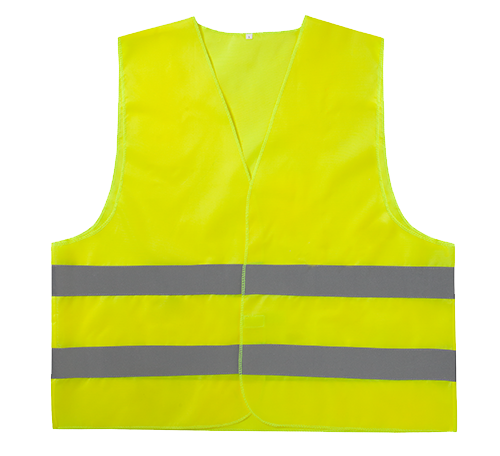
- A high-visibility vest stored somewhere you can access without getting out of the car, such as under the driver’s seat or in the door pocket.
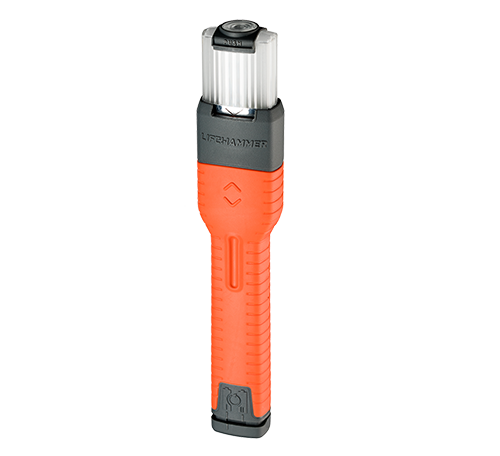
- A torch with working batteries, useful if you need to signal, inspect your vehicle, or navigate in the dark.
- A warning triangle, which many European countries require by law when you stop on a road.
- A window escape tool, stored within arm’s reach of the driver’s seat, not locked in the boot.
The key point about any safety item is placement. A vest packed at the bottom of a full boot is not useful in an emergency. Think about where each item lives in your car and whether you could reach it quickly, in the dark, under stress. If the answer is no, change where you store it.
How Lifehammer® supports you with driving safely in fog
At Lifehammer® we have been developing vehicle safety tools since 1983, and low-visibility driving situations like fog are exactly the kind of conditions our products are built around. Whether you are preparing your car for autumn and winter driving or putting together a complete in-car safety kit, we focus on tools that are reliable, compact, and genuinely useful when it counts.
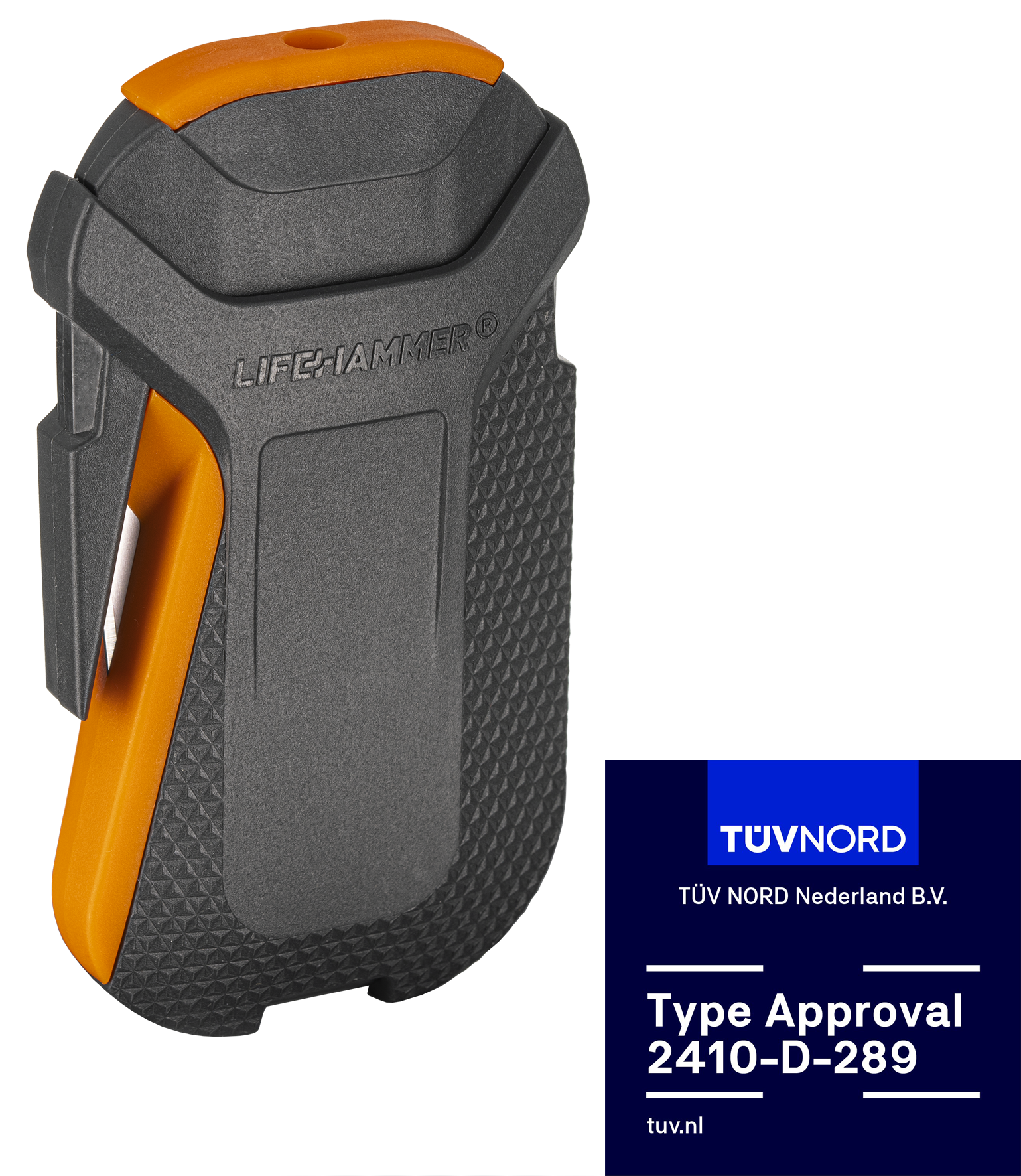
- Our Safety Hammer Evolution features a ceramic hammerhead that breaks tempered side windows reliably, combined with a seatbelt cutter for swift exit. It is assembled using the included hex key and mounts securely within reach of the driver.
- The Safety Hammer SMART uses a ceramic pin as its striking mechanism and can be positioned using 3M VHB double-sided adhesive tape, making it straightforward to place within arm’s reach without screws. Avoid positioning it near airbag deployment areas.
- Our Safety Vest Ultra comes in an ultra-flat vacuum pack that stores discreetly under a floor mat and decompresses immediately on opening. It is one-size-fits-all and suitable for both drivers and passengers, which makes it a practical answer to the visibility problem when you need to step outside the car.
- All Lifehammer® safety hammers are TÜV certified and trusted by first responders and fleet operators across Europe, which reflects the standard of reliability we hold ourselves to.
If you have questions about which products suit your car or your regular driving conditions, our Q&A section covers the most common topics in straightforward detail. You can also find our products on Amazon if you prefer to order there.