 English
 Nederlands
 Deutsch






The most common road trip mistakes drivers make come down to three areas: skipping vehicle checks before departure, underestimating fatigue, and leaving the car unprepared for unexpected situations. These are not the dramatic errors that make the news. They are the quiet oversights that turn a straightforward journey into a stressful one. The sections below address each of these in practical, actionable terms.
Why do so many road trips go wrong despite careful planning?
Most road trips go wrong not because of bad luck, but because planning tends to focus on the destination rather than the journey itself. Drivers spend time booking accommodation, mapping routes, and packing bags, but skip the less visible preparation that actually keeps a trip on track: vehicle condition, emergency readiness, and realistic time management.
The gap between planning and preparation is where most road trip mistakes happen. Planning is about what you want to do. Preparation is about being ready for what you did not expect. A well-planned trip with an under-checked car, a driver running on poor sleep, or a boot with no emergency supplies is still a trip waiting to go wrong.
The good news is that the most common road trip planning mistakes are entirely avoidable. They do not require specialist knowledge or expensive equipment. They require a short, honest checklist before you leave the driveway.
What do most drivers forget to check before a long drive?
Most drivers forget to check tyre pressure, fluid levels, and the condition of their spare tyre before a long drive. These are the three most commonly skipped items on any pre-departure vehicle check, and they are also the three most likely to cause a breakdown or delay on a long journey.
Tyre pressure affects fuel efficiency, handling, and tyre lifespan. It also changes with temperature, so a tyre that was correctly inflated last month may not be correctly inflated today. Checking it takes under five minutes and can prevent a blowout at motorway speed.
Fluid levels, including engine oil, coolant, and windscreen washer fluid, are similarly easy to overlook. None of them make noise or trigger a warning light until the problem is already serious. A quick check under the bonnet before a long trip takes less time than filling up at the petrol station.
The spare tyre is perhaps the most forgotten item of all. Many drivers have never checked whether their spare is in usable condition. If you carry a full-size spare, confirm it is inflated. If you carry a space-saver tyre, know its speed and distance limits before you need it. A flat spare at the side of the road is a frustrating and entirely avoidable situation.
How does poor route planning cause problems on the road?
Poor route planning causes problems by creating time pressure, increasing exposure to unfamiliar roads, and leaving drivers without a backup when conditions change. Over-reliance on a single navigation app, with no awareness of alternative routes, is one of the most common road trip mistakes drivers make in 2026.
Relying entirely on live navigation without a basic understanding of your route means that a lost signal, a dead phone battery, or an unexpected road closure can leave you disoriented. It is worth knowing the major roads and junctions of your journey before you leave, even if you plan to use navigation throughout.
Time pressure is a separate but related issue. Underestimating journey time, particularly for unfamiliar routes, leads to rushed driving and poor decisions. Building in realistic buffer time for fuel stops, rest breaks, and traffic is not pessimism. It is straightforward road trip preparation that makes the journey safer and more enjoyable for everyone in the car.
Planning for connectivity gaps matters too. Rural stretches, tunnels, and some border crossings can interrupt signal without warning. Downloading offline maps for your route before departure is a small step that removes a significant source of potential stress.
What should you always keep in your car on a road trip?
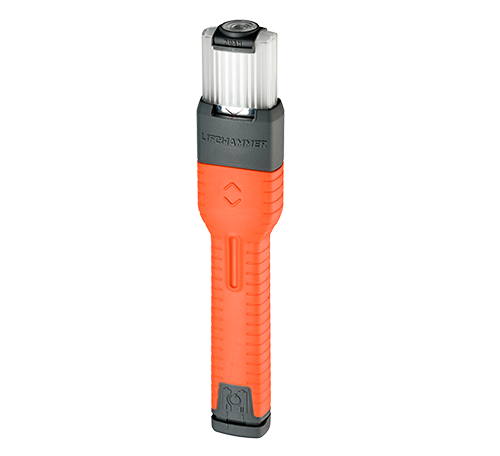
Every car on a road trip should carry a basic emergency kit: a warning triangle or road flares, a high-visibility vest, a first aid kit, a torch, jump leads or a portable jump starter, and a car escape tool. These are the items most likely to be useful in the situations that road trips occasionally produce.
A high-visibility vest is a legal requirement in several European countries when you exit your vehicle on a public road. Keeping one within reach in the passenger compartment, rather than in the boot, means you can put it on before you get out of the car, which is exactly when it matters.
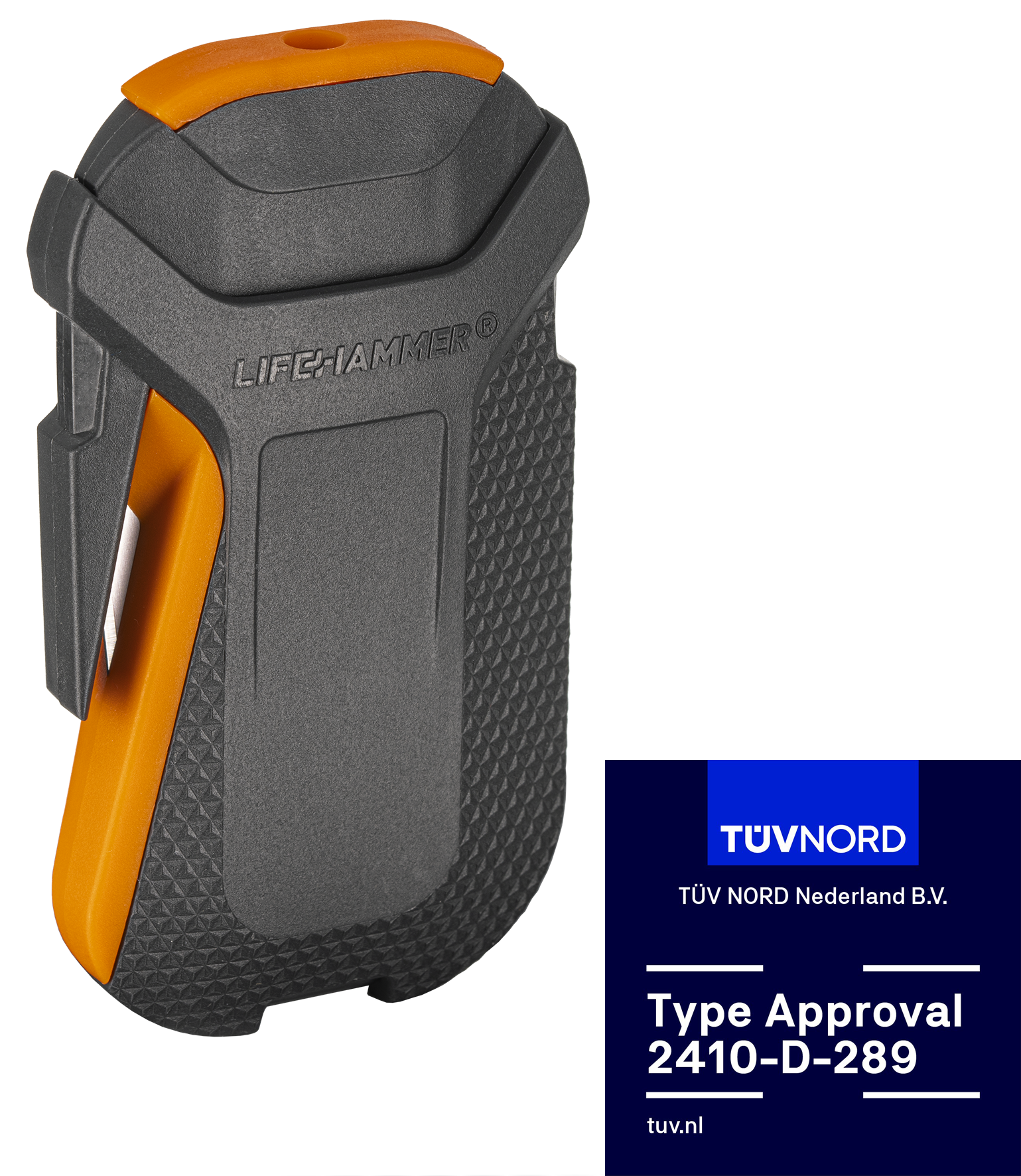
A car escape tool, sometimes called a safety hammer, allows you to break a tempered side window and cut through a seatbelt if you need to exit a vehicle quickly and cannot use the door. These tools are compact, mount securely within reach of the driver, and are trusted by first responders across Europe. They are the kind of item you hope to never use, but will be glad to have if the situation ever requires it.
A portable phone charger or in-car charging cable is also worth adding to the list. Navigation, emergency calls, and roadside assistance apps all depend on a charged phone. Running out of battery mid-journey is a minor inconvenience that becomes a significant problem if you are also dealing with something else going wrong.
When is driver fatigue actually dangerous on a road trip?
Driver fatigue becomes dangerous when a driver continues behind the wheel after the first clear signs of drowsiness: yawning repeatedly, difficulty maintaining lane position, or losing track of the last few kilometres driven. At this point, reaction time is already significantly reduced, and the risk of a microsleep, a brief involuntary loss of consciousness, becomes real.
The risk is highest between 2am and 6am, and again between 1pm and 3pm, when the body’s natural circadian rhythms produce dips in alertness. These windows apply regardless of how much sleep a driver had the night before. Planning long drives to avoid these hours where possible is one of the simplest and most effective road trip tips available.
The two-hour rule is a useful benchmark: most drivers benefit from a break of at least 15 minutes after every two hours of driving. This is not a rigid formula, but it reflects the general pattern of how concentration and alertness decline during sustained driving. Caffeine can help delay fatigue over a short window, but it does not replace rest.
Passengers can also play an active role. Keeping conversation going, monitoring the driver’s alertness, and being willing to take over driving if they are licensed and insured are all practical contributions to a safer journey. Fatigue is one road trip mistake that cannot be fixed with a checklist. It requires honest self-assessment and a willingness to stop when needed.
How can you make sure your next road trip runs smoothly?
The most reliable way to make a road trip run smoothly is to separate preparation into two distinct tasks: checking the vehicle and building the car kit. Both take less time than most drivers expect, and together they address the majority of common road trip mistakes before they have a chance to happen.
Before departure, work through a short vehicle check:
- Tyre pressure on all four tyres, plus the spare
- Engine oil, coolant, and windscreen washer fluid levels
- Brake and indicator lights
- Windscreen condition, including any chips that could spread under motorway vibration
- Fuel level, with a plan for where you will refuel en route
For the car kit, think in terms of visibility, communication, and exit. You want to be seen if you stop on a road, able to call for help, and able to get out of the vehicle if a door or seatbelt becomes difficult to operate. A warning triangle, a high-visibility vest, a charged phone with offline maps downloaded, and a car escape tool cover these three needs without taking up meaningful space in the car.
Planning the route with honest time estimates, identifying rest stops in advance, and sharing your itinerary with someone not travelling with you are the final steps. None of this is complicated. The difference between a road trip that goes smoothly and one that does not is usually not what happened on the road. It is what was or was not done in the hour before departure.
How Lifehammer® supports you with road trip preparation
At Lifehammer® we have been developing vehicle safety tools since 1983, and road trip preparation is exactly the kind of situation our products are designed for. Whether you are doing a quick pre-departure check or building out a complete car kit from scratch, we focus on tools that are reliable, compact, and genuinely useful when it counts.
- Our safety hammer range includes four models. The Classic and Plus use a manual hardened carbon steel hammerhead; the Evolution and Smart use an automatic ceramic pin as the striking mechanism. All four cut seatbelts and break tempered side windows.
- All Lifehammer® safety hammers are TÜV certified according to German standards and trusted by first responders and fleet operators across Europe.
- Our Safety Vest Ultra comes in an ultra-flat vacuum pack that stores discreetly under any floor mat and decompresses immediately on opening. It is one-size-fits-all and suitable for drivers and passengers alike.
If you have questions about which products are right for your car or your journey, our Q&A section covers the most common topics in straightforward detail.