 English
 Nederlands
 Deutsch



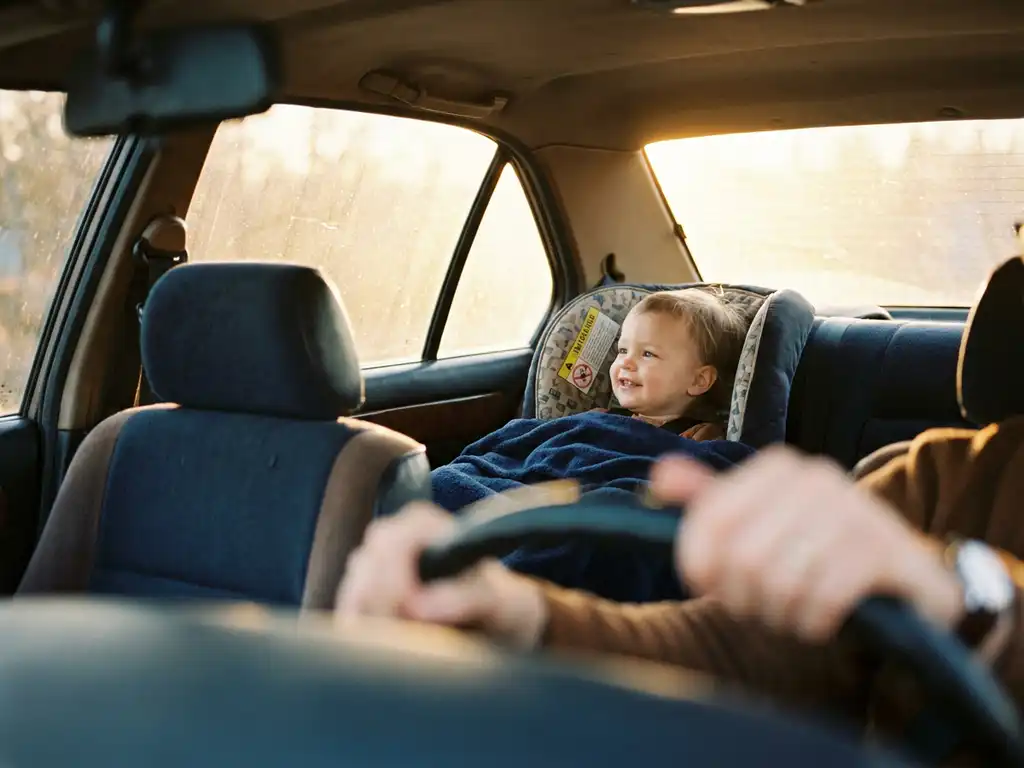
The back seat is safer for children than the front seat because it keeps them further from the dashboard, the windscreen, and the force of a frontal impact, which accounts for the majority of serious road collisions. Children’s bodies are still developing, making them far more vulnerable to the forces involved in a crash than adults. The sections below answer the most common questions parents have about child passenger safety in more detail.
At what age can a child sit in the front seat?
In most European countries, children must travel in an approved child restraint system until they reach 135 cm in height or 12 years of age, whichever comes first. Before that point, they should always travel in the rear seat. Once a child meets the height or age threshold, they may legally sit in the front, but rear seat travel remains the safer option regardless of age.
The reason height matters more than age is that car safety systems, including seatbelts and airbags, are designed around adult body proportions. A seatbelt that sits correctly across an adult’s chest and pelvis will not sit in the same position on a smaller child, which reduces its protective effect significantly. Reaching 135 cm is the point at which a standard adult seatbelt begins to fit as intended.
Even once children are legally permitted to sit in the front, many road safety experts recommend continuing to use the rear seat for as long as is practically possible. The structural protection offered by the rear cabin, combined with greater distance from the dashboard and windscreen, continues to offer meaningful advantages well into adolescence.
How does the rear seat protect children in a crash?
The rear seat protects children in a crash primarily through distance and structural design. Sitting further back means a child is further from the point of impact in a frontal collision, which gives the car’s crumple zones and safety systems more time and space to absorb energy before it reaches the passenger. The rear cabin also benefits from reinforced side structures and headrests designed to limit head and neck movement.
For younger children in rear-facing seats, the protection is even greater. A rear-facing child seat spreads the force of a frontal collision across the child’s back, neck, and head simultaneously, rather than concentrating it on a single point. This is why rear-facing travel is strongly recommended for as long as the child’s height and weight allow, typically up to around four years old depending on the seat model.
Forward-facing seats with a harness offer the next level of protection once a child has outgrown a rear-facing seat. The five-point harness distributes crash forces across the strongest parts of the child’s body. Booster seats, used once a child has outgrown a harnessed seat, raise the child so that the adult seatbelt fits correctly, which is what makes them safer than using the adult belt alone.
Are airbags dangerous for children in the front seat?
Yes, front passenger airbags can be dangerous for children, particularly those in rear-facing child seats. An airbag deploys at very high speed and with significant force. For an adult, this is calibrated to provide protection. For a child, especially one in a rear-facing seat positioned close to the dashboard, the deployment force itself can cause serious injury. This is why placing a rear-facing child seat in front of an active airbag is illegal in most countries.
If your vehicle has a front passenger airbag that cannot be deactivated, a rear-facing child seat must never be used in that seat. Many modern vehicles include a switch or sensor-based system that allows the front passenger airbag to be turned off. If yours does, you should deactivate it before placing any child in a rear-facing seat in the front.
Even for older children using forward-facing seats or booster seats, the front passenger airbag introduces a risk that simply does not exist in the rear. The safest and simplest approach is to keep all children under 12 in the back, regardless of airbag configuration, until they are of the height and age to travel safely with an adult seatbelt.
Which is the safest seat position in the back of the car?
The centre rear seat is widely considered the safest position in the back of the car for a child. It provides the greatest distance from the sides of the vehicle, which is particularly relevant in side-impact collisions. Because it is not adjacent to a door, it also reduces the risk of injury from intrusion in a lateral crash.
However, the centre rear seat is only the safest option when it is fitted with a proper three-point seatbelt and is compatible with the child’s seat or restraint system. Some older vehicles have a centre rear lap belt only, which offers significantly less protection than a shoulder belt. In those cases, a rear side seat with a full three-point belt and a compatible child seat may actually offer better overall protection.
When choosing a position, check the following:
- Whether the seat has a full three-point seatbelt rather than a lap belt only
- Whether your child’s seat or restraint is compatible with that seating position
- Whether ISOFIX anchor points are available, as these provide a more secure connection between the child seat and the vehicle
- Whether the headrest provides adequate support for your child’s head and neck
If your vehicle has ISOFIX points on the rear side seats but not the centre, the side ISOFIX position is likely to offer better protection than a centre seat with a lap belt only. Always consult your vehicle handbook and child seat instructions together when making this decision.
What other safety items should be in a car carrying children?
Beyond the correct child seat, a well-prepared car carrying children should include a small number of practical safety items that can make a real difference in an emergency. The most important of these are a car escape tool, a warning vest, and a basic first aid kit. These are not specialist equipment, they are straightforward items that any driver can carry and use.
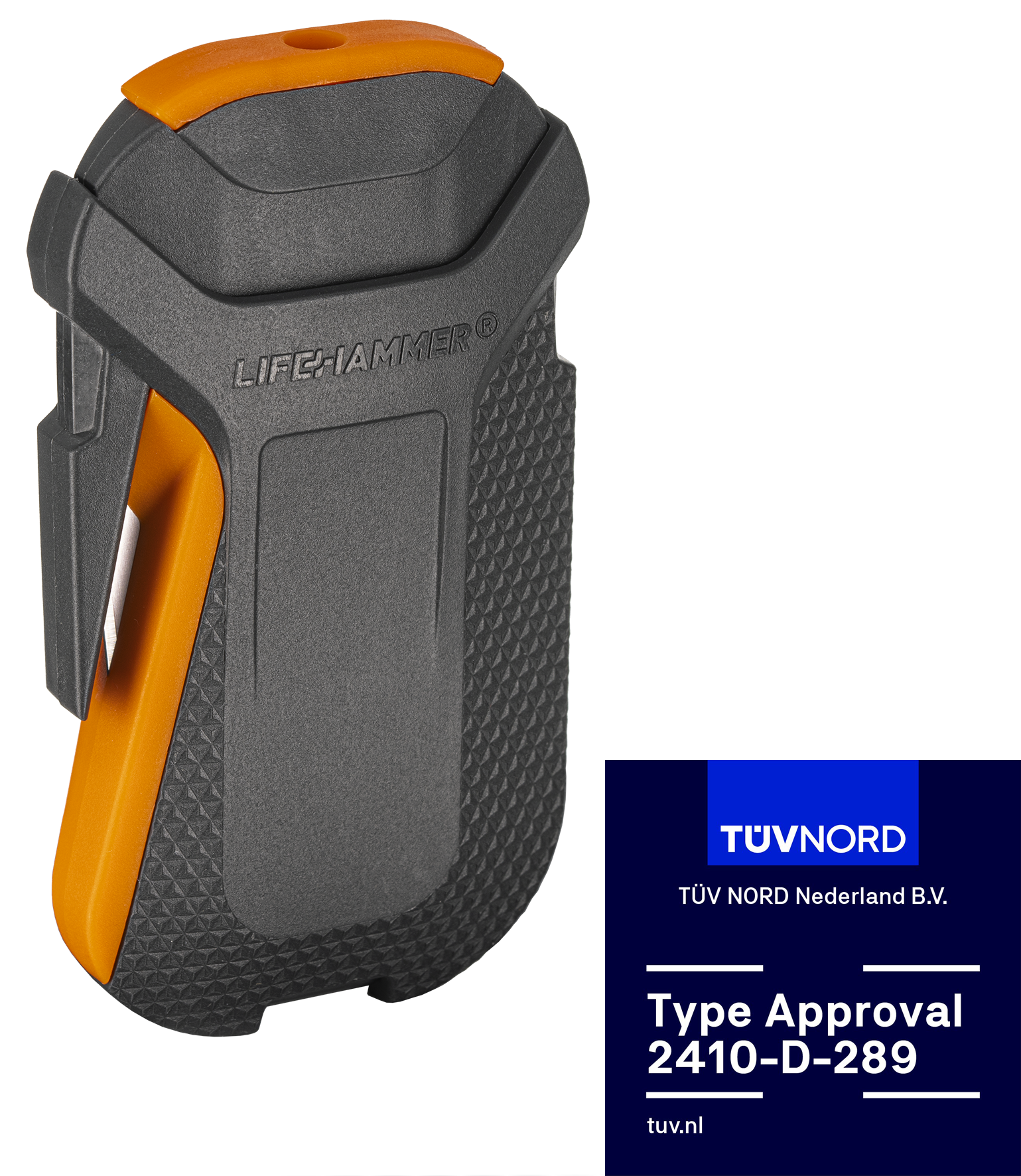
A car escape tool, such as a safety hammer, allows you to cut a jammed seatbelt and break a tempered side window if you or a passenger cannot exit the vehicle normally. In a situation where a door is blocked or a seatbelt will not release, having this tool within reach, rather than buried in a glove box or boot, can be the difference between a manageable situation and a serious one. It is worth noting that laminated glass, such as the front windscreen on most modern cars, cannot be broken with a standard safety hammer. Tempered side and rear windows are the ones these tools are designed for.
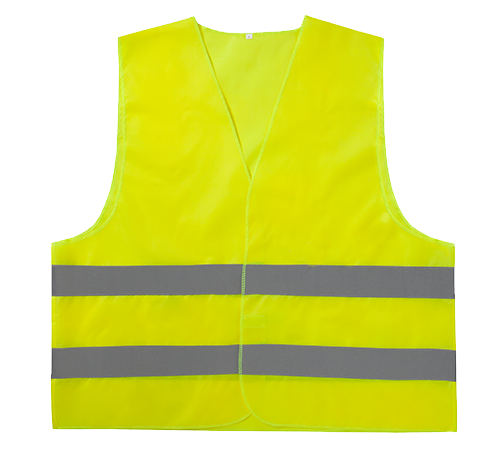
A warning vest is legally required in many European countries if you exit the vehicle on a road or motorway. Keeping one accessible, rather than stored in the boot where you would need to step outside to retrieve it, is the practical approach. A first aid kit rounds out the basics, and one sized for a family should include child-appropriate dressings and a foil blanket.
A short checklist of useful items to carry when travelling with children:
- A car escape tool with seatbelt cutter, stored within reach of the driver
- A warning vest accessible from inside the vehicle
- A family first aid kit including child-appropriate supplies
- A phone charger or power bank in case of a breakdown
- Water and a small snack supply for longer journeys
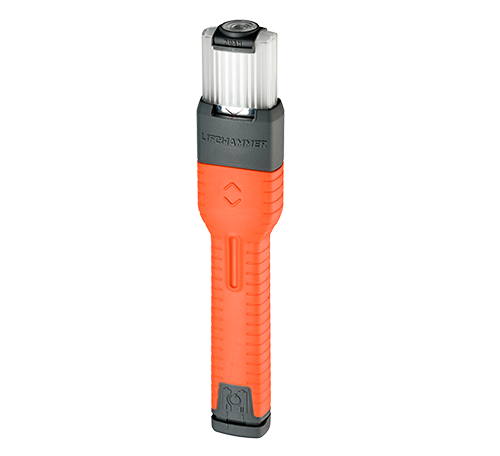
- A torch, particularly useful in winter or low-light conditions
How Lifehammer® supports you with child car safety
At Lifehammer® we have been developing vehicle safety tools since 1983, and travelling with children is exactly the kind of situation our products are designed to support. When you are responsible for young passengers, having the right tools in the right place matters more, not less.
- Our Safety Hammer Evolution uses an automatic ceramic hammerhead to break tempered side windows and includes an integrated seatbelt cutter, making it straightforward to use under stress. It is compact enough to mount within arm’s reach of the driver’s seat.
- All Lifehammer® safety hammers are TÜV certified and trusted by first responders, fleet operators, and families across Europe. They are designed to be used by adults and older children alike.
- Our Safety Vest Ultra comes in an ultra-flat vacuum pack that stores discreetly under a floor mat and decompresses immediately on opening. It is one-size-fits-all and suitable for drivers and passengers in any emergency roadside situation.
- Mounting matters: keeping a safety tool accessible from the driver’s seat, rather than in the boot, is what makes it genuinely useful. Avoid mounting near airbag zones when positioning any tool in the cabin.
If you have questions about which products are right for your car or your family’s journeys, our Q&A section covers the most common topics in straightforward detail.