 English
 Nederlands
 Deutsch







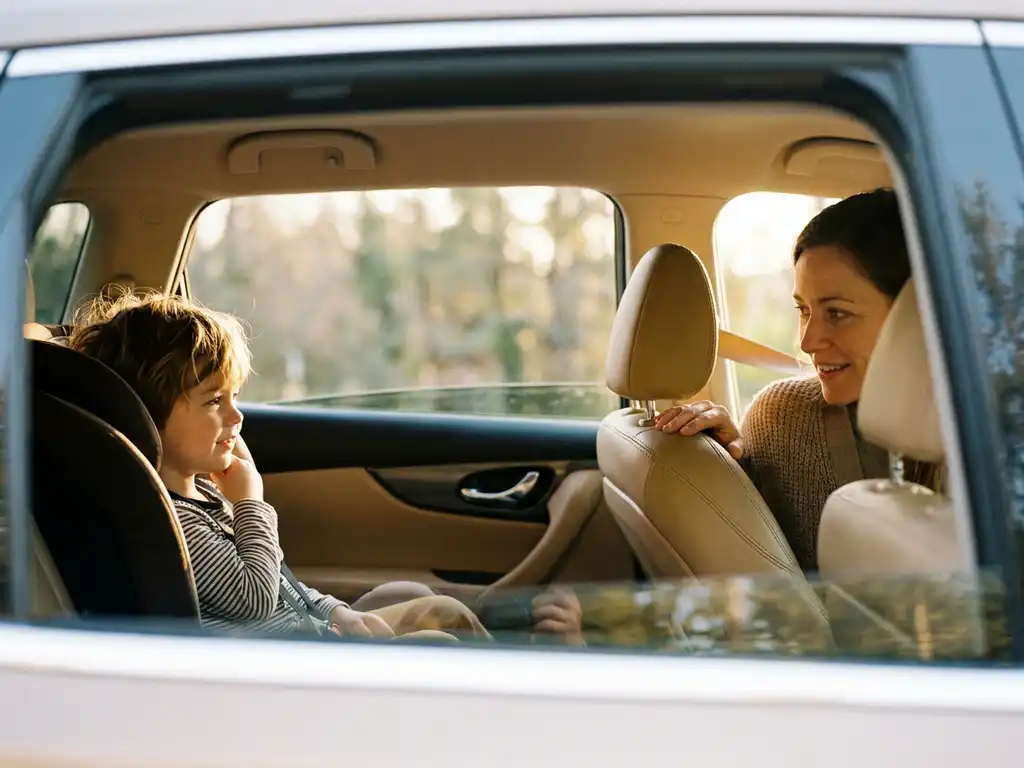
You can start teaching children what to do in a car accident from around age four or five, using simple, calm language suited to their developmental stage. The goal is not to frighten them but to give them a clear sense of what to do, who to call, and how to stay safe until help arrives. The questions below walk through everything from age-appropriate conversations to practical tools children can learn to use.
At what age can children understand car accident safety?
Children can begin learning basic car accident safety from around age four or five. At this stage, they can absorb simple instructions such as staying still, staying calm, and calling for help. As children grow, their understanding deepens, and you can introduce more specific steps, including how to use emergency tools or assist an injured adult.
Developmental readiness matters more than a fixed age. A five-year-old who already knows how to dial a parent’s number has the foundation to learn what to say in an emergency. By age seven or eight, most children can follow a short sequence of steps without prompting. By ten or eleven, many are ready to understand more complex scenarios, including what to do if an adult in the car is unresponsive.
The key is to match the conversation to the child’s current level. Use concrete language rather than abstract concepts. Instead of saying “get help,” say “press the green button on my phone and say our street name.” Specific instructions give children something to hold onto when they are frightened.
What should children know to do immediately after a crash?
Immediately after a car accident, children should know to stay calm, stay in their seat unless there is a clear danger such as fire or smoke, check whether they are injured, and alert an adult or call for help. These four steps cover the most important actions a child can take in the first moments after a collision.
Walk children through each step in plain terms:
- Stay calm. Taking a slow breath helps the brain think more clearly. Teach children that feeling scared is normal and that calm action comes next.
- Stay in the seat. Unless there is an immediate physical danger, remaining seated protects against further injury. Moving too quickly after a crash can cause additional harm.
- Check for injuries. Children should know to look at themselves first, then check on others nearby. Teach them to say aloud what they see so that adults or emergency responders can hear them.
- Call for help. Whether that means calling out to a nearby adult, pressing a button on a phone, or dialing the emergency number, children should know exactly which action to take and how to do it.
Repeating these steps regularly, even as a brief verbal exercise during car journeys, helps children store them as automatic responses rather than things they have to think through under stress.
How do you explain a car accident to a child without scaring them?
You can explain car accident safety to a child without causing fear by framing it as preparation rather than prediction. Use neutral, matter-of-fact language, the same tone you would use to explain what to do if the smoke alarm goes off at home. The message is: this is unlikely, but we know what to do just in case.
Avoid graphic descriptions or dramatic scenarios. Focus on actions and outcomes rather than causes. Instead of describing a collision in detail, describe the situation a child might find themselves in and what they would do next. “If we were ever in an accident and I needed help, here is exactly what you would do” is a calm, empowering way to open the conversation.
Children take emotional cues from adults. If you approach the topic with confidence and matter-of-fact language, they are likely to absorb it the same way. If you seem anxious or reluctant, they may sense that something is more frightening than you are letting on. Treat it as a practical life skill, the same way you teach them to cross a road or use a fire exit.
For younger children, short and simple works best. For older children, you can invite questions and answer them honestly. “It is very rare, but knowing what to do means we are ready” is a reassuring and truthful message.
What should children do if an adult in the car is unconscious?
If an adult in the car is unconscious after an accident, children should call emergency services immediately, give their location as clearly as possible, stay on the line with the operator, and avoid moving the unconscious person. These four actions give emergency responders the information they need and protect both the child and the injured adult.
The most important preparation you can do is to make sure children know the local emergency number. In Europe, that is 112. In the UK, it is 999. Practise saying it out loud with younger children so it becomes automatic. Also teach children how to describe their location. If they do not know the address, they can describe landmarks, road signs, or read out what they see on a nearby street sign.
Children should also know not to move an unconscious adult. Moving someone after a serious accident can worsen spinal or head injuries. The exception is if there is an immediate danger such as fire or flooding, in which case getting out of the vehicle becomes the priority.
For older children, it is worth teaching the basics of checking whether someone is breathing. This is not about performing first aid but about being able to report accurately to the emergency operator what they can see and hear.
What car safety tools should children know how to use?
Children old enough to follow instructions, typically from age eight or nine, can learn to use a safety hammer to break a tempered side window and cut a seatbelt in an emergency. These are the two most important functions in a vehicle escape scenario, and both can be performed by a child who has been shown how to do it calmly in advance.
A safety hammer is designed to break tempered glass, which is the type used in most car side and rear windows. It is important to note that laminated glass, which is used in windscreens, cannot be broken with a standard safety hammer. Children should know to aim for a side window, not the front windscreen, if they need to exit the vehicle.
Show children where the safety hammer is stored in your car and let them hold it so it feels familiar. Explain the two functions: the striking end for breaking the window and the cutter for the seatbelt. You do not need to simulate a real emergency to teach this. Simply showing them the tool, explaining what each part does, and letting them practise the motion with the seatbelt cutter on a spare belt is enough to build familiarity.
Children should also know how to unlock car doors manually, including child-locked rear doors if applicable, and how to operate the hazard lights if they are able to reach the controls.
How do you practise car accident safety with children at home?
You can practise car accident safety with children at home through short, calm role-play exercises that rehearse specific actions without recreating a frightening scenario. The goal is repetition and familiarity, not drama. A few minutes of practice, repeated a handful of times a year, is enough to build reliable recall under stress.
Here are practical ways to build that familiarity:
- Practise the emergency call. Ask your child to pretend they need to call for help. Have them say the emergency number, your home address or a familiar landmark, and a simple description of the situation. Do this as a calm exercise, not a test.
- Show them where safety tools are kept. Walk children through the car and point out where the safety hammer is stored. Let them pick it up and hold it. Familiarity reduces hesitation in a real situation.
- Run through the four steps. Periodically ask “do you remember what we do if there is ever an accident?” and let them walk you through the steps. Correct gently and keep the tone light.
- Talk through scenarios calmly. “What would you do if I were asleep and couldn’t wake up?” is a question you can ask on a car journey without it feeling alarming. Children often find these conversations reassuring rather than frightening when handled with a steady tone.
- Involve them in car preparation. When you check your car kit before a long journey, include children in the process. Knowing that the car is prepared gives children a sense of security and reinforces that safety is something the family takes seriously.
The aim is not to make children anxious about travelling by car. It is to give them a small set of reliable actions they can take if they ever need to. Children who feel prepared are more confident, not more fearful.
How Lifehammer® supports you with teaching children car accident safety
At Lifehammer® we have been developing vehicle safety tools since 1983, and teaching children car safety is exactly the kind of situation our products are designed to support. Our tools are built to be used reliably under stress, which means they work just as well for a child who has been shown how to use one as for an adult who reaches for it in an emergency.
- Our Safety Hammer SMART uses a ceramic pin as its striking mechanism and can be mounted within easy reach using 3M VHB double-sided adhesive tape, making it accessible to both adults and older children. Note: always avoid airbag areas when positioning it.
- The Classic and Plus models use a hardened carbon steel hammerhead and are TÜV certified to German standards. All four models in our range cut seatbelts and break tempered side and rear windows.
- Our safety hammers are trusted by first responders, firefighters, and law enforcement across Europe. That same reliability applies in a family car.
- Showing children where the Safety Hammer Evolution is stored and how it works takes only a few minutes and is one of the most practical things you can do to prepare them for an emergency.
If you have questions about which product suits your car or how to position it safely, our Q&A section covers the most common topics in straightforward detail.