 English
 Nederlands
 Deutsch




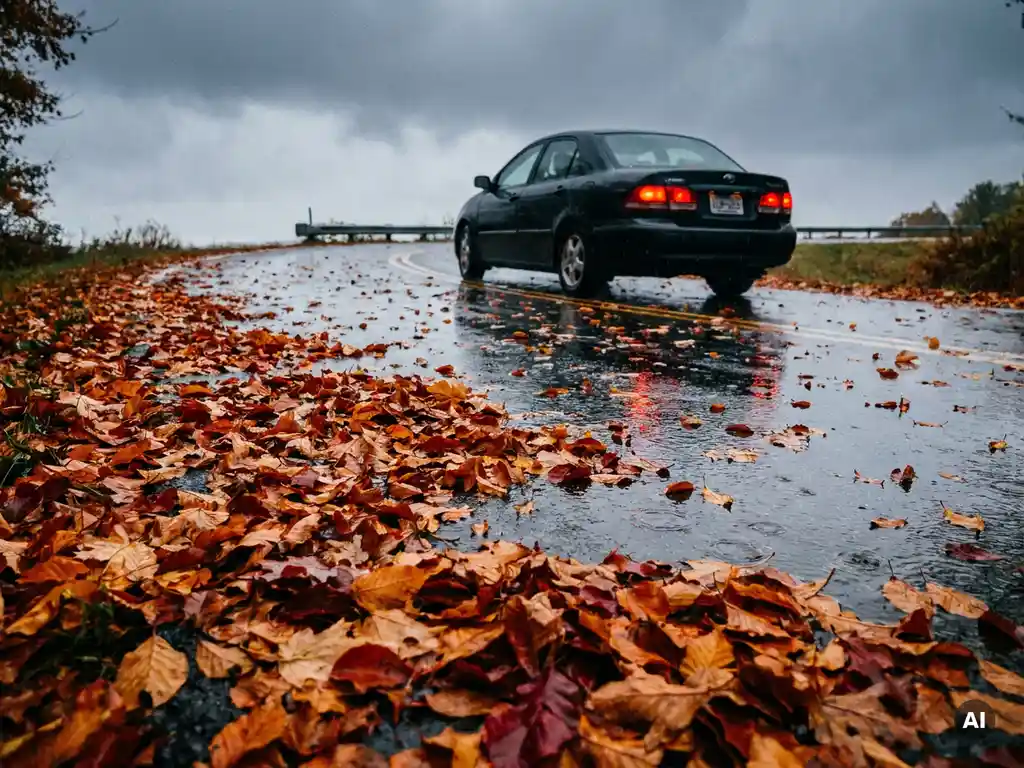
Wet leaves on the road are genuinely dangerous for drivers, often more so than many people expect. A layer of decomposing autumn leaves can reduce tyre grip to a level comparable with ice, making braking, steering, and cornering significantly less predictable. The sections below cover why this happens, where the risk is greatest, and how to drive more safely when the leaves start to fall.
How slippery are wet leaves compared to ice?
Wet leaves on the road can be almost as slippery as ice, and in some conditions they are even worse. Research from road safety organisations suggests that wet leaf coverage can reduce tyre friction to a level approaching that of a frozen surface. Unlike ice, which drivers are conditioned to watch for, wet leaves often go unnoticed until a vehicle is already on top of them.
The reason the comparison with ice is so relevant is that most drivers adjust their behaviour when they see frost or snow. Wet leaves rarely trigger the same instinctive caution, yet the physical result, reduced grip, longer stopping distances, and unpredictable handling, is very similar. A car travelling at 50 km/h on a wet leaf-covered road may take considerably longer to stop than the same car on clean, damp tarmac. That extra distance can make all the difference in a suburban street or on a bend.
Why do wet leaves make roads so slippery?
Wet leaves make roads slippery because the decomposition process releases a natural, oily residue that coats the road surface and acts as a lubricant between tyres and tarmac. When leaves become saturated with rain, this residue spreads across the road, creating a thin, almost invisible film that significantly reduces friction. The effect is compounded when multiple layers of leaves build up.
Fresh leaves contain moisture and natural compounds that, when compressed under vehicle tyres, break down into a paste-like substance. This paste fills the small surface irregularities in the road that tyres normally grip. Without those micro-textures to hold onto, tyres effectively lose the mechanical purchase they depend on for braking and steering. Tarmac that is already smooth from years of use is particularly vulnerable, since it has less texture to begin with.
Autumn rain makes this worse by keeping leaves wet for extended periods rather than allowing them to dry out and become brittle. A dry leaf crumbles and disperses; a wet leaf compresses and sticks, building up a slick layer that can persist long after the rain has stopped.
Which driving manoeuvres are most affected by wet leaves?
Braking is the manoeuvre most severely affected by wet leaves on the road, followed closely by cornering and acceleration from a standstill. All three depend on tyre grip, which wet leaves reduce substantially. Even vehicles with modern anti-lock braking systems (ABS) and electronic stability control will have longer stopping distances on a leaf-covered surface, because those systems manage grip rather than create it.
- Braking: Stopping distances increase significantly. Emergency braking on wet leaves can result in the vehicle sliding forward even with ABS active.
- Cornering: Understeer and oversteer become more likely as tyres struggle to maintain directional grip through a bend, particularly at normal road speeds.
- Acceleration: Wheelspin is common when pulling away from junctions or roundabouts, especially on rear-wheel-drive vehicles.
- Overtaking: Any manoeuvre requiring a quick change of speed or direction carries additional risk when grip is reduced.
It is worth noting that the reduced grip affects all tyres simultaneously. Unlike a pothole or a patch of oil, a leaf-covered road section affects the entire contact area of all four tyres at once, which limits what driver skill or vehicle technology can compensate for.
Where are wet leaves most likely to cause accidents?
Wet leaves are most likely to cause accidents on roads lined with trees, particularly in residential areas, country lanes, and routes through parks or woodland. These locations accumulate leaf fall quickly and are often not cleared as frequently as main roads. Junctions, roundabouts, and bends are especially high-risk spots because they are precisely where drivers need to brake, steer, or accelerate.
Cycle paths and footpaths through parks are also heavily affected, making autumn conditions relevant not just for car drivers but for cyclists and motorcyclists, who are even more vulnerable to sudden grip loss.
In urban environments, the danger concentrates in specific spots:
- Junctions where drivers brake and pull away repeatedly
- Roundabouts where cornering forces combine with reduced grip
- Bus stops and taxi ranks, where vehicles stop and start frequently on the same patch of road
- Shaded stretches where leaves stay wet longer because sunlight does not reach them
- Downhill sections where braking demand is highest
Rural roads present a different challenge. They are often narrower, with less margin for error, and leaf clearance is rarely a priority. A bend on a country road lined with mature trees can accumulate a deep, wet layer of leaves that is invisible until a driver is already on it.
How should drivers adjust their behaviour in autumn conditions?
In autumn driving conditions, the most important adjustment is to increase following distances and reduce speed earlier than you normally would. Because wet leaves extend stopping distances, the gap you leave to the vehicle in front needs to be larger, and braking should begin sooner and be applied more gently. Smooth, progressive inputs to the steering, brakes, and accelerator are far more effective than sharp corrections.
Practical adjustments that make a real difference:
- Increase your following distance: In wet leaf conditions, double the gap you would normally leave. If something unexpected happens ahead, you need more time and space to respond.
- Brake earlier and more gently: Apply the brakes progressively rather than sharply. This gives tyres the best chance of maintaining grip rather than locking up or triggering ABS unnecessarily.
- Reduce speed on bends: Enter corners more slowly than you think you need to. The correct speed for a wet leaf-covered bend is lower than for the same bend on clean, wet tarmac.
- Avoid sudden steering inputs: Smooth, deliberate steering reduces the risk of the front tyres losing grip and the vehicle understeering wide.
- Watch for shaded areas: Leaves in shadow stay wet and slippery for longer. Treat these patches with particular care.
- Check tyre condition before autumn sets in: Tread depth has a direct effect on how well tyres handle reduced grip. Tyres close to the legal minimum are significantly less effective on low-friction surfaces.
It also helps to be aware of where leaf fall is heaviest on your regular routes. If you know a particular stretch of road is lined with large trees, you can approach it with the right level of caution before you encounter the leaves rather than after.
What should drivers keep in their car during autumn?
During autumn, drivers should keep a few practical items in their car to stay prepared for the conditions the season brings. Beyond the obvious advice about checking tyres and carrying a warning triangle, autumn specifically calls for good visibility tools, reflective gear, and a reliable car escape tool, because reduced grip increases the risk of incidents, and being prepared matters more when conditions are unpredictable.
Useful items to keep in your car through the autumn months:
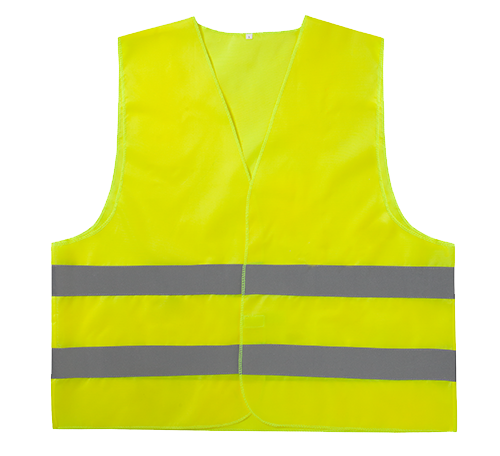
- Reflective safety vest: Shorter days mean more driving in low-light conditions. If you need to stop at the roadside, a high-visibility vest makes you visible to other drivers. In many European countries, carrying one is a legal requirement.
- Warning triangle: Standard roadside safety equipment, but particularly important in autumn when reduced grip means approaching drivers may not be able to stop as quickly.
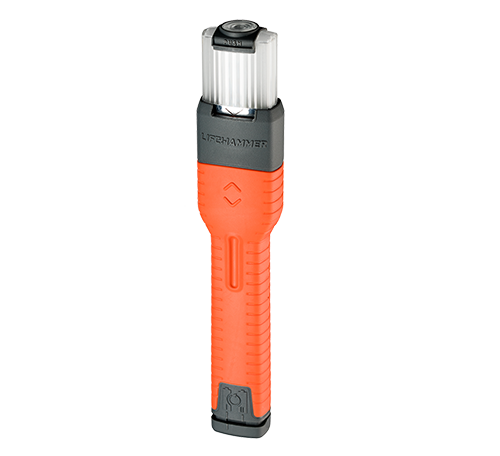
- Torch or headlamp: Useful for checking tyres or assessing a situation in poor light, which becomes more common as the days shorten.
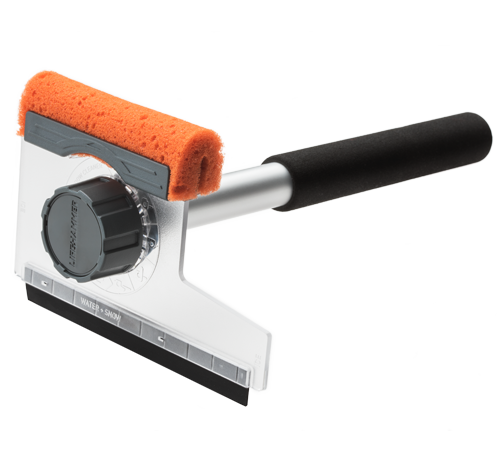
- Ice scraper and de-icer: Autumn mornings can drop to temperatures where frost appears without warning, even before the first official frost of the season.
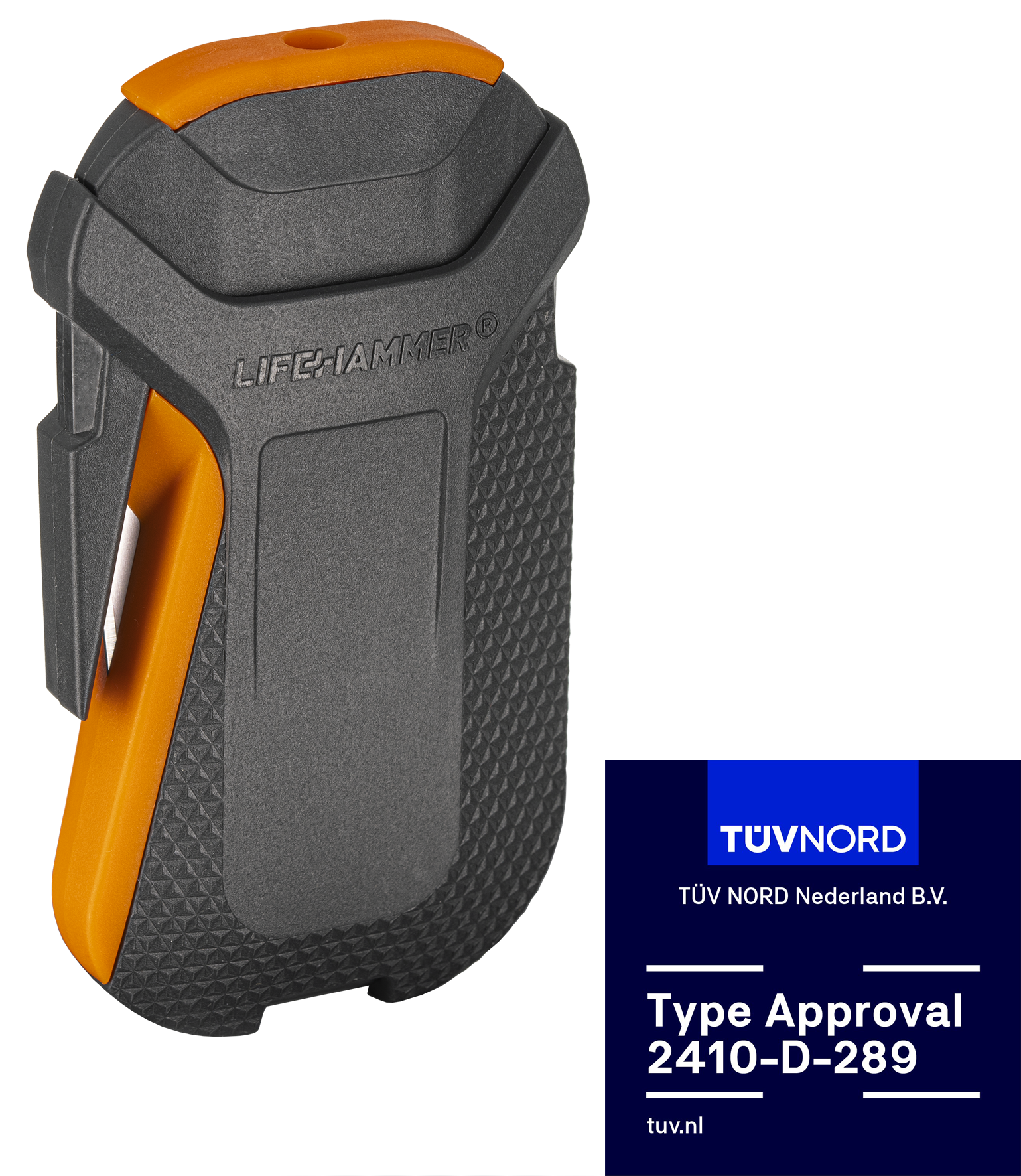
- Car escape tool: A safety hammer that cuts seat belts and breaks tempered side windows is a small, practical addition to any car kit. It takes up almost no space and requires no maintenance.
- Phone charger or power bank: Staying connected matters more when conditions are unpredictable and you may need to call for assistance.
Autumn is also a good time to check that your car’s lights are working correctly, that wiper blades are in good condition, and that your tyres have adequate tread depth. These are not dramatic preparations; they are the kind of straightforward checks that take minutes and make a genuine difference when conditions deteriorate.
How Lifehammer® supports you in autumn driving conditions
At Lifehammer® we have been developing vehicle safety tools since 1983, and autumn is exactly the time of year when having the right equipment in your car becomes more relevant. Reduced grip, shorter days, and unpredictable conditions are a combination that rewards preparation.
- Our safety hammer range includes four models to suit different preferences and mounting needs. The Classic and Plus use a hardened carbon steel hammerhead; the Safety Hammer Evolution and Safety Hammer SMART use an automatic ceramic striking mechanism. All four cut seat belts and break tempered side windows.
- All Lifehammer® safety hammers are TÜV certified and trusted by first responders and fleet operators across Europe, a level of reliability that matters when a product needs to work under pressure.
- Our Safety Vest Ultra comes in an ultra-flat vacuum pack that stores discreetly under any floor mat and decompresses immediately on opening. It is one-size-fits-all and suitable for drivers and passengers alike, useful in any situation where you need to be visible at the roadside.
If you have questions about which products are right for your car or how to mount them correctly, our Q&A section covers the most common topics in straightforward detail. You can also find our products on Amazon if you prefer to order there.