 English
 Nederlands
 Deutsch




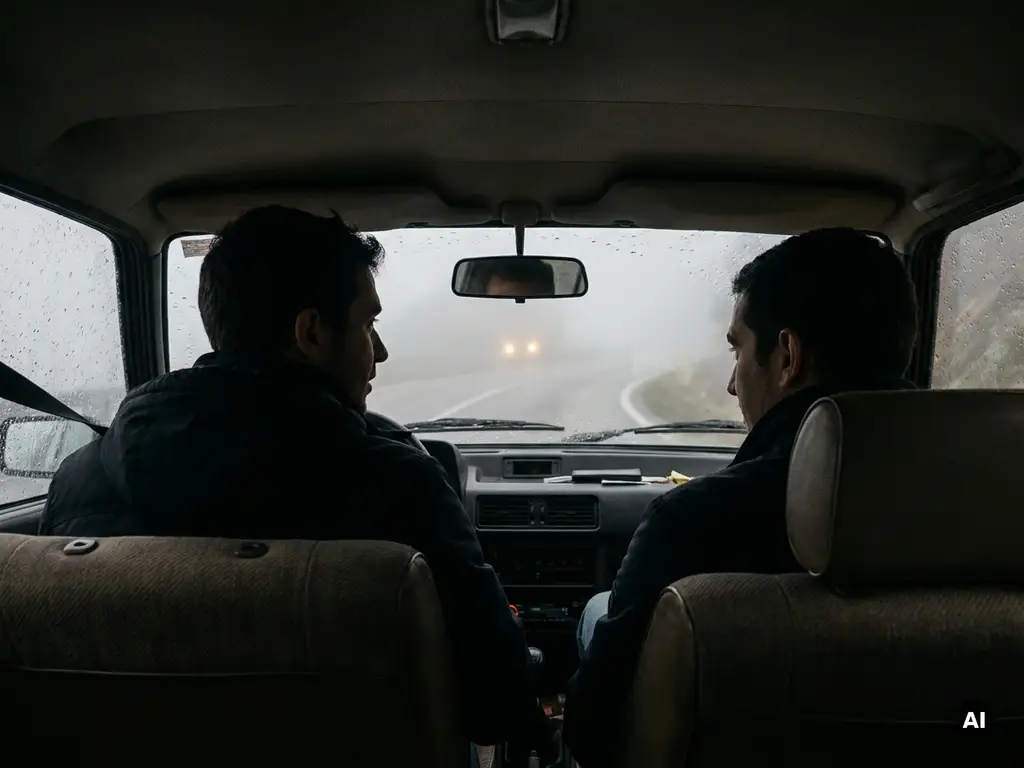
In fog, you should slow down by easing off the accelerator gradually rather than braking sharply. Sudden braking in fog risks catching drivers behind you off guard, especially when visibility is low and following distances are already reduced. The right approach combines a reduced speed, smooth deceleration, and adjusted lighting before you enter foggy conditions, not after.
Fog changes the rules of the road in ways that catch many drivers unprepared. The sections below answer the most common questions about driving in fog, from stopping distances and speed to lights and what to keep in your car.
How much does fog actually reduce your stopping distance?
Fog does not directly change your stopping distance, but it dramatically reduces the distance at which you can see a hazard, which effectively makes your stopping distance unsafe if you are travelling at normal speed. At 60 mph on a clear road, you need roughly 73 metres to stop. In dense fog with 30 metres of visibility, that gap is already gone before you have even registered the problem.
This is the core risk of driving in fog. Your brakes perform exactly as they always do. Your tyres grip the road the same way. What changes is the time you have to react. Fog compresses your decision window to almost nothing, which means the only way to restore a safe stopping margin is to reduce your speed significantly.
A useful rule of thumb: you should be able to stop comfortably within the distance you can see. If your headlights are illuminating 20 metres ahead, you should not be travelling at a speed that requires 50 metres to stop. Many drivers underestimate how little visibility they actually have in fog, particularly at dusk or on unlit roads where the fog blends with the darkness.
Should you brake or just ease off the accelerator in fog?
In most fog situations, you should ease off the accelerator rather than applying the brakes. Lifting off the throttle slows the vehicle gradually and naturally, without triggering your brake lights in a way that might startle or confuse drivers following closely behind you. If you need to slow down more decisively, apply the brakes gently and progressively, giving following traffic time to respond.
Hard braking in fog is a risk multiplier. Drivers behind you may be following too closely, may have poor visibility themselves, or may react slowly. A sudden flash of brake lights in thick fog can trigger a chain reaction. Smooth, early, and progressive deceleration is always the safer choice.
There is one important exception: if a hazard appears suddenly and you need to stop urgently, brake firmly and without hesitation. Avoiding a collision ahead is always the priority. The guidance to ease off gently applies to routine speed adjustment in fog, not to emergency braking situations.
What speed is safe to drive in fog?
There is no single safe speed for driving in fog because the appropriate speed depends entirely on your visibility at that moment. The governing principle is that you must be able to stop within the distance you can clearly see. In practice, this often means driving well below the posted speed limit, sometimes significantly so in dense fog.
As a general guide:
- If visibility drops below 100 metres, your speed should reflect that. On a motorway, this may mean reducing from 70 mph to 40 mph or less.
- In very dense fog where visibility is under 30 metres, speeds above 20 to 25 mph are rarely safe regardless of road type.
- In many European countries, fog lights are legally required when visibility falls below 50 metres, and speed limits are sometimes automatically reduced in these conditions on major routes.
One of the most common fog driving mistakes is matching the speed of other vehicles on the assumption that they must know what they are doing. They may not. Drive to your own visibility, not to the traffic around you. If conditions feel unsafe, pulling off the road entirely and waiting for the fog to lift is a legitimate and sensible option.
When should you use fog lights versus dipped headlights?
Use dipped headlights as your default in fog. They sit lower than full beam and illuminate the road ahead without reflecting back off the fog and reducing your own visibility. Switch on your rear fog light when visibility drops to around 100 metres or less. Front fog lights, if your car has them, can help in very dense conditions but are not always necessary.
Why you should never use full beam in fog
Full beam headlights direct a wide cone of light forward and upward. In fog, that light hits the suspended water droplets and bounces straight back at you, creating a bright wall of white glare that makes visibility worse, not better. Dipped headlights direct light downward toward the road surface, cutting under the fog layer more effectively.
When to switch your rear fog light on and off
Your rear fog light is a powerful warning signal for drivers behind you, but it should not stay on once conditions improve. A rear fog light at close range is bright enough to mask your brake lights, which creates its own hazard. Switch it on when visibility is genuinely reduced, and turn it off again when you can see clearly for more than 100 metres. Many drivers forget to turn it off after the fog clears, which is both a legal issue in some countries and a safety risk.
What else should be in your car before driving in low visibility?
Beyond adjusting your speed and lights, being properly equipped for low visibility driving means having the right items in your car before you set off. Fog often appears without warning, and the time to prepare is not when you are already in the middle of it.
A few things worth having on board:
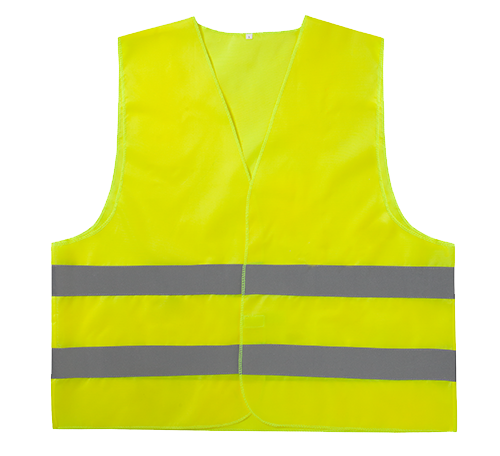
- A high-visibility vest. If you need to stop and exit the vehicle on a road or motorway shoulder in fog, you become almost invisible to other drivers. A reflective vest is compact, inexpensive, and in many European countries legally required in your vehicle.
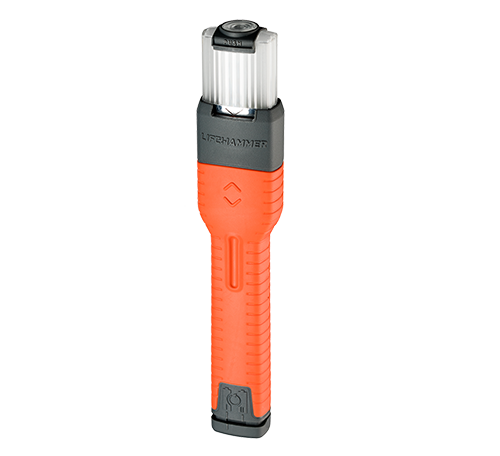
- A working torch. Fog combined with darkness or a breakdown creates a situation where a reliable light source is genuinely useful, both for your own visibility and for signalling to others.
- A charged phone. In poor visibility conditions, being able to call for help quickly matters. Keep a charging cable in the car.
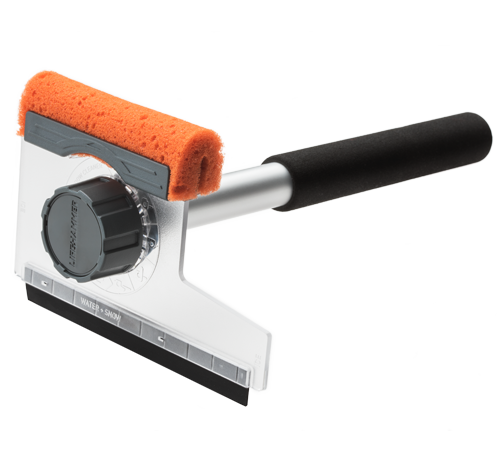
- A window cleaner or demister. Fog accelerates interior condensation. A clean windscreen with no smearing makes a real difference to how much you can actually see through dipped headlights.
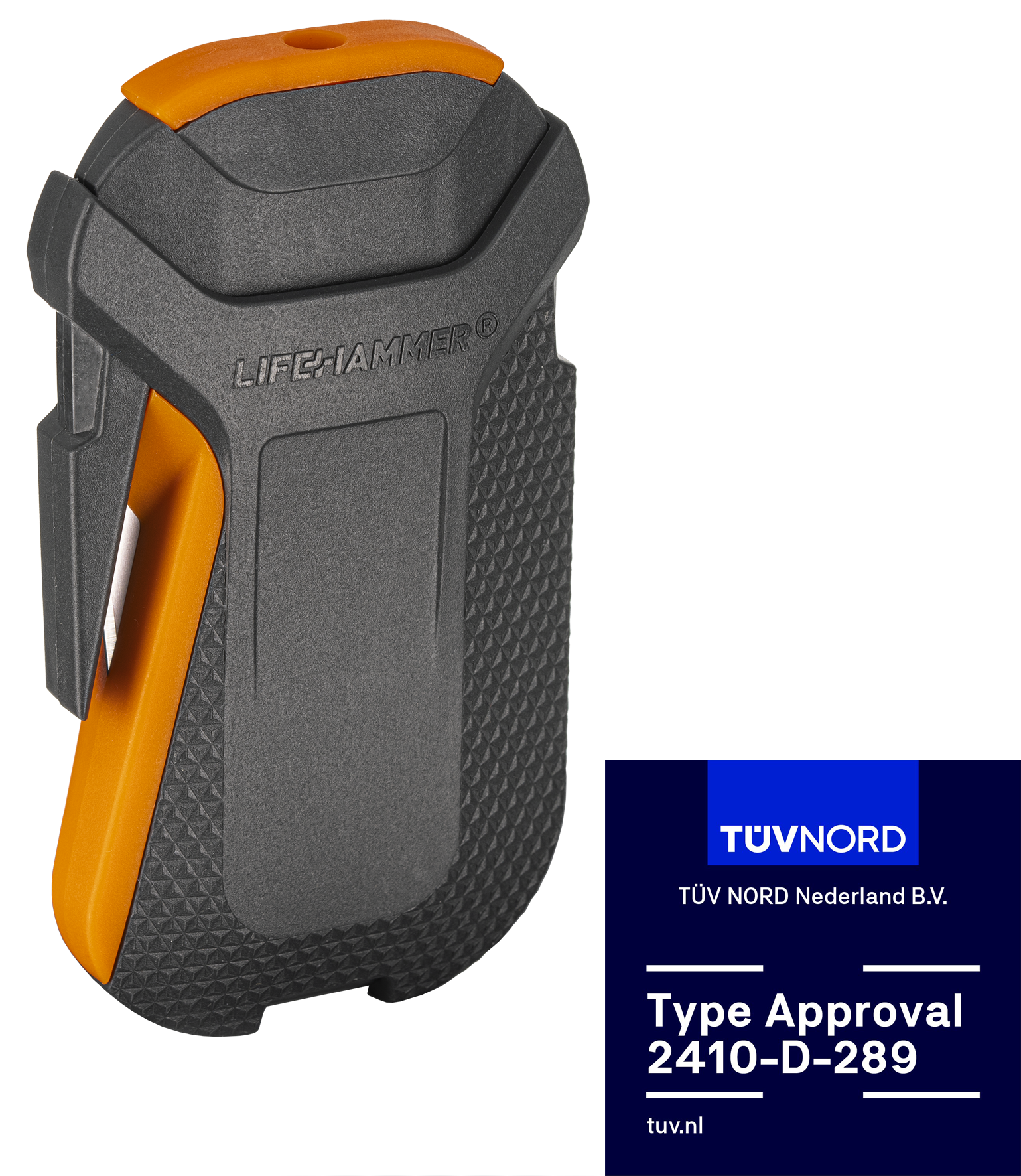
- A car escape tool. Not specifically a fog hazard, but low visibility increases accident risk. Having a seatbelt cutter and window breaker within reach is a sensible part of any car kit.
None of these items take up meaningful space, and most can stay in your car permanently. The goal is to be prepared before conditions change, not to scramble for solutions once they already have.
How Lifehammer® supports you with fog safety
At Lifehammer® we have been developing vehicle safety tools since 1983, and low visibility driving is exactly the kind of situation our products are designed to support. We focus on tools that are reliable, compact, and genuinely useful when conditions on the road change unexpectedly.
- Our Safety Hammer SMART uses a ceramic pin as its striking mechanism and can be secured within easy reach using 3M VHB double-sided adhesive tape, keeping it accessible without requiring tools to mount. It also cuts seatbelts and breaks tempered side windows.
- Our Safety Hammer Evolution features a ceramic hammerhead and is assembled using the included hex key for a secure, permanent fit in your vehicle. Like all Lifehammer® models, it is TÜV certified and trusted by first responders and fleet operators across Europe.
- Our Safety Vest Ultra comes in an ultra-flat vacuum pack that stores discreetly under any floor mat and decompresses immediately on opening. It is one-size-fits-all and makes you visible to other drivers if you ever need to exit your vehicle on a road or hard shoulder.
- All Lifehammer® products are built to perform reliably when they are actually needed, not just to look the part in a glove compartment.
If you want to know which product suits your car or how to mount it correctly, our Q&A section covers the most common questions in straightforward detail. You can also find our products on Amazon if you prefer to order directly.