 English
 Nederlands
 Deutsch





You can reduce the risk of aquaplaning by maintaining your tyres in good condition, adjusting your speed on wet roads, and avoiding sudden steering or braking inputs. Aquaplaning happens when a layer of water builds up between your tyres and the road surface faster than the tyre can disperse it, causing a temporary but dangerous loss of control. The sections below cover the most common questions drivers have about aquaplaning and what you can actually do about it.
What causes aquaplaning on wet roads?
Aquaplaning occurs when water accumulates in front of your tyres faster than the tread can channel it away, causing the tyre to ride on a thin film of water rather than gripping the road surface. At that moment, your steering, braking, and acceleration inputs have little or no effect because the tyre has lost direct contact with the tarmac.
The mechanism is straightforward: tyre tread is designed to push water outward and backward as the tyre rolls forward. When the volume of water on the road exceeds what the tread can move in the available time, a wedge of water lifts the tyre. This can happen suddenly and without much warning, particularly in heavy rain or where water has pooled in dips and ruts in the road.
Three factors combine to create aquaplaning conditions: the volume of water on the road, the speed of the vehicle, and the condition of the tyres. Change any one of those three variables and you change the risk level significantly.
What tyre conditions increase the risk of aquaplaning?
Worn tyre tread is the single biggest tyre-related factor in aquaplaning risk. As tread depth decreases, the tyre’s ability to channel water away from the contact patch drops sharply. The legal minimum tread depth in most European countries is 1.6mm, but many tyre safety organisations recommend replacing tyres at 3mm for wet-weather driving because performance deteriorates well before the legal limit is reached.
Tyre pressure also plays an important role. An underinflated tyre deforms under load, reducing the contact patch shape and making it harder for the tread grooves to direct water efficiently. An overinflated tyre, on the other hand, reduces the contact area itself, which can also compromise grip in wet conditions.
Beyond tread and pressure, tyre age matters. Rubber hardens over time, even on tyres with adequate tread remaining. Harder rubber is less able to conform to the road surface and less effective at dispersing water. Checking the manufacturing date on the tyre sidewall and replacing tyres older than six to eight years is a reasonable precaution, regardless of tread depth.
How does speed affect aquaplaning risk?
Speed has a direct and significant effect on aquaplaning risk. The faster a vehicle travels, the less time the tyre has to push water out of the contact zone. Above a certain speed threshold, the tyre simply cannot move water away quickly enough, and aquaplaning begins. That threshold drops considerably when tyres are worn or road drainage is poor.
There is no fixed speed at which aquaplaning always occurs, because the threshold depends on tyre condition, water depth, and road surface. However, the risk increases noticeably at motorway speeds in heavy rain, and it can occur at lower speeds on roads with standing water or poor camber.
Reducing your speed in wet conditions is one of the most straightforward ways to lower the risk. Slowing down gives your tyres more time to displace water and keeps you within a range where your tread can do its job. A smooth, progressive reduction in speed is far more effective than braking hard once you notice standing water ahead.
What should you do if your car starts aquaplaning?
If your car starts aquaplaning, the most important thing to do is to stay calm and avoid sudden inputs. Do not brake sharply, do not turn the steering wheel abruptly, and do not accelerate. Ease off the accelerator gently and hold the steering wheel straight until you feel the tyres regain contact with the road surface.
Sudden braking or steering during aquaplaning can cause the vehicle to spin or swerve once the tyres reconnect with the road, because the inputs you applied while floating are still in effect when grip returns. Keeping your movements smooth and measured gives you the best chance of regaining control without overcorrecting.
If your car has a manual gearbox, gently depress the clutch as you ease off the throttle. This removes drive from the wheels and reduces the risk of wheel spin when grip returns. With an automatic, simply lifting off the accelerator is enough. Modern stability control systems can help manage the situation, but they work best when the driver is not fighting them with aggressive inputs.
Which driving habits help prevent aquaplaning?
Several consistent driving habits reduce aquaplaning risk on wet roads. The most effective ones are straightforward to adopt and do not require any special equipment or training.
- Reduce your speed in rain. Slowing down gives your tyres more time to channel water and lowers the speed at which aquaplaning can begin.
- Increase following distance. A longer gap ahead gives you more time to react to standing water, brake lights, or sudden changes in road conditions.
- Avoid sudden steering, braking, or acceleration. Smooth, progressive inputs keep the tyre contact patch stable and reduce the risk of losing grip.
- Steer around standing water where it is safe to do so. Puddles and pooled water in ruts or wheel tracks are where aquaplaning is most likely to occur. Avoiding them when you can see them ahead is the simplest prevention.
- Follow the tracks of the vehicle ahead. In heavy rain, the vehicle in front displaces some of the surface water. Following at a safe distance in the same line can reduce the water depth your tyres encounter.
- Check your tyres regularly. Tread depth, tyre pressure, and tyre age all affect wet-weather performance. A quick monthly check takes only a few minutes and makes a measurable difference to how your car handles in rain.
Does the type of road surface affect aquaplaning risk?
Yes, road surface type and condition have a meaningful effect on aquaplaning risk. Roads with good drainage, a rough texture, or purpose-designed porous asphalt allow water to escape from under the tyre more quickly, reducing the risk. Smooth, worn, or poorly drained road surfaces increase it.
Older road surfaces that have been polished by years of traffic offer less texture for water to drain through. Roads with ruts or depressions channel water into concentrated pools exactly where tyres travel. Motorways and dual carriageways often have better drainage design than older rural roads, but at higher speeds the risk remains real.
Some newer road surfaces use open-graded or porous asphalt specifically to improve wet-weather grip and reduce aquaplaning. You may notice these on upgraded sections of motorway where spray from vehicles is visibly reduced in heavy rain. However, you cannot always know what surface you are driving on, which is why tyre condition and speed remain the factors most within your control.
How Lifehammer® supports you on wet roads and beyond
At Lifehammer® we have been developing vehicle safety tools since 1983, and wet-weather preparedness is exactly the kind of situation our products are designed to support. Knowing how to handle aquaplaning is important, but being equipped for whatever a journey brings is just as relevant.
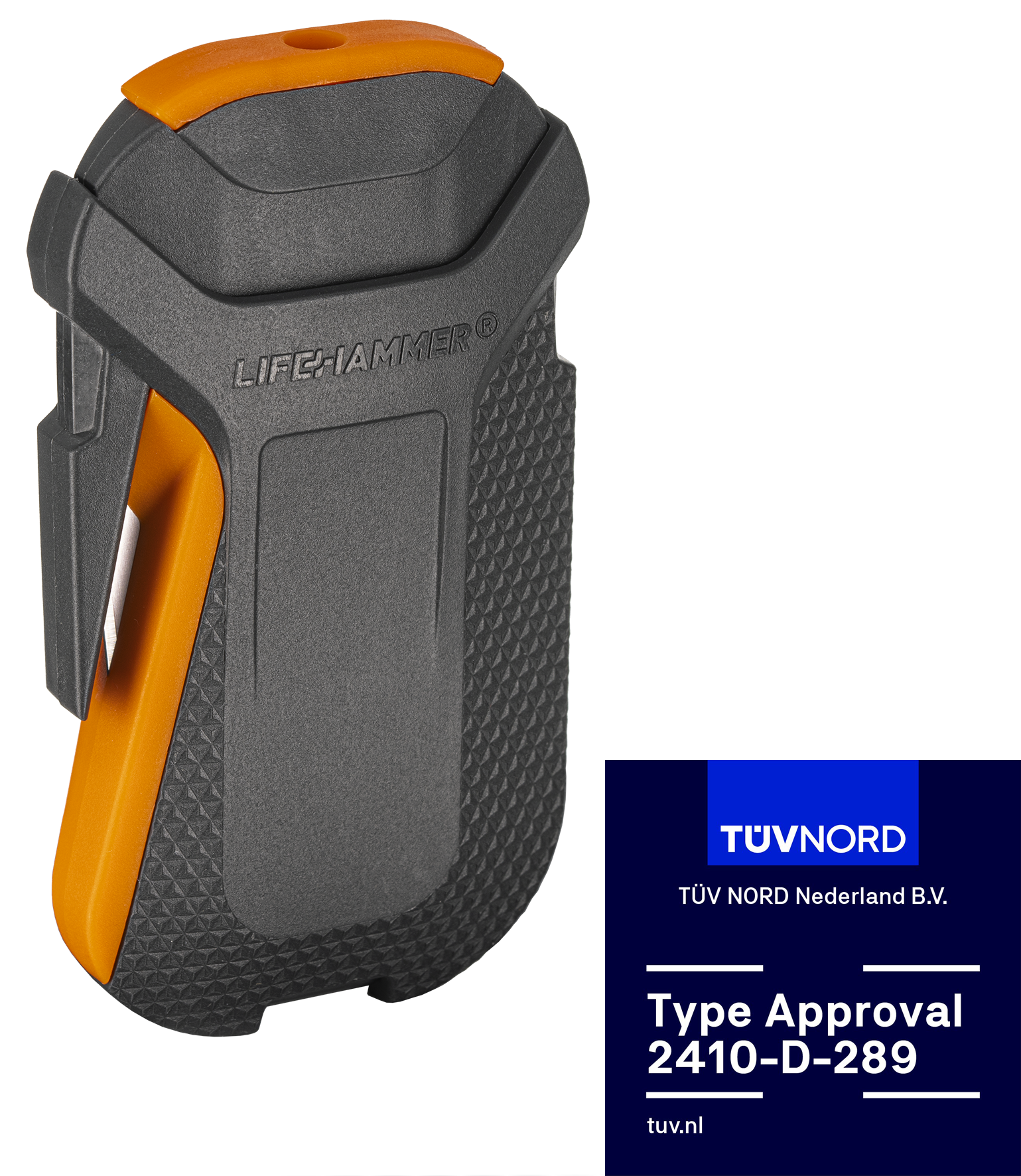
- Our Safety Hammer SMART uses a ceramic pin as its striking mechanism to break tempered side windows and cuts seatbelts, making it a compact and reliable tool for vehicle escape in any road condition. It can be secured within reach using 3M VHB double-sided adhesive tape.
- Our Safety Hammer Evolution uses a ceramic hammerhead and is assembled using the included hex key. Like all Lifehammer® models, it breaks tempered side windows and cuts seatbelts.
- All Lifehammer® safety hammers are TÜV certified and trusted by first responders and fleet operators across Europe, so you can rely on them when it matters.
- Our Safety Vest Ultra comes in an ultra-flat vacuum pack that fits discreetly under any floor mat and decompresses immediately on opening, keeping you visible if you ever need to stop on a wet or poorly lit road.
If you have questions about which products suit your car or driving routine, our Q&A section covers the most common topics in straightforward detail. And if you are ready to get equipped, you can find our full range on Amazon.